North Korea fired at least one apparent ballistic missile toward the Sea of Japan on Saturday morning, South Korea’s Joint Chiefs of Staff and Japan’s Defense Ministry said, hours after Pyongyang rejected Seoul’s demand for an apology over landmine explosions that wounded three South Korean soldiers in the Demilitarized Zone last month.
Launch and tracking
Japan’s Defense Ministry said it detected the launch and later assessed that the projectile had already splashed down in the sea east of the Korean Peninsula. South Korea’s military reported an “unidentified projectile” fired toward waters between the peninsula and Japan. Neither government immediately published range or altitude data, and there were no reports of damage on land or at sea.
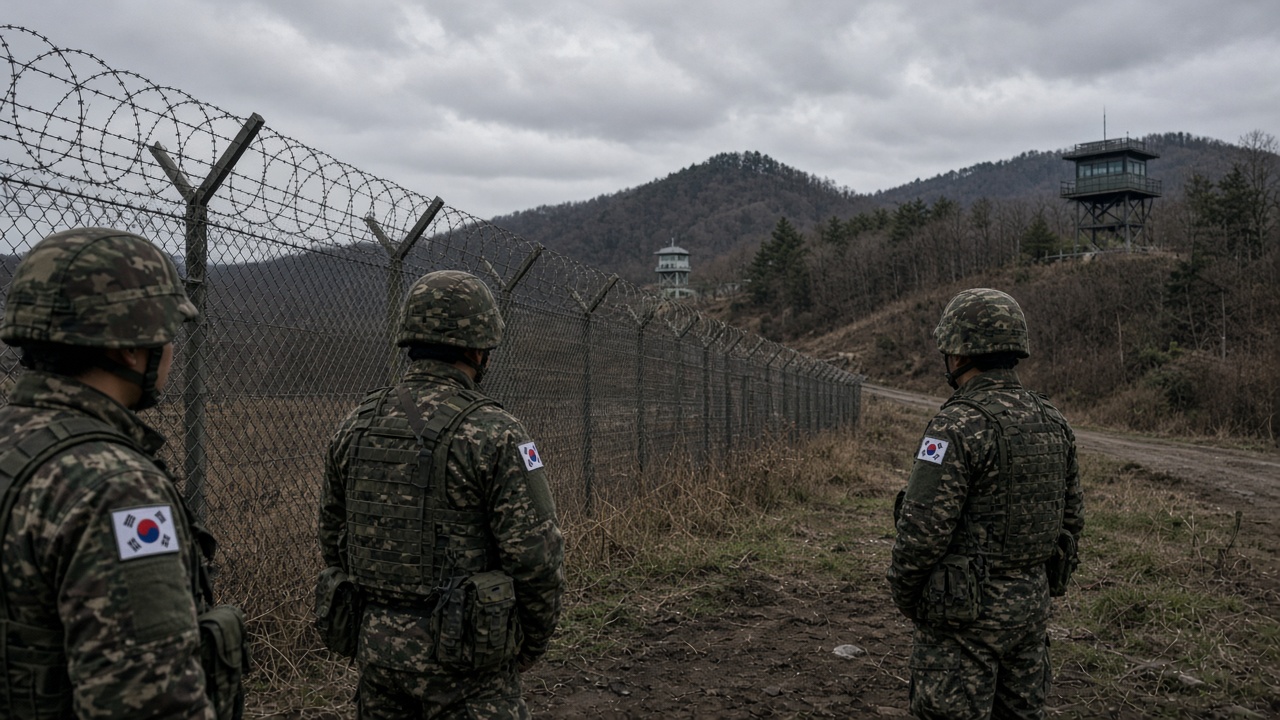
The test punctuates a week of recriminations over the September 21 detonations inside the southern edge of the DMZ, which Seoul says severely injured three troops on a patrol route. South Korean officials, including Defense Minister Ahn Gyu-back, have said North Korean wooden-box mines were highly likely responsible—a conclusion the United Nations Command is also examining as a possible armistice violation.
Pyongyang’s response
On Friday, the North’s official Korean Central News Agency carried a statement dismissing Seoul’s accusations as “groundless” and rejecting any apology. The statement framed the South’s diplomacy as posturing ahead of domestic politics and did not offer an alternative explanation for the blasts that injured the soldiers.
President Lee Jae Myung’s government had pressed for accountability while keeping conventional deterrence measures on the table. Saturday’s launch does not by itself signal an imminent border clash, but it signals that Pyongyang is willing to pair rhetorical defiance with weapons tests while the mine dispute remains unresolved.
Peninsula context
North Korea last conducted missile launches in mid-September, when state media said at least one test involved a new hypersonic glide vehicle. The South is simultaneously modernising its own strike portfolio—Hyunmoo-5 ballistic missiles and Cheongwang laser weapons featured at this week’s Armed Forces Day parade in Seoul—and coordinating with Washington on extended deterrence.
For residents in northern Gyeonggi and coastal cities, the sequence is familiar: a border incident, a diplomatic demand, a rejection in state media, then a morning launch alert on phones. Civil defence officials urged the public to follow shelter guidance if sirens sound, while the foreign ministry said it would brief allies on the launch through existing hotlines.
Commercial shipping lanes in the East Sea saw no disruption alerts from Seoul’s transport ministry after the splashdown, and Japanese prefectural governments did not elevate public shelter orders beyond routine missile-drill messaging.
What changes next depends on whether the U.N. Command review produces findings both capitals accept—and whether Pyongyang stages additional tests while autumn field exercises peak on both sides of the DMZ. Lawmakers in Yeouido were expected to summon defence officials next week if launches continue, while the foreign ministry said it would coordinate with Washington and Tokyo on any additional U.N. Security Council discussion.
For now, the sequence mirrors prior cycles: a border incident, public demands in Seoul, a KCNA rejection, and a short-range test that stops short of announcing a new warhead type. The difference this autumn is the visible mine evidence photographed by the joint investigation team and the two critically injured soldiers still recovering in military hospitals.