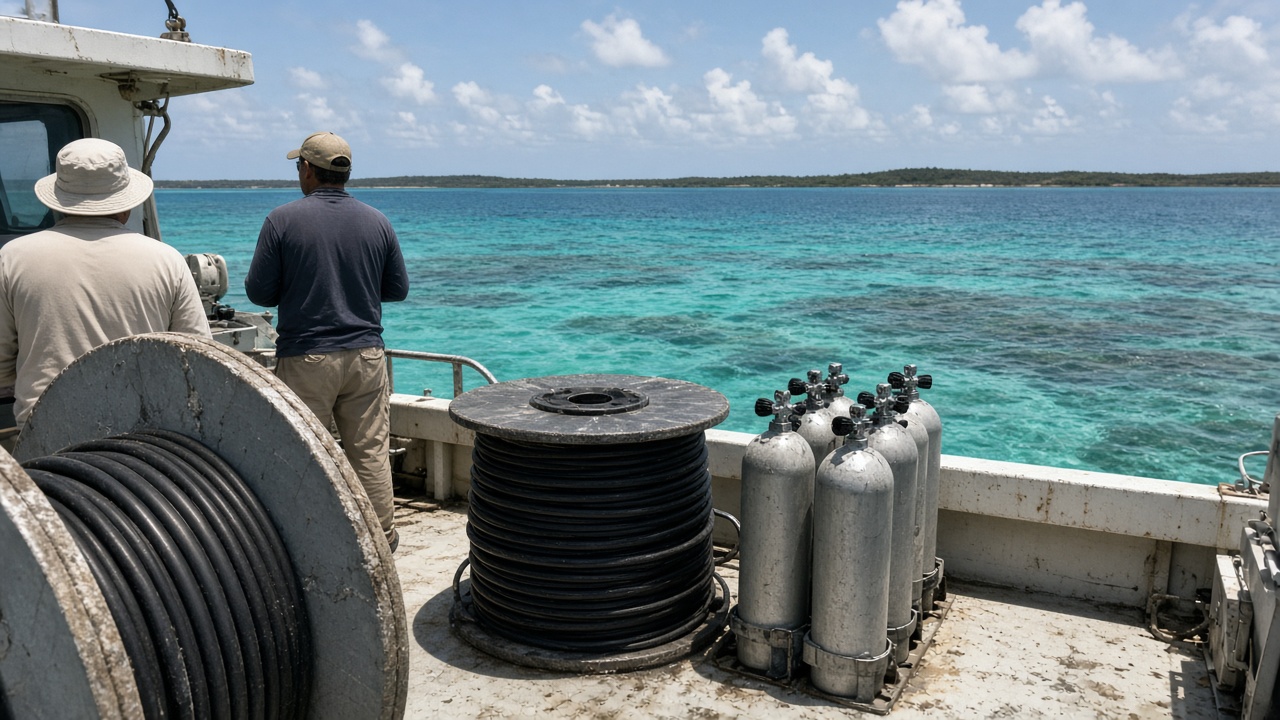
Scientists from the Australian Institute of Marine Science have deployed a chain of underwater listening stations along the Great Barrier Reef to record coral spawning snaps and fish choruses during this week's annual breeding window.
Crews aboard RV Solander lowered hydrophones at six reefs between Cooktown and the Whitsundays after moon-phase models predicted mass spawning three to five nights after the October full moon. Audio streams feed machine-learning classifiers trained to distinguish healthy reef racket from the quiet that often follows bleaching.
Why sound matters
Larval corals and reef fish orient by sound; degraded reefs grow eerily silent. AIMS researchers hope multi-year recordings will show whether local recovery projects restore acoustic complexity faster than visual surveys alone can detect.
Great Barrier Reef Marine Park Authority officers cleared the work under research permits with strict biosecurity rules. Tourist operators were briefed to avoid anchoring near buoys marked with reflective tape.
Climate backdrop
Sea surface temperatures ran warm through southern winter, raising fears of another bleaching summer. Spawning success this week does not guarantee survival of larvae if heat returns in January. Collaborators at James Cook University will cross-check audio hits with plankton tows.
Federal Reef 2050 funding covers the pilot, but scientists want sustained funding akin to weather radar, not one-off grants tied to election cycles.
Public access
AIMS plans to release curated sound clips for schools after quality checks, letting students hear shrimp snaps and parrotfish crunches without diving. Open data will publish on the institute's portal with GPS jittered to protect sensitive sites from illegal collectors.
If the array survives cyclone season, it will stay in place for the 2027 spawn, building a baseline acoustics index alongside traditional coral cover surveys.
Technology detail
Hydrophones capture frequencies up to 20 kilohertz, beyond human hearing but critical for larval orientation. Machine-learning models trained on 2024 pilot audio flag anomalous quiet within hours, alerting divers to check for bleaching or predator spikes.
Partners at CSIRO supply temperature loggers on the same moorings, correlating heat stress with acoustic dropout. Tourist operators volunteering vessels for servicing receive early warnings when spawning nights approach, helping them schedule night dives responsibly.
Long-term, reef managers want acoustic indices on public dashboards beside sea temperature charts, giving Australians a visceral sense of ecosystem health beyond aerial photos.
Funding outlook
Marine scientists told a Townsville briefing that acoustic monitoring costs a fraction of repeated dive surveys, yet grant cycles remain annual. Reef tourism operators pledged in-kind boat time if federal funding wavers after the election.
University students analysing audio spectrograms will present early findings at the Great Barrier Reef symposium in November, comparing spawning nights before and after the 2024 bleaching event.