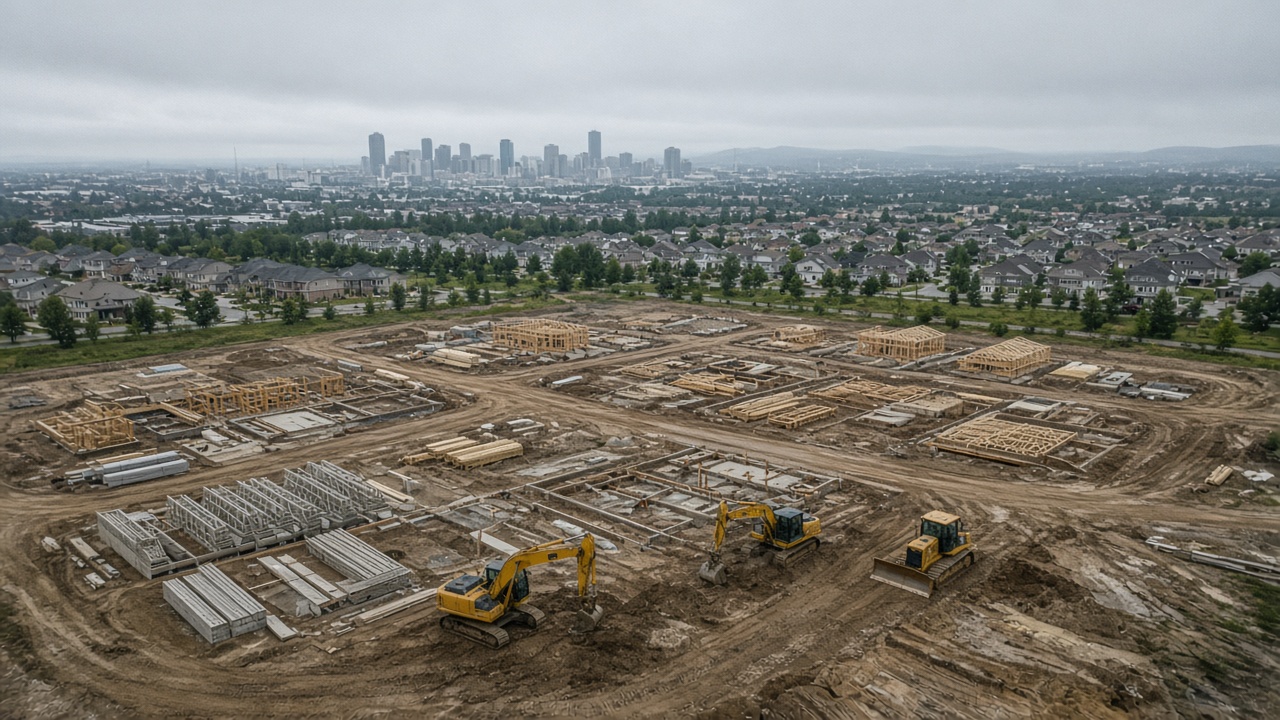
Australia's housing accord will keep missing its own numbers until the Commonwealth ties infrastructure dollars to verifiable zoning decisions, not ministerial press releases about ambition.
States have accepted headline targets to build 1.2 million homes over five years, yet several capitals still take more than a year to rezone infill sites near train lines. The National Housing Supply and Affordability Council reported in September that approvals lag targets by six figures nationally, with New South Wales and Victoria responsible for most of the gap.
Why deadlines slip
Local councils face vocal opposition to density, and state planning ministers rarely override them before elections. Federal money for roads and utilities arrives as grants without enforceable timelines, so trenches sit idle while blame shifts between tiers of government.
The Productivity Commission has urged cash-for-reform contracts: release stage payments only when parcels are rezoned, shovel-ready and connected. That model worked for some NDIS interfaces; housing is more politically radioactive but no less urgent.
What not to do
Another national summit will not lower rents. Nor will first-home buyer grants that inflate prices without expanding supply. Investors have already priced slower building pipelines into listed developers' margins; renters pay the compounding cost.
Some states want Canberra to curb short-term holiday letting; others fear tourism jobs. A coherent package can do both—density near stations plus registration of empty investor units—but only if premiers sign delivery dates with teeth.
The ask
Parliament should empower the housing council to score states quarterly and automatically pause future infrastructure bids when rezoning backlogs exceed agreed thresholds. Politics will howl; the alternative is another decade of young families commuting two hours because paperwork moves slower than cranes.
InfoHandle Editorial: measure zoning, fund what clears, and stop rewarding press releases.
Case studies
Sydney's Macquarie Park corridor shows how delayed rezoning keeps students commuting from Campbelltown despite existing rail capacity. Melbourne's Fishermans Bend spent a decade in planning reviews while docklands towers rose nearby with fewer schools. Brisbane's Olympic village site proves fast-track models exist when governments align incentives.
Councils plead insufficient staff to assess complex applications; states could fund planning tribunals with strict clocks instead of blaming local democracy. Federal infrastructure tied to measurable lot releases would give premiers political cover to overrule NIMBY campaigns.
Renters cannot wait for culture wars to settle. Binding zoning deadlines with dollars withheld are blunt tools, but softer approaches have failed for a generation.
Federal role
The Albanese government housing minister should publish which state milestones were met each quarter, attaching dollars released or withheld. Transparency beats another intergovernmental agreement that lives in a drawer.
Developers on the ASX need predictable pipelines more than another stamp duty tweak; capital will flow when land is legally buildable, not merely advertised.