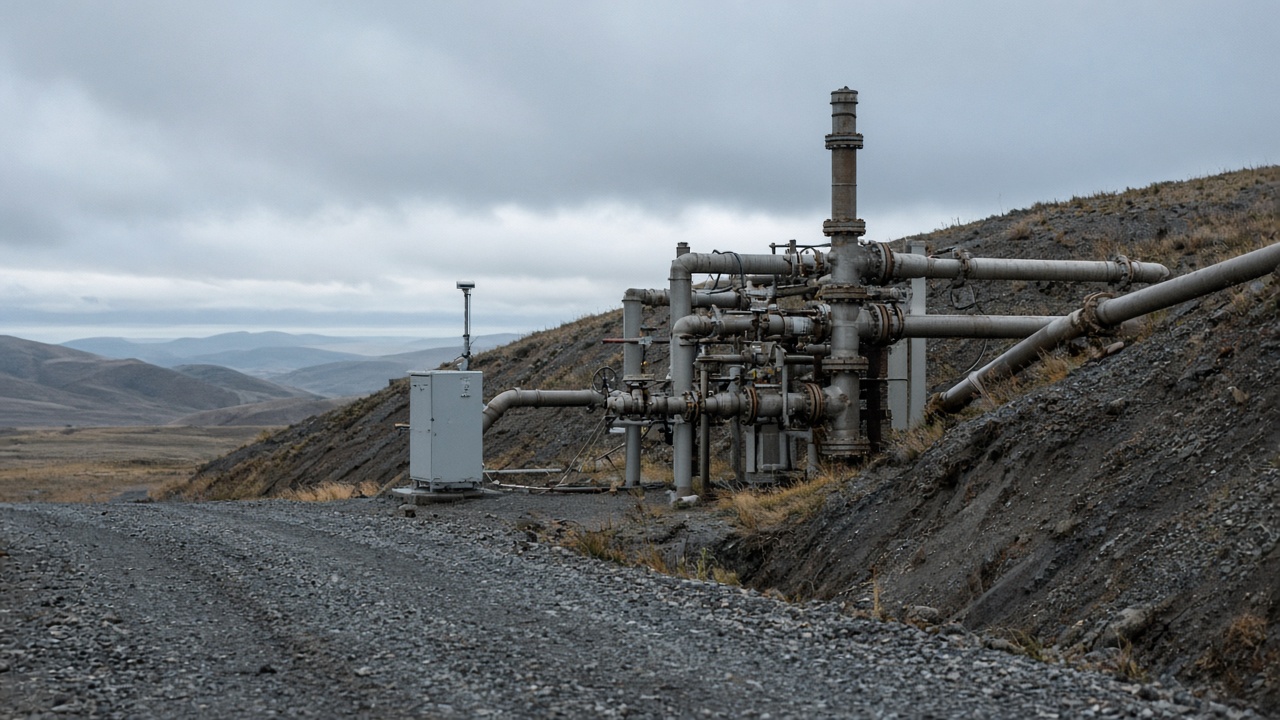
KIGAM seismologists recorded more than 120 microearthquakes within two kilometers of Pohang’s experimental geothermal wells in the two weeks after a September tremor rattled dishes in nearby apartments. The Korea Institute of Geoscience and Mineral Resources halted high-pressure injection tests and invited residents to a town hall Sunday, promising updated hazard maps before operators request permission to resume stimulation.
What instruments show
Portable seismometers deployed after the September event detected a tight cluster of magnitude 0.8 to 2.1 events along a northeast-trending fault segment under an industrial zone. Unlike the 2017 Pohang earthquake that damaged homes and triggered lawsuits, September’s shaking stayed below injury thresholds, but frequency alarmed engineers who remember how small swarms preceded larger releases elsewhere.
Injection volumes for the enhanced geothermal pilot were modest—officials said daily fluid rates stayed under pre-approved caps—but KIGAM wants independent review of pressure data logs. Operators must show whether fractures opened pathways to critically stressed faults before ministries sign off on restart.
Community response
Apartment councils near the wellfield demanded real-time public dashboards like those used for nuclear plants. Pohang mayor’s office set up a hotline for vibration reports after social media videos showed ceiling dust falling during the September jolt. Merchants worry that earthquake headlines could deter investors eyeing battery-material plants along the coast.
Energy policy context
Korea’s geothermal ambitions sit between carbon targets and local consent. Trade ministry planners view enhanced geothermal as baseload complement to offshore wind, but 2017 litigation still shadows permitting. National Assembly members from Gyeongsang provinces asked for insurance pools covering induced-seismicity claims before new federal grants flow.
Researchers proposed lowering injection rates and adding passive seismic monitoring for six months—a delay operators accept if it preserves the pilot’s license. Universities offered graduate students access to anonymized data for thesis work, hoping transparency builds trust.
Next steps
KIGAM will publish a preliminary report mid-October. If swarms decay without larger events, controlled injection might resume with tighter traffic-light protocols that automatically pause pumping when event rates exceed thresholds. If not, Korea may shift geothermal R&D to less urban sites, another setback for a technology that needs wins after years of caution.
International comparisons
European enhanced-geothermal projects share data through open repositories; KIGAM invited Swiss seismologists to review Pohang logs remotely. Operators hope that transparency defuses lawsuits before they start. Insurance underwriters asked for independent probabilistic hazard models before renewing pilot coverage—a condition both sides accepted Sunday.
Monitoring timeline
Residents will receive SMS alerts if any event exceeds magnitude 2.5, a threshold chosen after town-hall feedback. Schools within three kilometers practiced duck-and-cover drills Monday morning regardless, a reminder that perception drives policy as much as accelerometer readings.