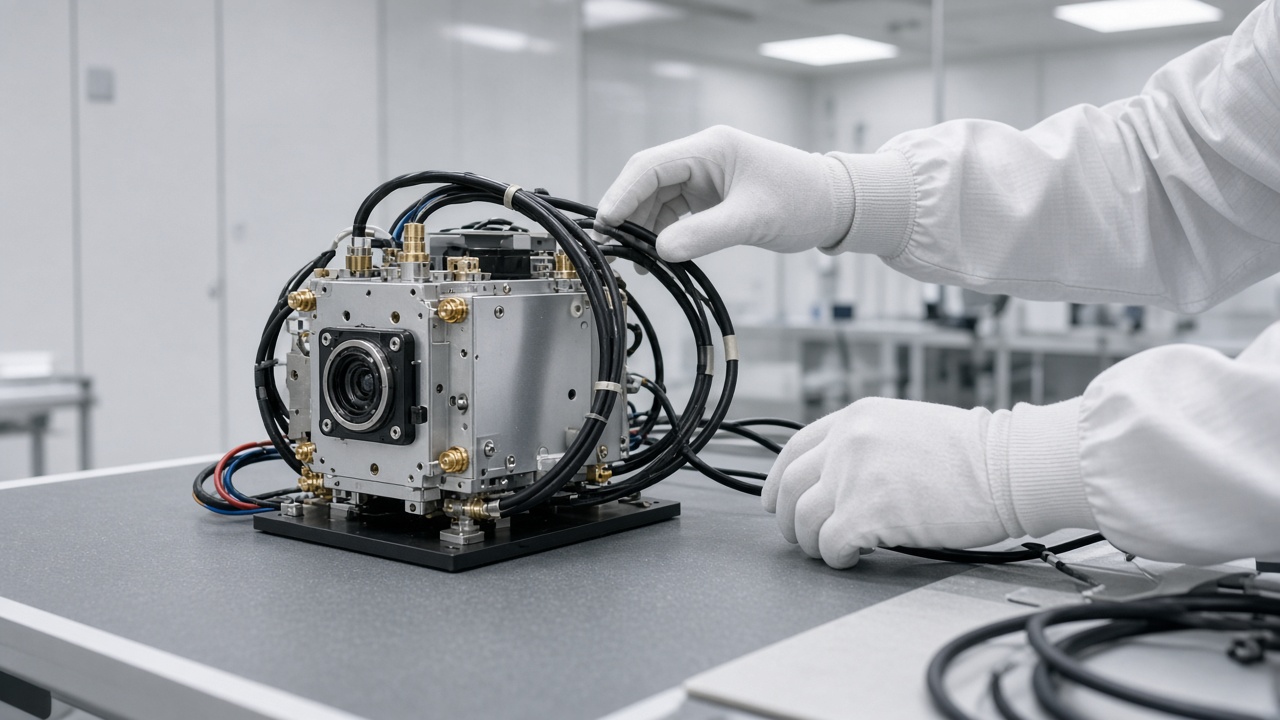
TakeMe2Space’s MOI-1A satellite, billed as India’s first orbital computing platform, is operating in low Earth orbit after launching aboard SpaceX’s Transporter-18 Falcon 9 rideshare, the Hyderabad startup said, using Nvidia Orin NX processors to run inference without downlinking raw sensor floods.
The spacecraft weighs under 50 kilograms and targets customers who want to train or deploy models on orbit for agriculture monitoring, disaster response and defence analytics. By processing data in space, the firm promises lower bandwidth bills and faster alerts than traditional earth-observation satellites that beam entire image strips home.
Recovery from a failed ISRO ride
MOI-1A is a rebuild. The company’s earlier MOI-1 CubeSat was destroyed when ISRO’s PSLV-C62 mission failed in January 2026, wiping out the primary EOS-N1 payload and 15 co-passengers. Rather than wait for another Indian launch slot, TakeMe2Space booked SpaceX’s commercial manifest—a path other Indian startups increasingly choose when schedule certainty matters more than flying a domestic flag.
Founders said no paying customers abandoned contracts after the PSLV setback, citing India’s overall launch record despite consecutive PSLV anomalies. Still, the pivot highlights a gap between ISRO’s ambitious manifest and private firms that need quarterly deployment cadences.
Hardware choices
Nvidia’s Orin NX modules bring data-centre-class GPU acceleration to a power-constrained bus. Radiation tolerance and thermal cycling determine how long consumer-derived chips last; TakeMe2Space has not published full mission-life estimates but argues that short-lived edge nodes can be refreshed via frequent launches on rideshare missions.
Competitors globally are testing similar “orbital data centres,” backed by venture capital betting that AI demand will extend beyond terrestrial clouds. India’s space policy reforms opened the sector to private launch agreements, making MOI-1A an early proof point—not ISRO scale, but a new business model.
Why it matters beside ISRO’s NavIC push
While ISRO prepares NVS-03 to restore NavIC positioning in mid-October, private firms are attacking a different bottleneck: getting insights from orbit rather than merely getting there. MOI-1A’s success would encourage insurers and regulators to treat orbital compute as a service category, with export controls on models rather than rockets.
For scientists, the test is whether on-board inference actually beats ground processing once downlink costs and model-update logistics are counted. For India’s startup ecosystem, it is evidence that a January disaster does not have to end the story—if you can find another ride to space.
IN-SPACe, India’s private space regulator, listed TakeMe2Space among firms authorised for end-to-end missions, a step that eases future launch paperwork. The company plans a follow-on observation satellite once MOI-1A completes commissioning tests in orbit.