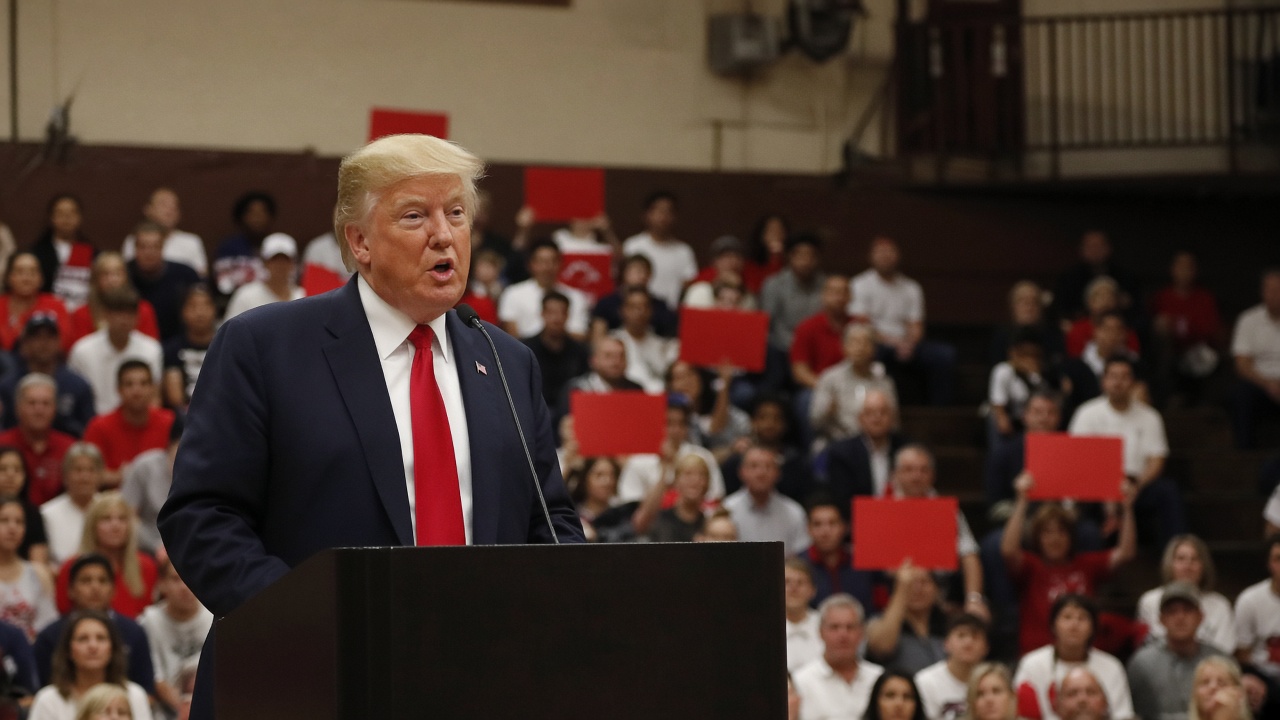
U.S. President Donald Trump said Saturday that foreign companies that refuse to build factories in the United States could face import tariffs as high as 300 percent, framing the threat as a way to pull more manufacturing jobs back onshore ahead of the Nov. 3 midterm elections.
Speaking at a campaign rally in Vandalia, Ohio, Trump told supporters that overseas firms would be given roughly a year and a half to open U.S. plants before facing punitive duties ranging from 150 percent to 300 percent. He named South Korea, China, Japan and Canada while arguing that his tariff agenda had already pushed allies and rivals to commit billions of dollars to American factories.
What changed on Saturday
The remarks land as Washington is still translating last year’s trade deals into concrete projects. South Korea, for example, agreed to channel $350 billion into the U.S. economy in exchange for cutting tariffs on Korean goods from 25 percent to 15 percent. Seoul has since drawn a sharper line around which ventures count as binding commitments, especially the proposed Alaska liquefied natural gas export complex that Trump has publicly treated as part of the package.
On Friday, Trump rejected suggestions that he had moved too quickly in announcing Korean participation in Alaska LNG. “I didn't jump the gun. I mean, they were there and they were represented,” he told reporters. He added that if Seoul chose not to proceed, “that's okay with me. I'll just charge them more.”
Why Ohio matters politically
Trump’s stop in Vandalia came as Republicans defend a competitive Senate seat in a state where manufacturing wages and energy costs remain central campaign issues. By pairing tariff threats with promises of new plants, he is trying to show voters that protectionism can deliver investment, not just higher shelf prices.
Yet the same rhetoric complicates negotiations with partners who are already under pressure to honor multi-year investment pledges. Industry Minister Kim Jung-kwan of South Korea has said Seoul should not fund projects that fail commercial viability tests, even as officials acknowledge that walking away could invite renewed U.S. tariff pressure.
What companies are watching
Lead developer Glenfarne Group estimates Alaska LNG could cost between $44.5 billion and $54.5 billion, with Reuters reporting a per-unit production cost more than double many recent Gulf Coast projects. The venture would require an 800-mile pipeline from Alaska’s North Slope to Nikiski plus treatment and liquefaction plants—numbers that make “commercially reasonable” return language politically sensitive in Seoul.
The first confirmed strategic investment under the Korea-U.S. framework is a gas-fired power plant in Encinal, Texas. Discussions continue over eight large nuclear reactors, but Korean officials stress that each project still needs its own feasibility review.
What happens next
White House officials have not published formal tariff schedules tied to Saturday’s rally comments, and any new duties would still need to survive legal challenges and market reaction. Trading partners are likely to treat the 150-to-300 percent range as a negotiating ceiling rather than an immediate rate sheet.
For multinational manufacturers, the practical question is whether U.S. site announcements made over the next 18 months will be credited as compliance—or whether Washington will demand additional capital before easing existing 15 percent or 25 percent tariff bands already in place.