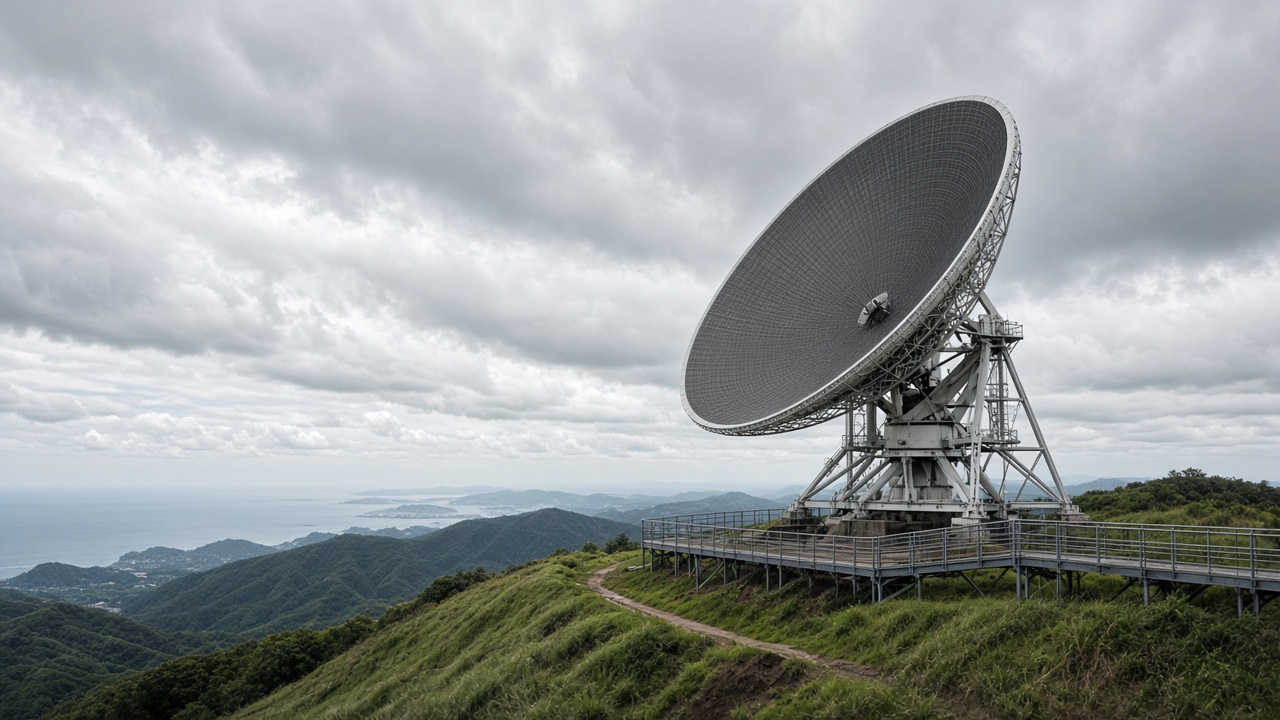
The Korea Astronomy and Space Science Institute began a post-Gaecheonjeol student access program at its Jeju radio telescope array, inviting high-school teams to collect pulsar timing samples under staff supervision. The outreach push aligns with ministry efforts to grow domestic talent in radio astronomy as Korea expands cooperation on very-long-baseline interferometry projects and prepares ground support for future lunar missions.
Program design
Participating schools from Jeju, Busan, and Gyeonggi rotate weeklong residencies at the site near Mt. Halla’s northern slopes, where low terrestrial interference supports centimeter-wave observations. Students learn calibration routines, safety protocols around high-gain feeds, and basic data reduction using open-source pipelines institute engineers maintain. Nights are reserved for live acquisitions when weather permits; cloudy holiday weather shifted some teams to archived data exercises instead.
KASI said the program is not a tourist visit—each team must submit a proposal outlining research questions, such as measuring dispersion measures for known pulsars or comparing signal noise before and after local wind events.
Science and infrastructure context
Korea’s radio astronomy network ties into East Asian VLBI arrays that image black hole shadows and track spacecraft trajectories. Jeju’s dishes complement a mainland site in Yeoju and overseas partners in Japan and China. Institute leaders argue hands-on access demystifies careers beyond K-pop and gaming, sectors that dominate youth aspirations in surveys.
Dark-sky advocates on Jeju support the program but want lighting ordinances enforced near the array; resort developments along the coast can raise background noise if spillover is not controlled.
Education policy link
The Ministry of Science and ICT funded bus scholarships so inland schools without astronomy clubs could participate. Teachers receive stipends for curriculum integration—linking electromagnetic spectrum lessons to real antenna plots. Some parents worried about overnight stays during typhoon season; KASI pointed to hardened dormitories built after a 2018 typhoon damaged a secondary shed.
University admissions offices increasingly recognize structured STEM portfolios; institute certificates may bolster applications though they are not official Olympic-style medals.
Future expansion
If autumn sessions stay incident-free, KASI will add winter radio-sun observations for teams studying space-weather impacts on Korean power grids—a topical hook after prior geomagnetic storm warnings. Commercial satellite operators also train technicians at Jeju, creating potential mentorship crossovers institute staff welcome.
For students stepping onto the catwalk beneath a dish taller than their school gym, the takeaway is tactile: Korea’s space science is not only launchpads on television, but also clicking data files after a cold night on a volcanic island.