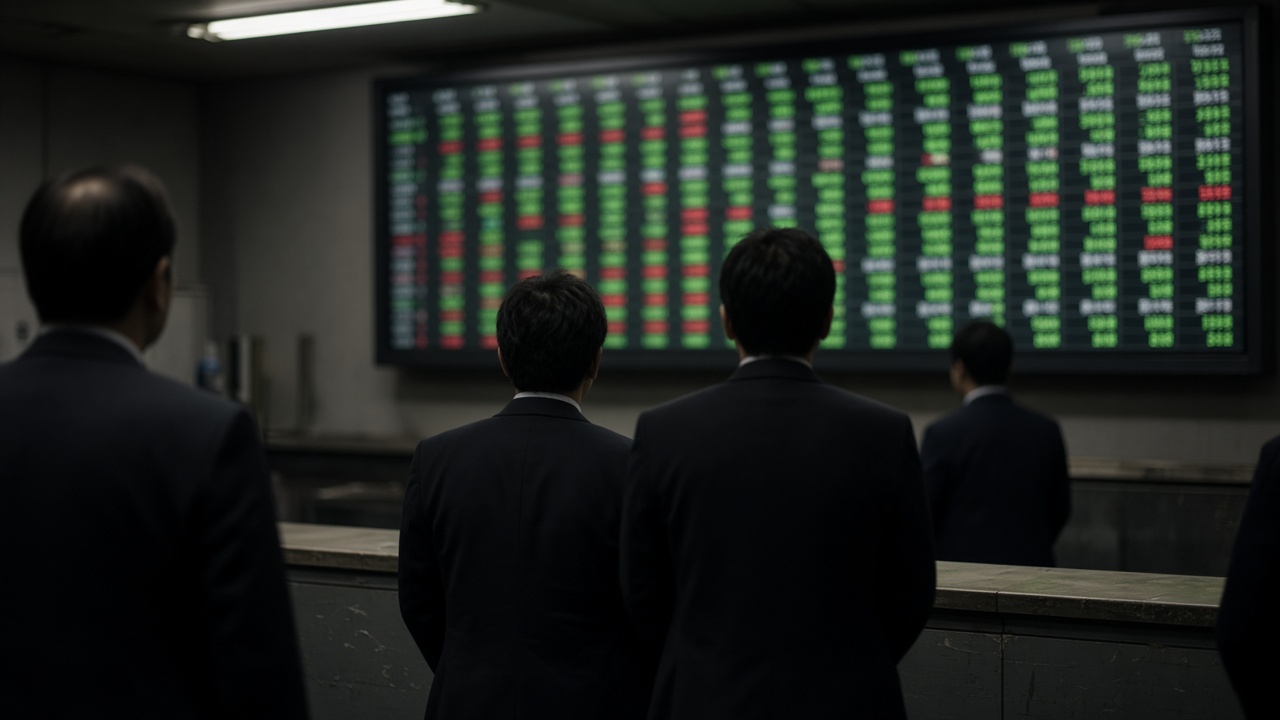
Tokyo’s cash market reopened Monday with portfolio managers treating 70,000 on the Nikkei 225 as the line to watch after Osaka Exchange night-session futures touched that handle following a softer-than-expected U.S. September payrolls report.
The index had closed at 68,309 on Friday, down 647 points, as investors booked profits in exporters and technology names ahead of the American jobs data. The payrolls release showed slower hiring and a higher unemployment rate, which traders interpreted as reducing the odds of an imminent Federal Reserve rate increase and, by extension, keeping the dollar strong against the yen.
Yen weakness still drives the tape
A dollar near 158 yen remains the dominant macro input for Japan’s export-heavy index. The Bank of Japan lifted its policy rate to 1.25 percent in September, yet summary-of-opinions released last week led markets to scale back bets on another hike as soon as the October 29–30 meeting. MUFG Research noted that Japanese rate futures priced only about five basis points of tightening for October, down from roughly ten at the start of the week.
That dynamic helps equities in the short run—overseas earnings translate into more yen—but it also keeps import costs elevated for energy and food, feeding political pressure for consumption-tax relief in the Diet session that began Monday.
Sector rotation into the new week
Friday’s pullback hit semiconductor equipment and trading houses that had led the autumn rally. Banks, which benefit from a steeper domestic yield curve, outperformed on the final session of last week. Monday’s opening basket will show whether investors return to AI-linked hardware or broaden into domestic demand names that could gain if food-tax cuts pass.
Risks on the calendar
Beyond U.S. data, Tokyo traders are marking the Bank of Japan meeting at month-end, Tokyo inflation readings that have stayed above the 2 percent target, and any finance-ministry rhetoric on yen intervention if the dollar approaches 160. Technical analysts cited in market newsletters warn that momentum oscillators on the four-hour Nikkei chart have reached stretched levels, raising the probability of a brief shakeout even if the medium-term trend remains up.
For now, the first hour of Monday trading will answer whether overseas funds treat the payrolls surprise as a green light to add Japan exposure or as a reason to wait for a cheaper entry after a 12 percent rally since summer.