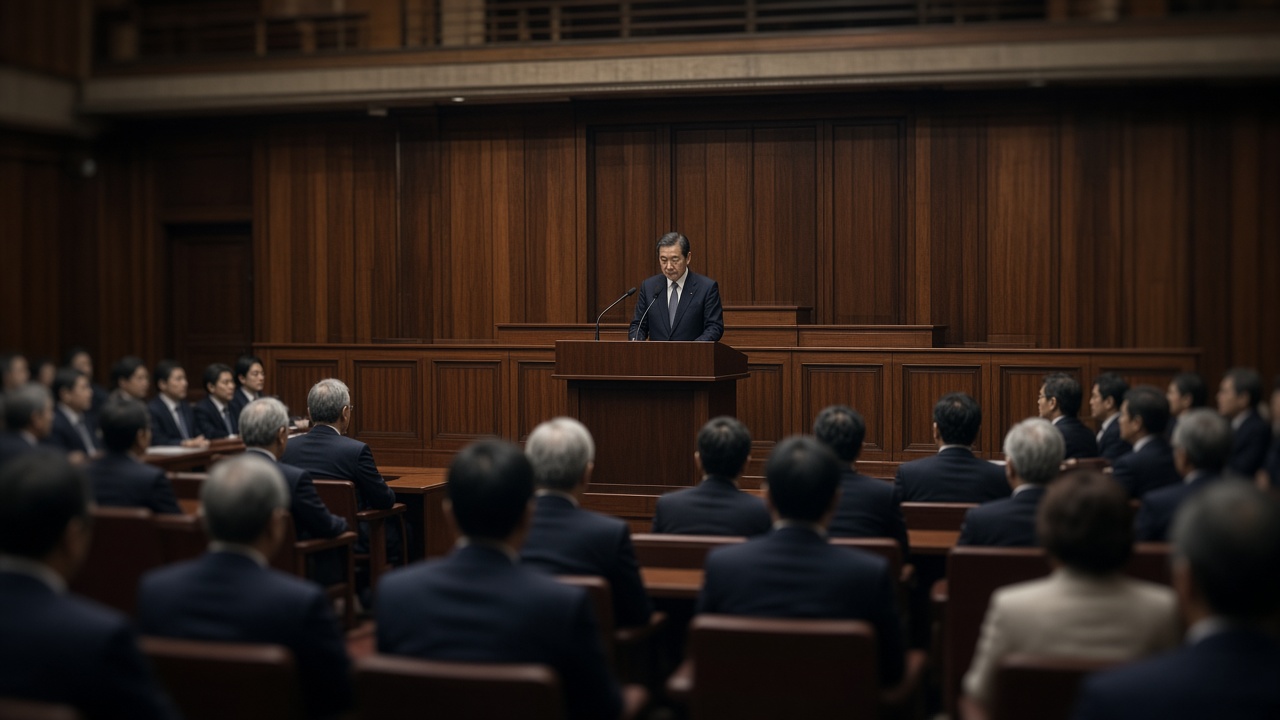
Japanese Prime Minister Sanae Takaichi opened an extraordinary Diet session Monday with a 30-minute policy address that sought a calmer relationship with China while refusing to soften Tokyo’s positions on Taiwan, maritime disputes, and human rights. The speech kicks off a 69-day legislative calendar in which her government must pass a supplementary budget and prepare revisions to Japan’s three core security documents.
China: neighbor and rival
Takaichi called China an “important neighbor” and said Tokyo would pursue a “constructive and stable relationship” built on dialogue. The line follows a year of strained ties after she suggested in late 2025 that Japan could intervene militarily if a Chinese attack on Taiwan created a “survival-threatening situation” for Japan—a break with decades of strategic ambiguity that drew sharp protests from Beijing.
China’s top diplomat said last week that relations were “waiting to be normalized again” when he met a former Japanese foreign minister leading a business delegation in Beijing. Takaichi is expected to travel to China in November for the Asia-Pacific Economic Cooperation summit, and Monday’s speech read as an attempt to keep that channel open without retreating on security policy.
Red lines in the speech
At the same time, Takaichi said Japan would “continue to assert Japan’s position” on Chinese military activity around the country, coercion in the East and South China seas, the safety of Japanese nationals in China, and human rights. She pledged to “strongly demand responsible action” from Beijing on each front. Channel News Asia noted that rare-earth export curbs imposed after her Taiwan comments have squeezed Japanese manufacturers, adding economic pressure to the diplomatic repair effort.
Domestic agenda behind the diplomacy
The policy speech also framed Takaichi’s economic pitch: she cited Japan’s slide to 12th place on the 2026 Global Innovation Index, behind South Korea, Singapore, and China, and promised a “Growth Strategy Implementation Plan” by year-end. Inflation and rising debt service costs remain politically sensitive a year into her premiership, when her approval ratings have stayed unusually high.
On security, she said the cabinet would update the National Security Strategy, the National Defense Strategy, and the defense buildup program before the session ends. Opposition parties, including Nippon Ishin no Kai, are pushing parallel debates on lower-house seat cuts and how to cover revenue lost if a planned food-tax change proceeds in April 2027.
What lawmakers do next
Committee hearings begin this week on the supplementary budget and on Ministry of Finance requests tied to the food-tax shift. For foreign-policy watchers, the test is whether Takaichi’s softer rhetoric translates into ministerial visits or merely buys time until the APEC meeting. Either way, Monday’s address made clear that Taiwan and maritime deterrence remain non-negotiable lines for her coalition—even as she quotes classical Chinese literature to argue that “those with determination will succeed.”