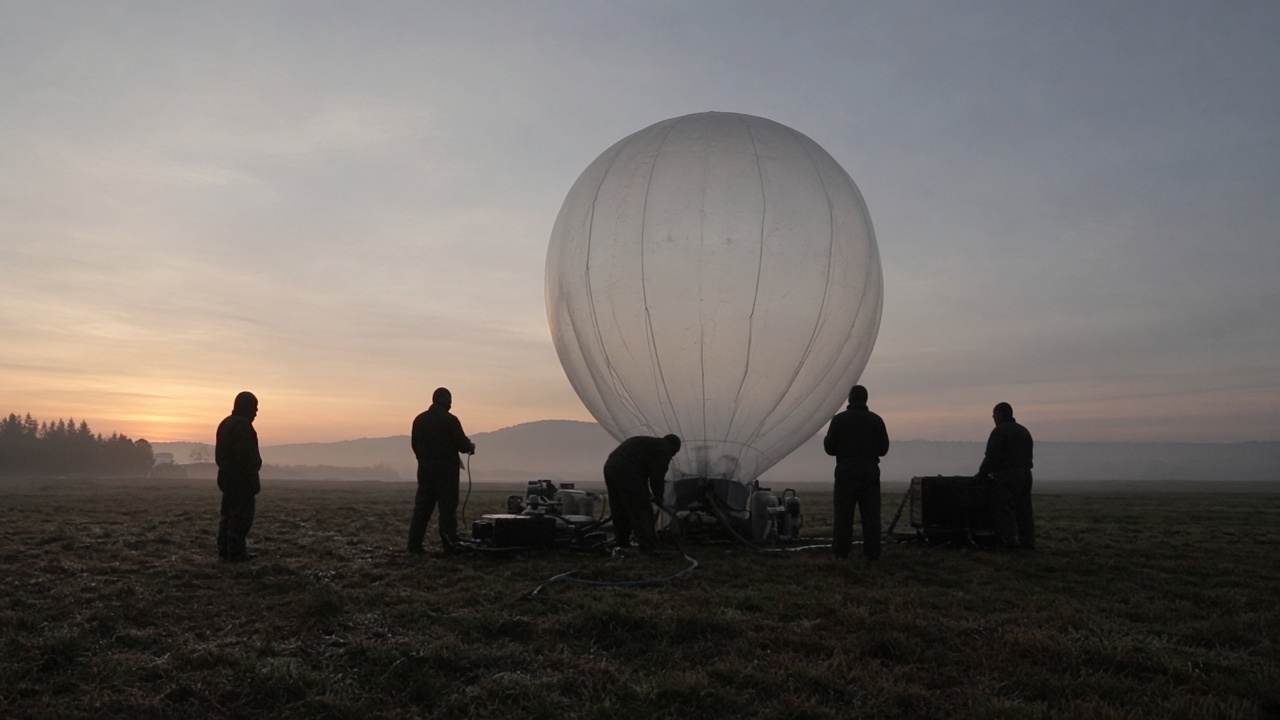
Scientists at the Tata Institute of Fundamental Research recovered stratospheric ozone samples Sunday from a balloon launched near Hyderabad, completing the final permitted flight before winter air-traffic curbs pause high-altitude research until March. Payload instruments collected air canisters between 18 and 28 kilometres altitude, where ozone concentrations shape ultraviolet exposure over the Deccan plateau during the post-monsoon transition.
Why the winter ban exists
Aviation regulators restrict unmanned balloon overflights during fog and festival travel peaks when instrument packages might drift into commercial corridors. TIFR’s balloon facility coordinates with the India Meteorological Department and defence airspace cells to file daily trajectories; missed launch windows from monsoon winds pushed this campaign to the last clear weekend before the ban.
Ozone in the lower stratosphere acts as a shield; tracking seasonal dips helps climate models separate industrial emissions from natural variability. TIFR teams compare Hyderabad samples with prior launches from Maharashtra to see whether urban pollution plumes reach the stratosphere faster after heat-wave summers.
What happens next
Laboratory mass spectrometry will quantify halogen compounds tied to legacy refrigerants still leaking from cold chains. Ministry of Earth Sciences grants fund the work under atmospheric chemistry programmes that also support ISRO satellite validation—balloon point measurements calibrate remote sensing when monsoon clouds block satellite views.
Graduate students archived frozen canisters in Hyderabad freezers for shipment to Mumbai analysis labs; results may appear in peer-reviewed journals before the March flight window reopens, giving policymakers another data point on whether India’s ozone recovery tracks global trends.
Instruments and safety drills
The payload carried electrochemical ozone sondes and cryogenic samplers insulated against minus-sixty-degree stratospheric temperatures. Recovery teams tracked the balloon with GPS transponders until parachute descent over a designated fall zone cleared of villages; farmers received SMS alerts the night before launches, a courtesy TIFR adopted after a 2019 landing near a school playground.
Hyderabad’s launch field sits inland enough to avoid cyclone tracks but still contends with post-monsoon wind shear; technicians aborted two prior attempts in September when jet streams shifted mid-inflation. Winter bans give analysts time to process data without competing for airspace with Republic Day flypasts and domestic cricket charter traffic that spikes in January.
Ministry officials said balloon campaigns complement ISRO’s upcoming atmospheric satellites by validating ozone trends at latitudes satellites skim quickly; policymakers use the combined record in climate negotiations even though India’s per-capita emissions remain far below industrialised averages.
Training pipeline
Doctoral candidates from Tata Institute of Fundamental Research and University of Hyderabad assisted the launch, logging wind profiles that will train next year’s crew before the March window reopens. Undergraduate outreach sessions scheduled for November will use video from Sunday’s recovery to explain stratospheric chemistry without sending students to restricted launch fields during exam season.