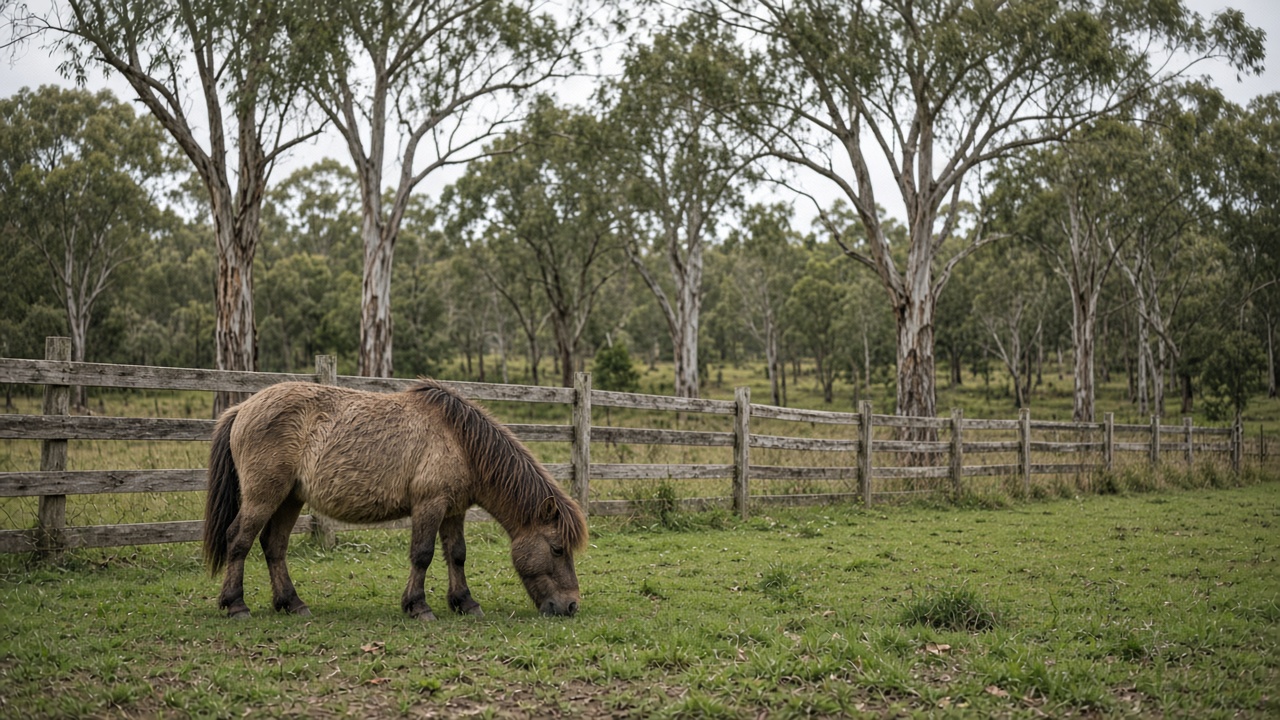
CSIRO’s Australian Centre for Disease Preparedness confirmed a third Hendra virus genotype in a Rockhampton pony paddock sample collected after a non-fatal equine illness, extending a surveillance net that already tracks HeV-g1 in Queensland and HeV-g2 as far south as Newcastle.
Sample and sequencing
Biosecurity officers isolated viral RNA from nasal swabs taken under quarantine in late September when a vaccinated pony showed fever and ataxia without human exposure. Whole-genome sequencing placed the pathogen on a distinct branch from both HeV-g1 and the HeV-g2 genotype identified in flying foxes across Victoria and Western Australia, though polymerase gene distances remain within the Henipavirus species boundary defined by international virology committees.
Implications for horse owners
CSIRO reiterated that existing Hendra vaccines are expected to cross-protect because surface glycoproteins are conserved, but chief veterinary officers will update property movement conditions in central Queensland until flying-fox roost surveys finish. Horse owners near Rockhampton saw similar protocols after 2012 incidents that environmental modelling linked to winter temperature bands extending viral survival in paddock runoff.
The detection does not change human treatment pathways—only seven Hendra cases in people have been recorded nationally—but it does pressure state governments to fund more frequent bat sampling. Nature Microbiology research published this year argued low viral loads in many positive bats require larger longitudinal studies to capture clade diversity.
Policy response
Queensland’s chief biosecurity officer said paddock owners within 20 kilometres of the property will receive booster vaccination reminders and fruit-tree netting advice to keep flying foxes from horse troughs. Export yards are not affected; the case is localised and no slaughter restrictions apply.
For scientists, the Rockhampton genotype adds another lineage to phylogenetic maps used to model which bat species carry which clades. Grey-headed and little red flying foxes both test positive in different regions, complicating one-size roost culling proposals.
Pet owners should monitor government alerts rather than social media speculation: Hendra remains bat-borne first, horse-second, human-third, and diagnosis requires accredited veterinary laboratories, not field kits.
Veterinary authorities urged owners to keep feed bins covered and remove fruit from paddocks frequented by bats, repeating biosecurity messaging that proved effective after earlier central Queensland clusters. Vaccination clinics in Yeppoon and Rockhampton added weekend hours to clear backlogs before the school holiday travel period.
CSIRO will deposit sequence reads in an open-access repository after peer review, allowing international henipavirus researchers to compare the Rockhampton clade with bat isolates from Indonesia and the Philippines.