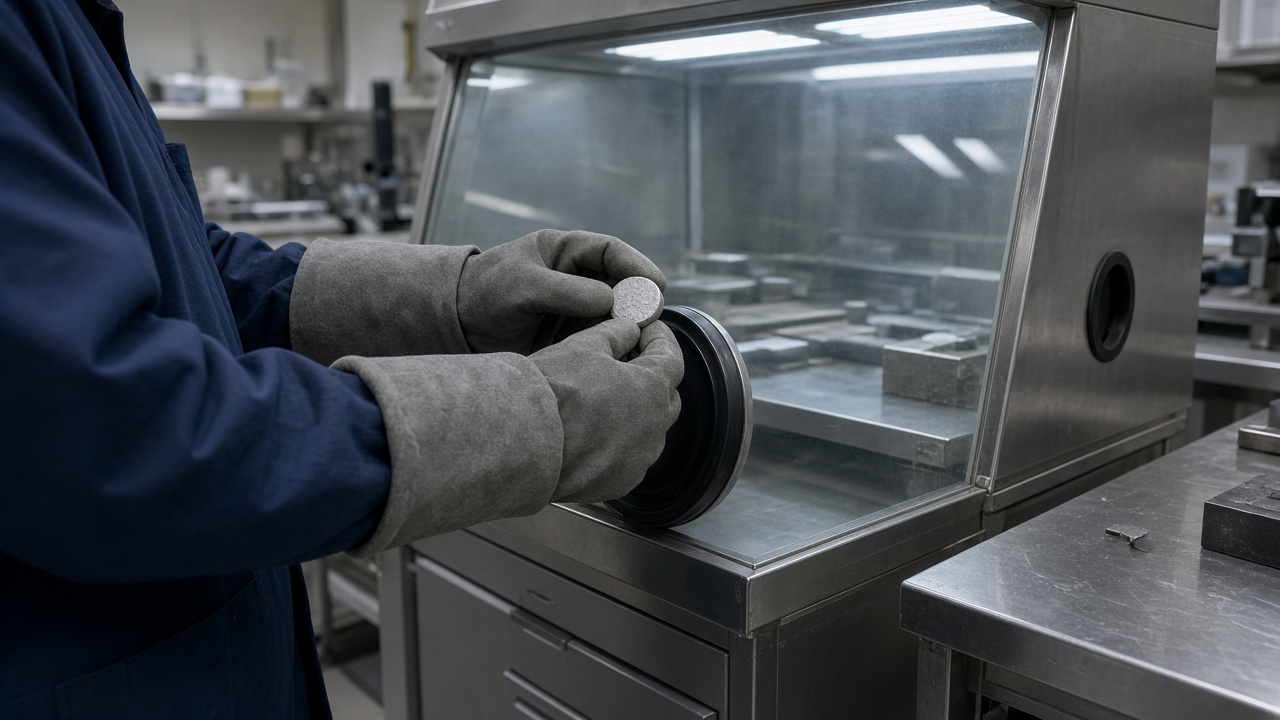
KAIST researchers published stack-level conductivity and thermal stability numbers for a sulfide-based solid electrolyte days before Seoul's InterBattery expo opens, giving Korean cell manufacturers a domestic benchmark to compare against marketing decks at the Gangnam convention hall, according to the journal notice and expo floor plan InfoHandle reviewed.
What the paper claims
The team reported room-temperature ionic conductivity above commercial oxide benchmarks in coin-cell tests, with exotherm onset temperatures higher than liquid-electrolyte controls in nail-penetration calorimetry. They stress lab scale: no automotive pack validation yet. Still, vendors hunting government battery subsidies need third-party metrics auditors recognize.
Expo context
InterBattery exhibitors will show semi-solid and solid-state roadmaps from LG Energy Solution, Samsung SDI, and dozens of startups. Jaemin Yoon's desk watches whether KAIST's numbers appear in ministry slides during audit week—science funding is on the table alongside shipyard testimony.
Limits
Published metrics do not guarantee mass production. Supply chains for sulfide powders remain concentrated in Japan and China. Korean policymakers want domestic precursor plants; this paper does not solve mining.
The story is a ruler, not a product launch—useful for separating expo hype from reproducible lab results.
Industry reactions
Two Seoul startups said they will cite the KAIST metrics in investor meetings at InterBattery, though both cautioned that manufacturing yield remains below lab cells. Ministry officials may reference the paper when defending battery R&D grants during audit questions.
Safety testing
Fire agencies asked for nail-penetration protocols used in the study; KAIST posted supplementary methods online for third-party replication.
How auditors may use the data
Science ministry briefers have asked national labs to show reproducible metrics before InterBattery week, and KAIST's supplementary dataset gives committee staff a neutral reference when exhibitors quote higher conductivities on slide decks. The team posted raw impedance spectra and calorimetry traces online so LG Energy Solution and Samsung SDI engineers can compare without signing nondisclosure agreements. That openness matters because last year's expo featured conflicting solid-state timelines that later slipped.
Supply chain and policy stakes
Korean battery makers still import sulfide precursors from Japanese and Chinese suppliers, and trade ministry officials want domestic precursor plants online before the next subsidy review. KAIST's paper does not solve sourcing, but it gives lawmakers a domestic benchmark when vendors ask for tax credits tied to "Korean solid electrolyte" branding. Environmental groups filed written questions about sulfide handling at pilot lines; the authors said their campus lab uses sealed glove boxes with municipal waste contracts.
What comes after InterBattery
Conference organizers expect ministry roundtables on Thursday where startups pitch joint ventures with tier-one cell makers. If KAIST's nail-penetration curves hold up in third-party replication, they could appear in those slides; if not, the paper still forces exhibitors to separate marketing from peer-reviewed numbers. For Seoul readers, the expo is as much about audit-season accountability as it is about product launches.