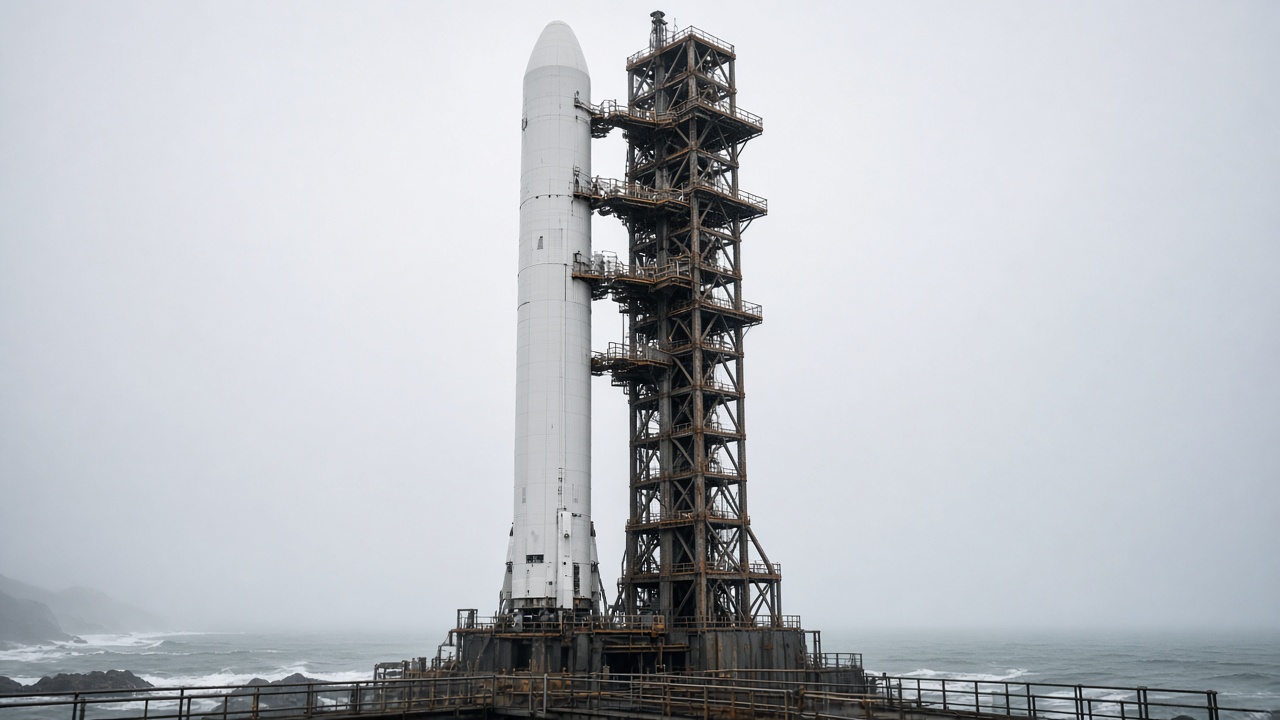
Indian Space Research Organisation teams finished stacking the first stage of a GSLV-Mk2 rocket at the Satish Dhawan Space Centre in Sriharikota, moving the NVS-03 navigation satellite closer to a launch window between 15 and 20 October, multiple officials told the Times of India.
Why NVS-03 matters
NVS-03 is the next spacecraft in India’s second-generation NavIC constellation, meant to provide regional positioning and timing services independent of foreign global navigation systems. The satellite had awaited government clearance at the spaceport alongside Gisat-1A before approvals arrived in September, allowing integration to proceed without storage delays.
NavIC accuracy suffered after earlier spacecraft anomalies; restoring redundancy is a strategic priority for defence and civilian users relying on indigenous signals.
Campaign timeline
Launch campaign work began 14 September, with engineers telling reporters they aimed to complete integration within a month. One source said 15 October remained the internal target, while another cautioned that range weather and vehicle checks could slip the date toward 20 October. ISRO had not posted a formal launch notice on its public missions page as of Tuesday.
Vehicle and payload
The mission will fly on GSLV-F18 carrying an approximately 2,232-kilogram spacecraft built by UR Rao Satellite Centre. NVS-02 launched in January 2025 into a transfer orbit that required extended orbit-raising; NVS-03 is intended to expand coverage toward 129.55 degrees east longitude once operational.
Parallel programmes
ISRO’s first successful 2026 mission was EOS-05 on 4 September aboard GSLV-F17. Officials in Bengaluru said preparations continue on additional Earth-observation and communication satellites, but NavIC recovery is the near-term headline for national security planners.
Industry impact
Chip and smartphone makers embed NavIC receivers in domestic market variants; insurers and logistics firms use regional signals for fleet tracking when GPS jamming concerns rise. A successful NVS-03 insertion would stabilise service before commercial receivers refresh hardware for festival-quarter sales.
Risks on the pad
GSLV flights carry higher failure sensitivity than PSLV workhorses; past cryogenic-stage issues kept programme managers cautious. Weather at Sriharikota can delay countdowns during northeast monsoon remnants. ISRO typically announces a public launch window only after mandatory readiness reviews.
What observers should watch
Stacking the first stage signals propellant loading rehearsals come next, followed by satellite encapsulation. If NVS-03 lifts off in mid-October, India will have two fresh navigation assets in orbit within a year—an important milestone for a constellation that cannot afford another gap.