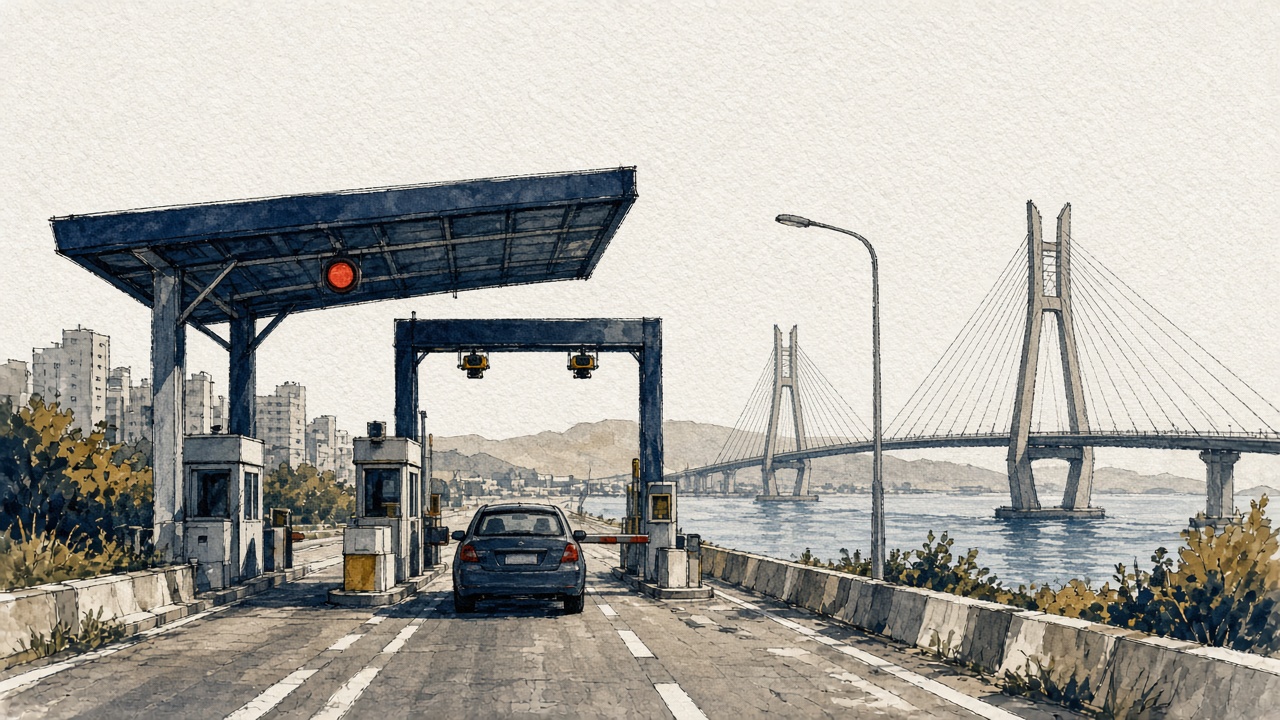
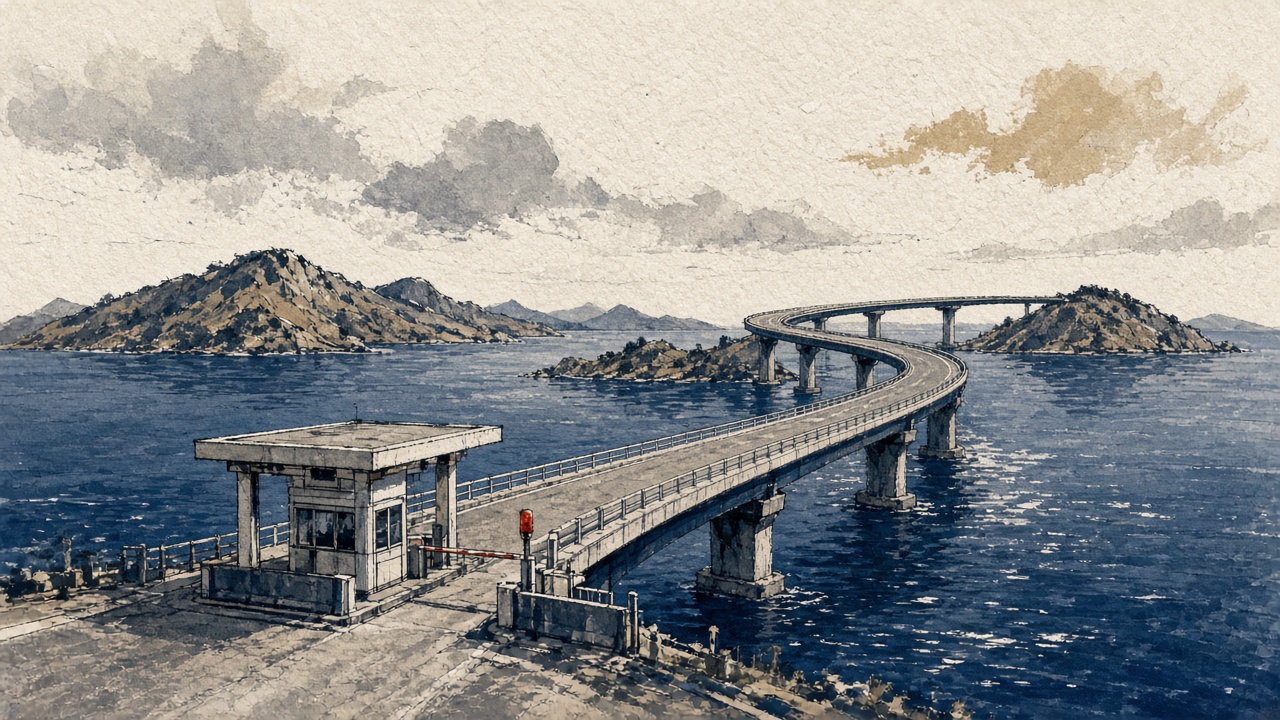
On the Setouchi Shimanami Kaido, the expressway that hops island to island between Hiroshima and Ehime prefectures, a standard car pays ¥2,950 on a weekday if the trip is billed through ETC. Roll up to the same toll gate without an electronic tag and the published cash fare for the full Onomichi–Imabari run is ¥4,920. Cyclists can cross the inland sea on ferries or the free Onomichi bridge ramp, but anyone who wants the elevated road with its sea views pays a four-digit yen charge on a corridor that has been open for decades.
That price feels like a user fee for today's pavement: maintenance, lighting, snow crews on northern routes, the whole visible apparatus of keeping a highway alive. The question is why the number is still sized for a balance sheet most drivers never see, long after the opening ceremonies and ribbon cuttings are over.
A toll that outlasts the bridge ribbon
JB Honshi, the operator of the Honshu–Shikoku bridge expressways, publishes those fares in a simple table. A light car pays ¥2,310 on ETC holidays, ¥2,950 on ETC weekdays, and ¥4,920 in cash without ETC for the full Shimanami crossing between Onomichi and Imabari. The road is one of the most photographed drives in Japan, yet the tariff is not priced like a municipal bridge toll that only has to cover paint and potholes.
Drivers who use the network regularly learn the ETC discounts by heart. The holiday rate of ¥2,310 exists because JB Honshi, like the NEXCO companies on Honshu, layers time-of-week discounts on top of a base distance table that was never designed to mirror fuel costs or congestion alone. What they are not handed at the gate is a receipt that says how much of the charge is rent on capital someone else still owns.
The Shimanami route is only one leg of the Honshu–Shikoku system. JB Honshi also operates the Kobe–Awaji–Naruto, Seto Central, and western Seto routes named on its guidance pages. All are legally expressways with the same national financing DNA even when the scenery changes from suspension bridges to inland hills.
What drivers think they are buying
The intuitive story is operating cost. Expressways must be swept, inspected, repaired after earthquakes, and policed. Traffic has recovered since the pandemic dip; East Nippon Expressway Company (NEXCO East) reported about 2.96 million vehicle passages per day in the fiscal year that ended in March 2024, up 1.9 percent from the year before. More wheels ought to mean more cash for asphalt.
But the same company's accounts show how thin the operating cushion is on the core road business. Highway operating revenue was ¥1,450 billion that year while highway operating expenses were ¥1,439 billion, leaving ¥11 billion in operating profit on the expressway segment itself. Service-area sales and parking add fatter margins elsewhere in the group, which is why a rest-stop coffee can subsidize the optics of the road division without changing how the toll itself is structured.
Management costs still matter. NEXCO East spent ¥2,465 billion on expressway administration and upkeep in the same year, a figure that includes everything from winter patrols to the seismic retrofit program for local bridges that cross over the highway. Those are real bills paid in cash. They are simply not the first claim on your ¥2,950. Lease fees are booked ahead of them in the income statement's hierarchy.
The operator is not sitting on a vast surplus from tolls once the contractual payments leave the building. The heavy lifting happens before "maintenance" in the everyday sense gets its line item.
The receipt is mostly rent
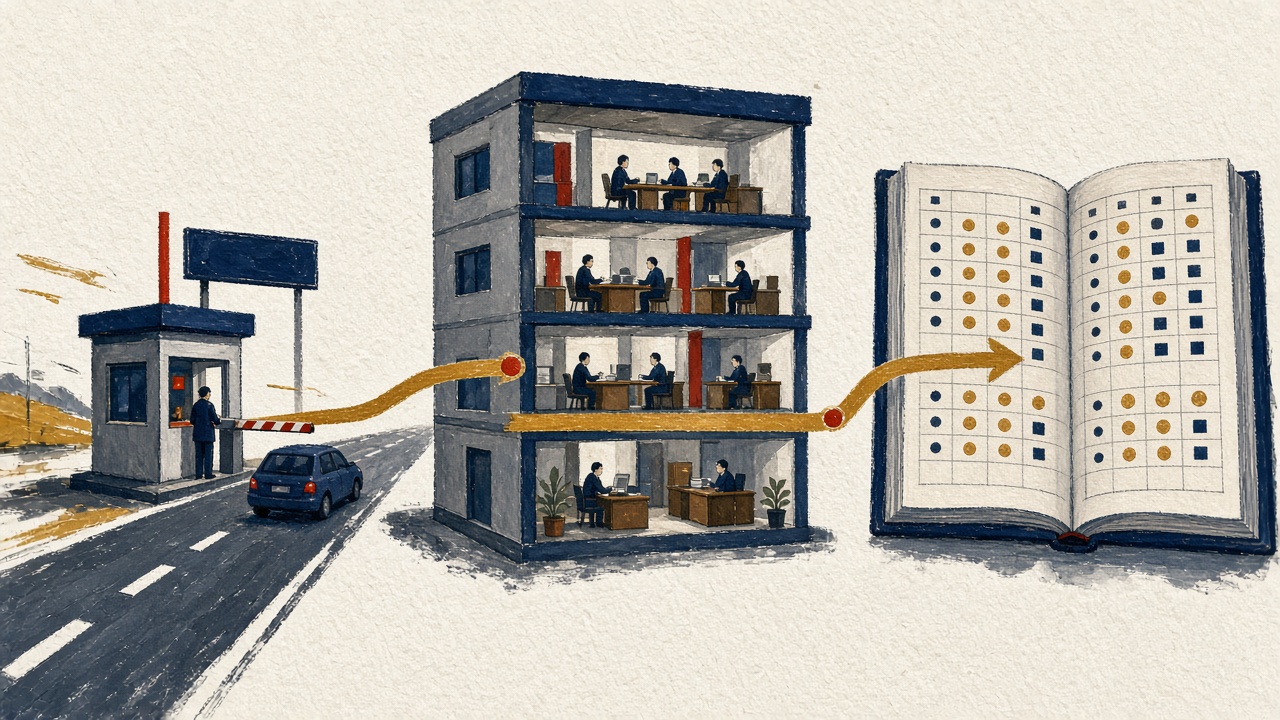
Pull the revenue table apart and the dominant pair of numbers is toll income versus road-asset lease fees. NEXCO East recorded ¥8,164 billion in toll revenue in fiscal 2023. In the same year it paid ¥5,708 billion in road-asset lease fees, the charge for using the pavement, tunnels, and bridges that legally belong to Japan's highway debt agency.
That lease payment is not a secret surcharge hidden in a footnote. The company's settlement release explains that when actual toll revenue moves above or below the planned revenue baked into its agreement with the Japan Expressway Holding and Debt Repayment Agency (JEHDRA), the lease fee is adjusted up or down. In fiscal 2023, traffic beat plan enough that NEXCO East added ¥1,042 billion to the year's lease-fee total relative to the baseline schedule.
Good year for drivers, in one sense: more trips. Good year for bondholders, in another: the operator sends the upside to the agency that exists to retire debt. The adjustment is not a penalty for profitability; it is the way the privatization contracts keep the debt agency's cash flow tied to the same variable (vehicle kilometers) that politicians promised would fund the network when the Japan Highway Public Corporation began borrowing against future tolls in the postwar decades.
Compare the two numbers side by side and the toll looks less like a price for today's trip than a tariff on a leased asset. Toll revenue and lease fees move together because the contracts were written that way on purpose.
Who owns the pavement
The 2005 privatization of Japan's highway public corporations is often described as putting roads in company hands. Operationally, yes: six expressway firms run lanes, plazas, and service areas. Legally, the asset base still flows through JEHDRA, which holds road property and lends it to the operators while collecting fees designed to repay inherited and newly transferred debt.
料金収入の実績が、機構と高速道路会社(以下「会社」)との協定に定める計画収入の一定割合を超えて変動する際には、一定割合を超える部分について会社から機構に支払う道路資産賃借料を加減算する仕組みとなっております。
When a new lane opens, the accounting can look circular. Completed road sections are transferred to JEHDRA as "road-asset completion value," and the construction cost shows up on both sides of the operator's books in ways that net out of profit but do not disappear from the national debt ledger. NEXCO East's FY2023 release lists examples (smart interchanges on the Tōhoku and Kan-etsu corridors, four-laning on the Sendai southern road) that raised completion values even as completion volumes fell year on year because fewer large projects reached the handover stage.
The Shimanami link is only one dramatic example; the same architecture covers the Tōhoku, Tōmei, and every other intercity ribbon in the NEXCO map. JB Honshi sits in the same ecosystem: its plazas collect the fare, but the long-distance debt logic was national long before the island bridges became a tourism brand.
機構は、法令により、道路関係四公団の民営化(平成17年10月)から60年以内に、高速道路会社から徴収する貸付料により、公団から承継した債務(約40兆円)及び会社から新たに引き受けた債務を完済することとされています。
JEHDRA's public materials state the statutory mission plainly: within 60 years of the October 2005 privatization, loan fees collected from the expressway companies must extinguish roughly ¥40 trillion in inherited public-corporation debt plus additional debt the agency assumes when companies hand over newly finished assets. Toll plazas are the collection interface for that mandate.
Why the balance sheet is still enormous
Twenty years into the new structure, the stock is smaller but still measured in tens of trillions of yen, not billions. On 1 October 2005 the old public corporations split into six expressway companies plus JEHDRA, the vehicle created to own the pavement and swallow the loans. Investor materials put JEHDRA's opening balance at about ¥37.4 trillion; the agency's own summary of inherited liabilities rounds the public-corporation portion to about ¥40 trillion before counting new assumptions.
JEHDRA reported a financial-statement debt balance of ¥24,422.4 billion at the start of fiscal 2025 (April 2024). Repayment is real. Agency disclosures describe fiscal 2025 cash repayments of about ¥2,784.4 billion, but the same year also saw about ¥1,504.5 billion in new debt taken on from companies as projects matured. The chart is not a straight line down because finishing a road can add principal even as traffic pays interest on the old stock.
By the fiscal year that ended in March 2025, held debt in JEHDRA's basic financial statements stood near ¥25.1 trillion; a year later the financial-statement balance at March 2026 was about ¥23,784.8 billion after another repayment cycle. Progress, yes: about ¥13.0 trillion below the opening posture in the investor slide, but still the scale of a G7 country's annual government budget, not a rounding error.
The Ministry of Land, Infrastructure, Transport and Tourism's 2005 privatization framework even tied politics to the calendar: one slide in the reform package described dissolving the agency about 45 years after privatization once debt was gone and transferring expressways to public managers for toll-free operation. Debates about maintenance funding and regional gaps have complicated that promise, but the original design made clear that tolls were a multi-decade amortization plan, not a pay-as-you-go service charge.
Central Nippon Expressway shows the same rent logic outside the Tokyo orbit. In fiscal 2023 it booked ¥6,721 billion in toll revenue and ¥4,770 billion in road-asset lease fees. The Shimanami driver's ¥2,950 is a tiny visible slice of a national machine that still moves trillions of yen a year toward bondholders and agency accounts.
The counterexample that proves the rule
JEHDRA is quick to note when repayment runs ahead of the latest schedule. For fiscal 2025, repayment-plan debt at the start of fiscal 2026 totaled about ¥23,648.6 billion, roughly ¥2.2359 trillion below the plan that was in force. Loan-fee income of about ¥2,270.2 billion helped beat expectations. That is genuine fiscal progress, and it matters for anyone worried about Japan's long-term public liabilities.
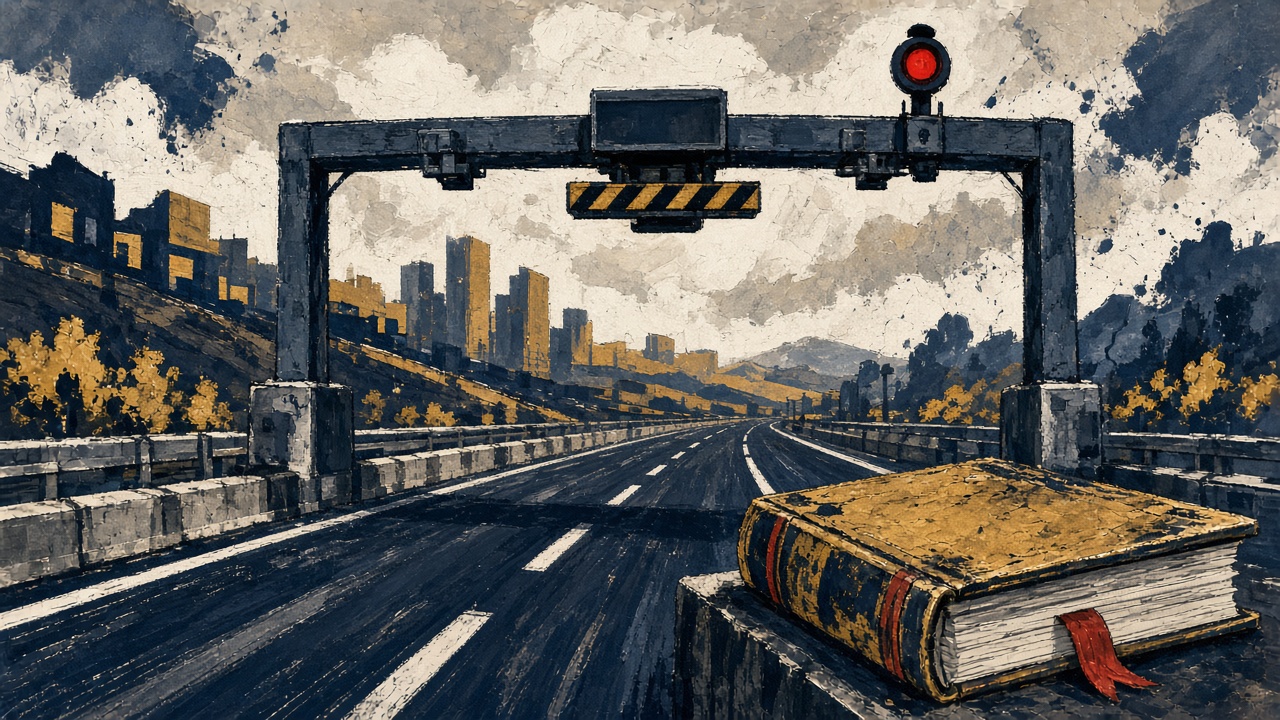
It does not change what a toll is. Ahead-of-plan amortization still means today's drivers prepay yesterday's construction loans. When traffic disappoints, the adjustment clause works the other way; when traffic surges, as it did for NEXCO East in 2023, lease fees rise. The fare is indexed to a debt schedule more than to the marginal cost of keeping a particular bridge painted.
The ¥2,950 charge on a clear day
Go back to the Shimanami on a clear autumn afternoon. The islands are green, the sea is blue, and the ETC screen flashes ¥2,950 for the full crossing. None of the digits on that display say "1970s," yet a large share of what you pay on every intercity expressway in Japan still traces to the borrowing binge that built the network and to the 2005 accounting move that placed those loans in JEHDRA's ledger while leaving the gates in NEXCO colors.
The road feels finished. The debt is not. Until the agency's balances reach zero under the law's 60-year horizon, a Japanese expressway toll remains what it has been since privatization: part user fee, part lease payment on a national mortgage, priced one island, one plaza, and one electronic beep at a time.