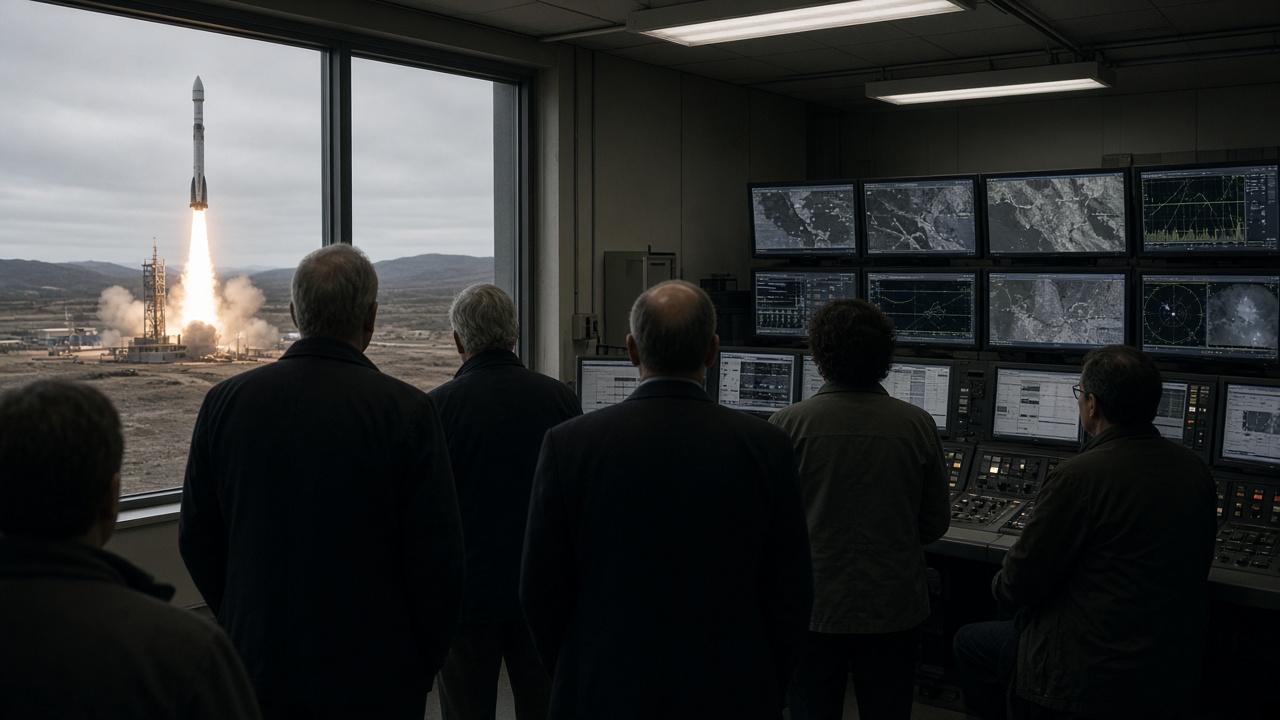
South Korea conducted its first test launch of a homegrown hypersonic glide vehicle on Thursday, with President Lee Jae Myung observing the event alongside the Agency for Defense Development and senior military leaders, Cheong Wa Dae said.
Authorities said the vehicle rode a booster to its planned altitude, separated, and completed a hypersonic glide before maneuvering vertically and horizontally to strike a designated target. The presidential office framed the weapon as a strategic asset that could change battlefield calculations on the peninsula.
How the test unfolded
The Korea Herald reported that Lee watched from a situation room with Defense Minister Kang Shin-chul, presidential chief of staff Kang Hoon-sik and ADD leadership. Seoul did not disclose the launch location, a standard practice for sensitive weapons trials.
Unlike conventional ballistic missiles that follow more predictable arcs, hypersonic glide vehicles can travel at extreme speeds while skimming lower altitudes and shifting course — traits that complicate early warning and interception. Thursday's flight was ADD's maiden indigenous demonstration of that class of weapon.
Lee's defense messaging
After the launch, Lee inspected the Hyunmoo-5 high-yield ballistic missile designed to penetrate hardened underground targets, linking the day's events to a broader push for indigenous strike options. "Our security must be secured through our own strength," he said, according to the presidential office account carried by domestic media.
Officials said the successful glide test advanced Seoul's ability to hold time-sensitive targets at risk, complementing existing cruise and ballistic inventories.
OPCON transfer and procurement
The test lands during parliamentary audits in which the Joint Chiefs of Staff highlighted early deployment of high-yield missiles and medium-altitude reconnaissance drones as prerequisites for a South Korean-led combined defense posture. Wartime operational control remains with the U.S.-led Combined Forces Command, and Lee has pledged to complete transfer conditions before his term ends in 2030.
Peninsula tensions after DMZ mines
Thursday's display also followed Seoul's conclusion that North Korean antipersonnel mines planted south of the Military Demarcation Line caused Sept. 21 blasts that wounded three South Korean troops. Defense Minister Kang said the military was responding firmly to North Korean activity near the boundary, while JCS Chairman Gen. Jin Young-sung told lawmakers Seoul was weighing physical and nonphysical measures without elaborating.
Analysts in Seoul will parse whether the hypersonic program accelerates after this maiden shot, and how Pyongyang's propaganda outlets characterize another indigenous precision system unveiled under Lee.