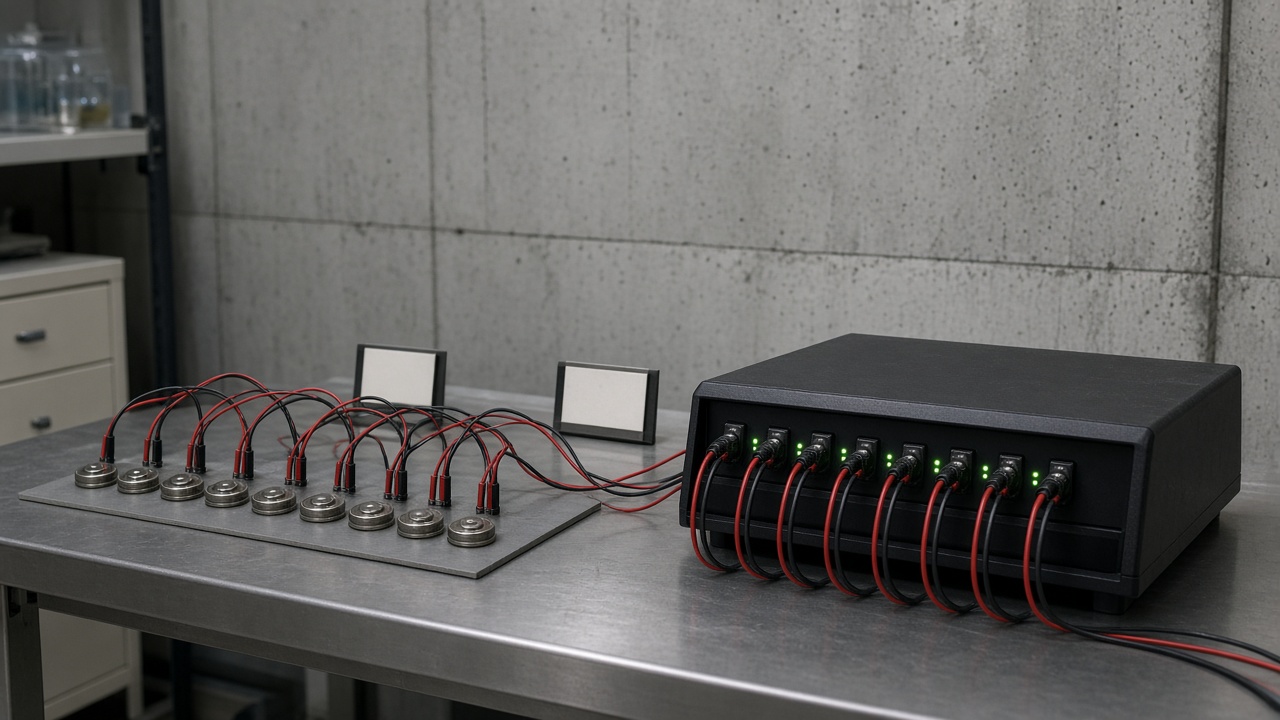
Scientists at the Bhabha Atomic Research Centre used neutron diffraction on the Dhruva research reactor to map how lithium-sulfur cathodes degrade during fast charging, publishing interim results Wednesday in a departmental bulletin. The work targets defence portable power packs and grid-scale prototypes where energy density matters more than the cobalt-heavy chemistries dominating consumer electronics.
Why neutrons help
X-ray tools struggle to see light elements such as lithium and sulfur inside sealed cells. Dhruva’s thermal neutron beam lets researchers track phase changes in sulfur species without opening pouches, reducing contamination risk. The team cycled coin cells at rates comparable to electric three-wheeler duty cycles, then compared lattice strains with cells that used modified electrolyte additives.
Early data show polysulfide shuttling—the process that dissolves active material—slows when a boron-nitride coating is applied to the cathode host. Cycle life improved from roughly 120 to 190 full-depth cycles in lab conditions, still short of commercial lithium-ion benchmarks but a step toward viable sulfur chemistries.
Applications India cares about
Defence Research and Development Organisation labs have funded sulfur research because lighter packs extend unmanned aerial vehicle endurance. Grid-storage pilots in Ladakh also want chemistries that tolerate temperature swings without nickel supply risk.
Path to scale
BARC said it will license the coating process to battery startups through the Technology Transfer and Collaboration Division, with safety reviews for any pilot using imported sulfur precursors. Commercialisation remains years away: pouch-cell formats and manufacturing defects still dominate field failures more than cathode chemistry alone.
Still, the Dhruva measurements give Indian labs a non-destructive diagnostics tool that previously required sending cells overseas. In a market racing toward electric buses and stationary storage, that local capability matters as much as the headline cycle-life number.
Collaboration pipeline
IIT Bombay electrochemists will receive irradiated cell samples under a memorandum with BARC to validate whether coating thickness scales from coin cells to pouch formats. Automotive OEMs watching the work want crash-test data before considering sulfur packs in passenger vehicles, given gas evolution risks if seals fail.
Neutron beam time on Dhruva is allocated by committee; battery projects compete with materials science for reactor slots. BARC’s bulletin said it will open two additional beam days per quarter if industry co-funding covers technician overtime.
Safety and regulation
Atomic Energy Regulatory Board reviewers attended beam experiments to ensure irradiated samples remain sealed when transported to partner labs. Any commercial pilot using sulfur cathodes will need separate hazardous-material clearances because dissolved polysulfides are corrosive if cells vent.
Startups that license the coating must train factory staff on dry-room protocols; moisture ruins sulfur cathodes faster than nickel-manganese-cobalt chemistries. BARC’s technology transfer office said it will bundle training modules with licence fees.