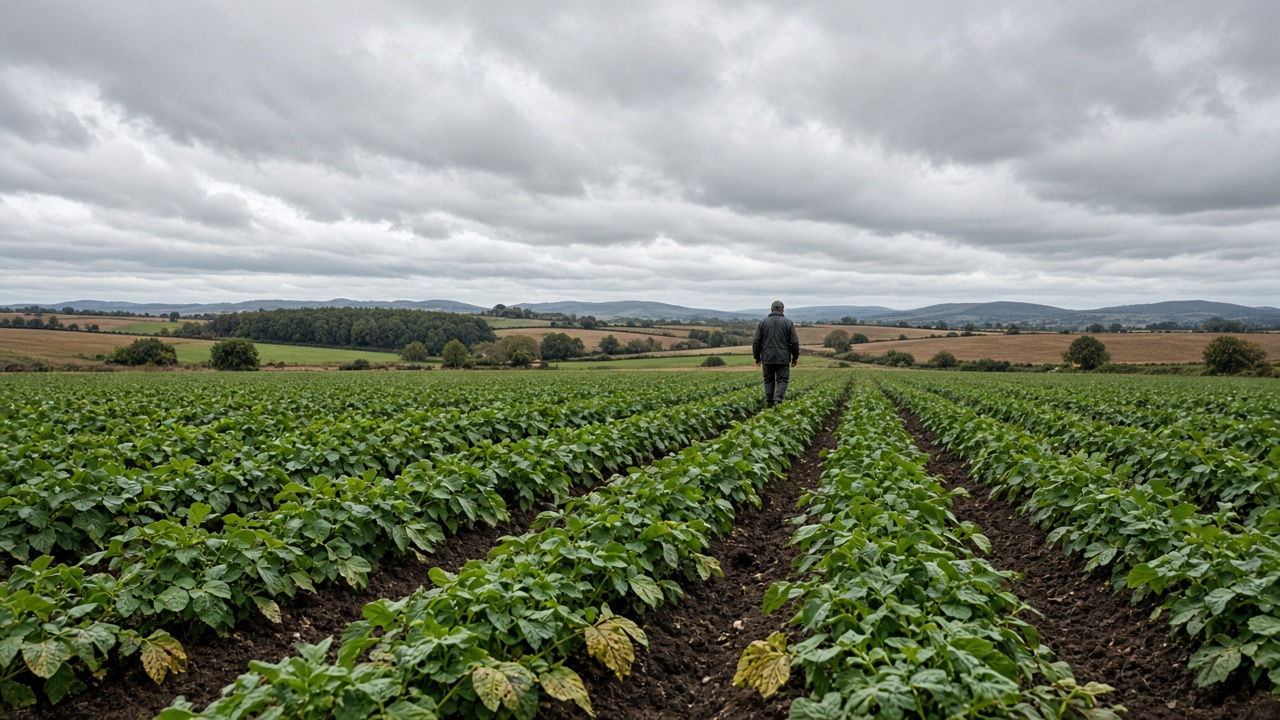
Keele University will coordinate a four-year research programme to track bacterial crop diseases edging toward the United Kingdom from mainland Europe, part of a £54 million UK Research and Innovation package aimed at food security and biosecurity threats.
Professor James Bell’s consortium includes the Animal and Plant Health Agency, Fera Science, Rothamsted Research and universities in Exeter, Gloucestershire, Warwick and York. The group will model how pathogens affecting potatoes and other staples might establish here if climate and trade patterns shift.
Why bacteria matter now
Fungal threats such as ash dieback dominate public debate, yet bacterial wilts and blights can wipe out harvests faster once they cross borders. EU monitoring networks have flagged increasing pressure in near neighbours; Brexit-related changes to plant-health inspections make early detection a domestic priority.
Researchers plan to combine field sampling, genomic sequencing and grower workshops so farmers receive practical guidance before outbreaks become entrenched. Tools developed for export certification could later feed into Defra’s border targeting.
Funding round
The Keele-led grant is one of 18 projects sharing the UKRI pot, alongside work on antimicrobial resistance in farming and next-generation livestock vaccines at the Pirbright Institute. Co-funders include the Foreign Office and the Department of Health, reflecting cross-government concern that plant and animal health are linked to human nutrition and NHS costs.
Universities competing for quality-related research funding see agricultural science as a growth area after ministers emphasised domestic food production in response to geopolitical shocks. Industry partners hope the work will shorten the gap between laboratory discovery and on-farm diagnostics.
Farmer perspective
Growers already face tight margins from energy and fertiliser costs. A new disease incursion would arrive atop labour shortages and water abstraction limits. Extension services shrunk in many counties during austerity; projects like this aim to rebuild trusted channels for advice.
Scottish and Welsh administrations run parallel plant-health regimes; Keele’s outputs will need adaptation for devolved inspectors. Northern Ireland’s unique border arrangements add another layer for seed potato trade.
Timeline
Field seasons begin planning this winter, with initial surveillance protocols expected before spring planting. Policymakers will watch whether the science translates into faster risk assessments at ports—a test of whether post-Brexit sovereignty rhetoric matches laboratory investment.
Seed potato exporters in Scotland have asked for early briefings because bacterial wilt would trigger immediate export bans under current EU and UK rules.
Defra plant-health inspectors say the consortium’s maps will feed into routine port risk scoring once peer review completes.