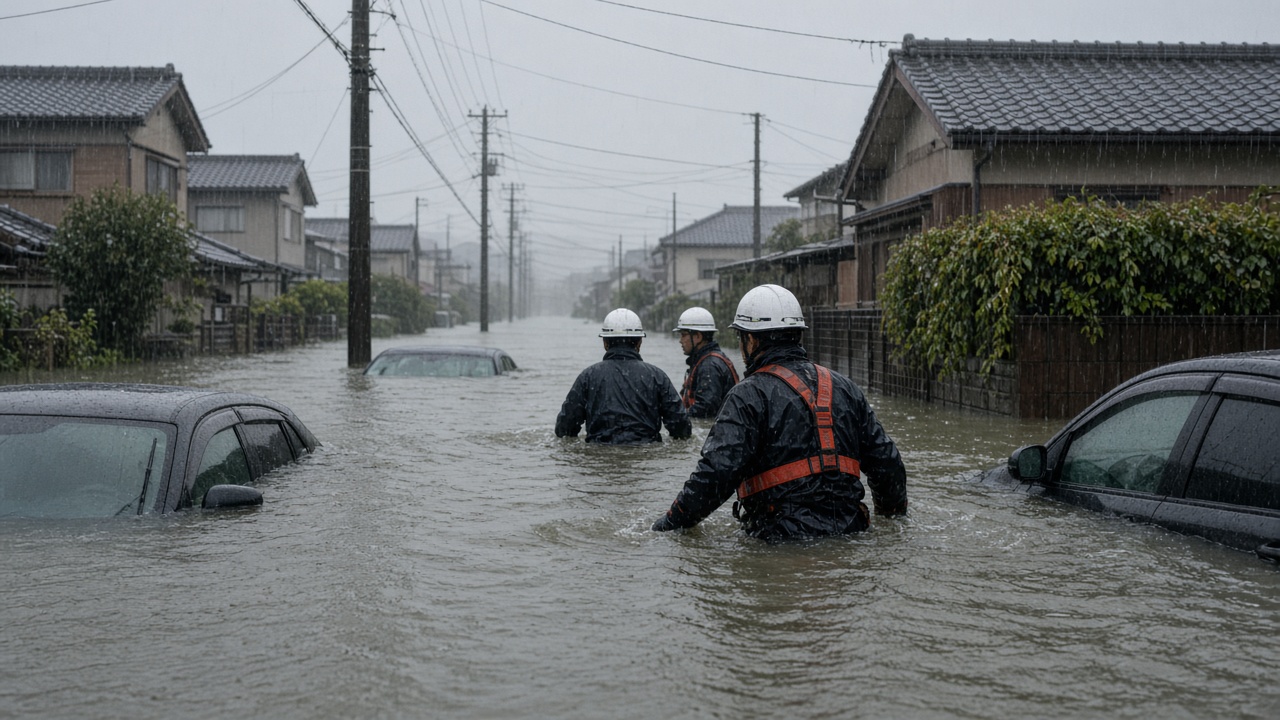
The death toll from Typhoon Dujuan rose to nine across Japan’s Kanto region as authorities on Wednesday confirmed a woman killed in Kanagawa Prefecture and a man found in a submerged vehicle in Chiba Prefecture, while rescue teams continued searching for four people still missing after the storm’s torrential rain triggered floods and mudslides east of Tokyo.
Japan’s Meteorological Agency downgraded Dujuan from typhoon status late Tuesday as the system moved away from the Pacific coast, but prefectural officials warned that saturated slopes and swollen rivers could keep landslide risk elevated even after skies cleared. Six of the nine confirmed victims died in Chiba and three in Kanagawa, according to local government tallies cited by domestic media.
Damage concentrated in Chiba
Chiba bore the brunt of Dujuan’s rainfall during the five-day Silver Week holiday that ended Wednesday. Floodwaters inundated neighborhoods in cities such as Sakura, while breaches near Lake Inbanuma sent water into Narita and surrounding towns. Earlier in the week more than 45,000 households in the prefecture lost electricity, and rail operators suspended sections of the Keiyo and Sobu lines as crews pumped stations.
Two people remained unaccounted for in Chiba and another two in Kanagawa as of Wednesday morning, according to Japan Today and Kyodo News reports. At least one resident in Kanagawa was seriously injured. Self-Defense Force units joined police and firefighters in boat searches along flooded roads and in mudslide debris fields in Miura and inland Chiba municipalities that had already been soaked by heavy rain in August and early September.
Travel and recovery
The typhoon struck at the peak of domestic holiday travel, forcing airlines to cancel flights at Narita and Haneda and prompting event organizers in the Tokyo Bay area to postpone outdoor festivals. With Dujuan now extratropical, airlines have largely resumed schedules, but Chiba’s disaster headquarters said some evacuation centers would stay open for residents who cannot return to water-damaged homes.
Governor offices in both prefectures asked the national government to expedite damage assessments so homeowners can access relief funds. Ministry of Land, Infrastructure, Transport and Tourism teams have been inspecting levees around Inbanuma after emergency repairs last month, mindful that another strong typhoon, Surigae, was being monitored farther south in the Western Pacific.
What officials watch next
Meteorologists said the immediate cyclone threat had passed for the Kanto plain, but slow-moving rain bands could still brush eastern Honshu through the weekend. Municipalities urged residents in hillside neighborhoods to heed evacuation advisories at night, when mudslides are hardest to spot. For families still searching for missing relatives, the focus remains on drained underpasses and collapsed retaining walls where Wednesday’s discoveries showed how quickly floodwaters trapped drivers.
The nine confirmed deaths make Dujuan the deadliest typhoon to hit the Tokyo commuter belt so far this season, even though the storm never made landfall as a typhoon in the capital itself. Until the four missing people are located, Chiba and Kanagawa will keep emergency staffing on round-the-clock shifts, treating the event as an active disaster rather than a closed chapter.