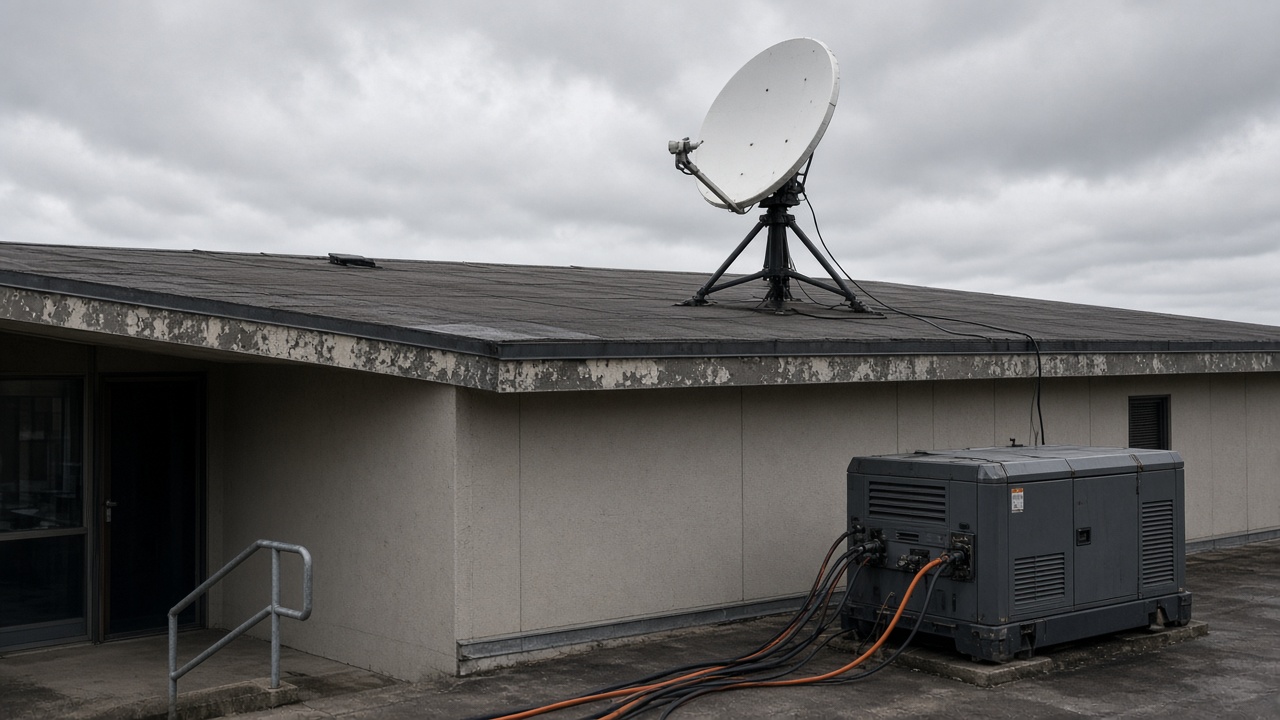
Several municipalities in northern Chiba deployed satellite backhaul kits this week after Typhoon Dujuan snapped fiber routes that connect town halls to the prefecture’s disaster coordination network.
What broke first
Officials said landslides took out aerial fiber along prefectural roads before power failed, leaving voice radios as the only link at some sites. Satellite terminals shipped from MIC stockpiles now carry email-sized situation reports and shelter occupancy tables when terrestrial LTE is congested.
IT vendors warned that upload speeds remain far below pre-storm fiber, so high-resolution drone imagery is being couriered on drives rather than streamed. That manual step slows headquarters maps but keeps critical shelter lists moving.
Lessons from August rains
Chiba had already rehearsed satellite fallbacks after the August heavy-rain disaster, when inland flooding isolated similar offices. This week’s rollout was faster—under 36 hours in two towns—but spare batteries are rationed because generator fuel deliveries are competing with TEPCO repair trucks on the same mud-clogged roads.
What residents should expect
Municipal websites may update slowly even when shelters are open; officials asked residents to rely on FM radio and prefecture apps that cache pages when connectivity flickers. Restoration contractors said fiber splicing could take weeks where poles must be rebuilt, meaning satellite mode may persist through the Sports Day holiday.
Vendor coordination
Shared service centers in Chiba City lent VSAT terminals to inland towns that lack their own disaster IT contracts. Engineers said firmware updates must be applied before links go live, adding a half-day delay that frustrated mayors expecting instant broadband.
Mobile carriers deployed portable cells atop flatbed trucks, but backhaul saturation meant download speeds under one megabit at peak hours. Officials asked residents not to stream video at shelters so voice calls and municipality forms could get through.