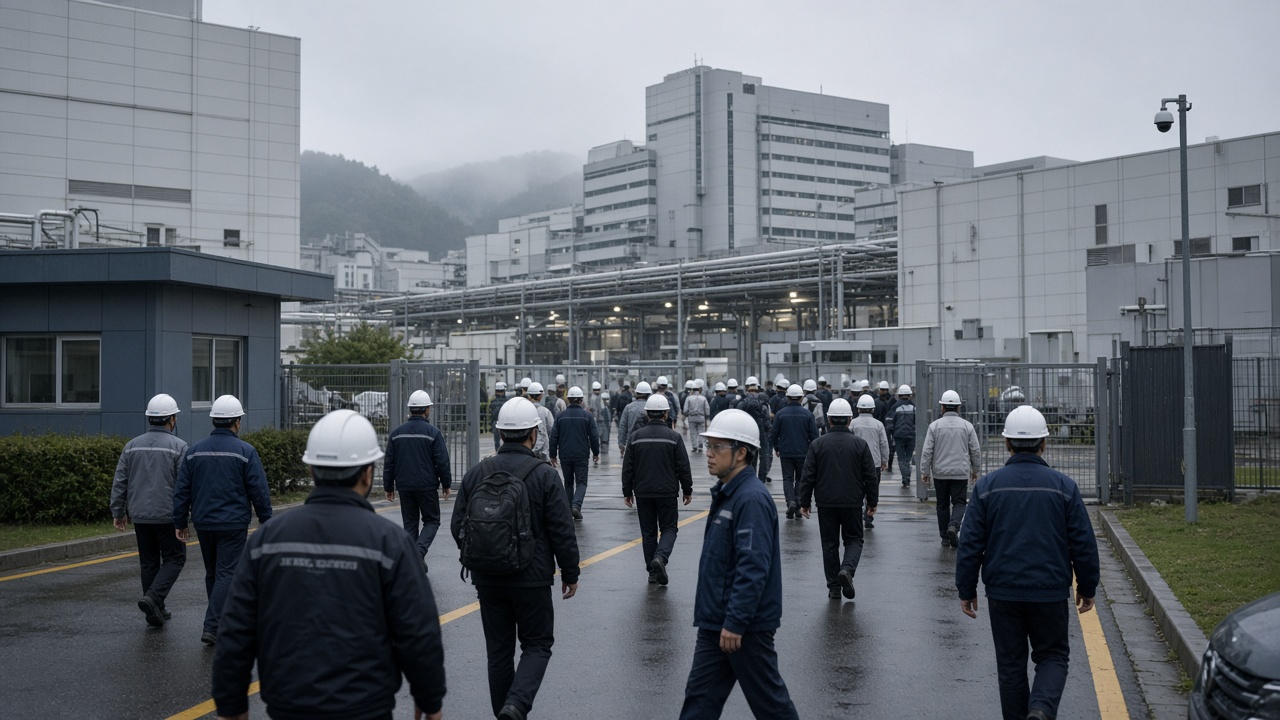
Micron Technology’s Taoyuan union cleared a legal strike vote this week after rejecting the U.S. memory giant’s bonus package, and Taipei should treat the standoff as a competitiveness issue—not a routine labor spat isolated from the AI supply chain.
What workers voted for
Of 2,258 eligible members, 1,994 backed strike authorization in a six-day ballot, Focus Taiwan reported. The union wants a permanent profit-sharing formula tied to operating income, not only annual performance bonuses. Micron offered up to 68 months of pay in a September package that workers dismissed as inadequate compared with Korean peers.
Taiwan hosts roughly 15,000 Micron employees across Taoyuan and Taichung, producing DRAM and high-bandwidth memory for AI servers. A walkout—even a short surprise strike threatened by union leaders—would ripple through an already tight memory market.
Why government should care
The Ministry of Labor urged Micron to return with concrete proposals after its board meeting scheduled for Oct. 8-9 U.S. time. That is the right tone. Taipei markets itself as the indispensable node for advanced packaging and memory; that pitch weakens if the largest fabs cannot settle how prosperity is shared when profits surge.
Korean suppliers Samsung and SK hynix already market profit-linked bonuses to engineers. Taiwan cannot rely on patriotism alone when recruiting the technicians who keep HBM lines running through typhoon season.
Investor blind spot
Equity analysts price memory up-cycles but rarely model labor rupture risk at Taiwanese sites. Thursday’s TAIEX session showed memory names moving on supply fears even as TSMC sold off. Markets are starting to connect the dots; policymakers should stay ahead of them.
Profit-sharing is not a call for fixed entitlements that ignore downturns. It is a demand for transparent rules when operating margins explode, so workers do not depend on one-off cash gifts announced during mediation.
Broader fab labor calendar
Micron’s Taichung union continues talks with a mediation session set for Oct. 22. Other semiconductor employers watch the outcome to set their own 2027 templates. National Day speeches celebrating tech resilience ring hollow if the workers building that resilience feel cheated.
Editorial bottom line
Taiwan should facilitate serious bargaining quickly, without picking sides on dollar amounts. Letting a strike drag into the holiday week would hand Beijing a propaganda win and U.S. customers a reason to diversify capacity. Competitiveness is fabs plus people; this week proved the second half of the equation needs the same strategic attention as export controls and subsidy programs.