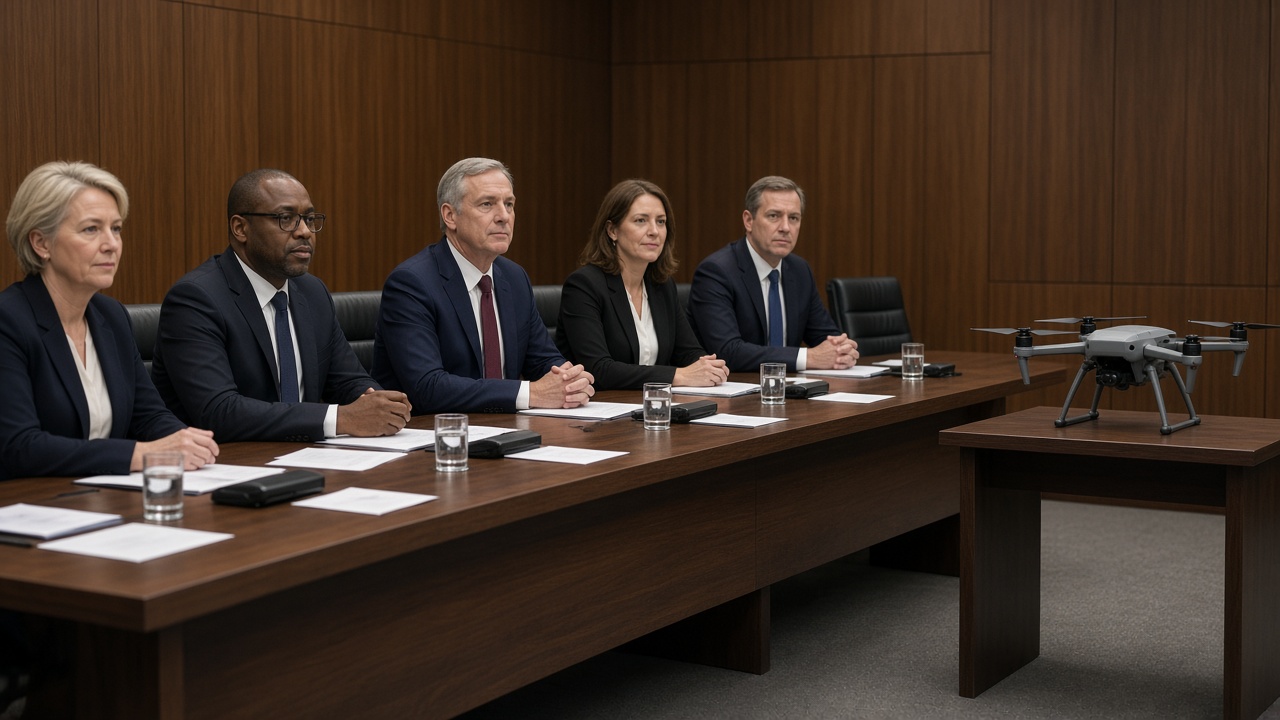
President Lai Ching-te urged two visiting U.S. congressional delegations on Wednesday to deepen defense cooperation beyond procurement, calling for joint research, development, and production of drones, counter-drone systems, and artificial intelligence tools that support military decision-making.
Who met whom
Lai spoke separately at the Presidential Office with a House group led by Representative Brendan Boyle, ranking Democrat on the House Budget Committee, and a Senate delegation led by Michael Bennet of Colorado, according to the Presidential Office and Taipei Times accounts. Meetings landed days before Saturday’s National Day ceremonies.
Lai told Boyle’s group that Taipei wants to progress step by step from military purchases to co-development and co-production, strengthening resilience on both sides. He named drone and counter-drone systems, AI-enabled decision support, and logistics effectiveness as priority areas.
From sales to co-production
Taiwan’s defense industrial base has expanded unmanned aerial vehicle testing and domestic missile programs, but many platforms still rely on U.S. engines, sensors, and software stacks. Joint production could keep more sustainment dollars on the island while giving U.S. firms exportable modules tested in a high-threat environment.
Counter-drone demand rose after repeated incursions by Chinese aircraft and drones around outlying islands. Integrating AI-assisted cueing with existing radar nets is a politically salable project for lawmakers who want technology transfer, not only box shipments.
AI decision support
Military AI in Taiwan is discussed alongside civilian guardrails, but battlefield decision aids focus on sensor fusion and logistics routing rather than autonomous strike authority. Lai’s emphasis matches U.S. interest in resilient command links if satellite communications are contested.
Bennet’s office highlighted space cooperation in his meeting, citing work on a Taiwan-U.S. space assistance bill and deployment of the Formosat-8 remote-sensing constellation. Dual-use AI talent pools in Hsinchu and Taipei could feed both space analytics and defense software if export controls are cleared.
Tax and legislative follow-ups
Lai also asked House members to help finalize legislation implementing a Taiwan-U.S. double-taxation agreement, a longtime business priority that affects defense contractors placing staff on island. Boyle and Bennet said they would carry Lai’s cooperation ideas back to Washington.
Defense budgets remain contested in Taipei’s legislature, where opposition parties have challenged spending plans. U.S. visits during National Day week are partly signaling that Washington still backs deterrence investments regardless of local political fights.
What comes next
Concrete programs would require export licenses, intellectual-property frameworks, and funding lines in both countries. Even without signed memos, the meetings set expectations that drone and AI lines will appear in future arms notifications and industry day agendas.
For Taiwan’s tech sector, the message is that AI talent working on commercial data centers may be tapped for dual-use projects with stricter security rules—another reason labor and profit-sharing fights at memory fabs draw national attention.