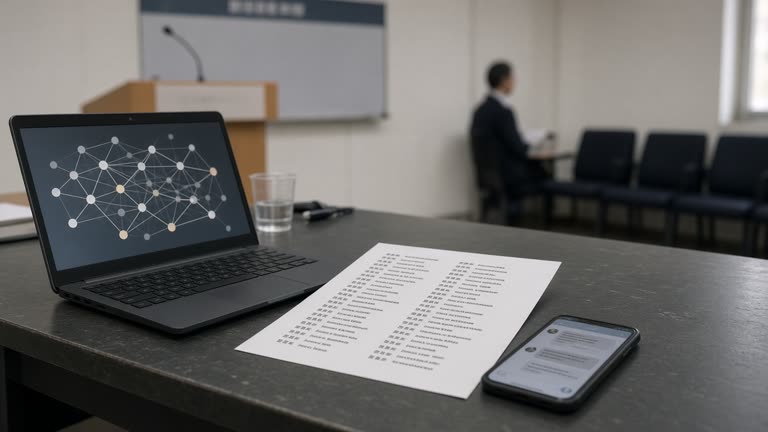
Academia Sinica teams won a National Science and Technology Council grant to compress Mandarin large language models so township governments can run offline chatbots on modest GPU servers without sending citizen queries to public clouds.
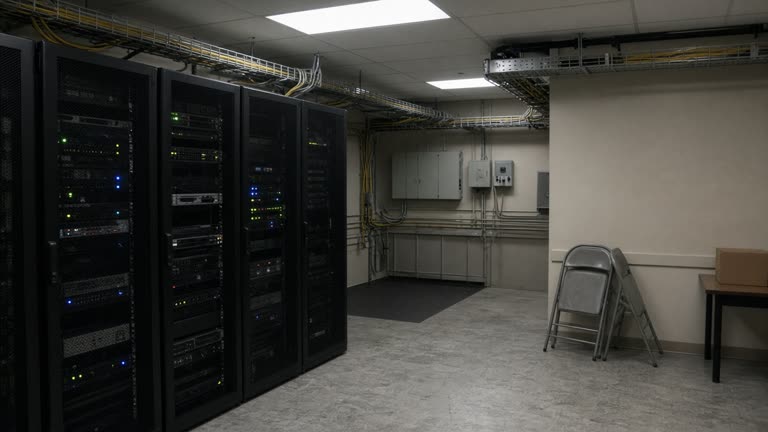
Academia Sinica engineers cut a Mandarin instruction-tuned model to under four gigabytes so township offices can run citizen-service chatbots offline on existing PCs.
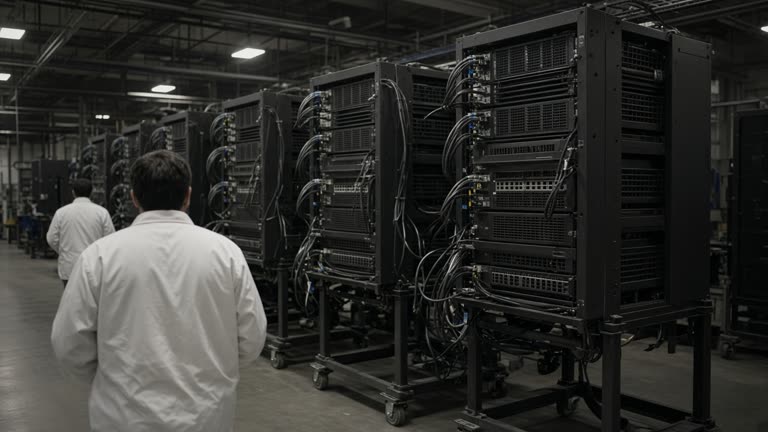
Taiwanese AI server integrators told customers December rack shipments would slip one to three weeks as CoWoS advanced-packaging slots stayed fully booked.
Phison joined a Palo Alto Silicon-to-Steel mixer on Oct. 8 with JMEMTEK, NeuroShine, metAI, MORALE AI and APMIC, framing memory bottlenecks and factory-grade AI agents as Taiwan's physical-AI export story.
President Lai Ching-te asked visiting U.S. House and Senate delegations to move beyond arms sales toward joint research on drones, counter-drone systems, and AI-assisted military decision tools ahead of National Day.
Taiwan’s National Institute of Cybersecurity will deploy agentic AI to mimic hackers in next year’s government cyber defense exercise, extending MODA’s push to scan critical systems with frontier models.
The Ministry of Digital Affairs issued a logging template that requires ministries to document data sources and human review steps for citizen-facing chatbots under the AI Basic Act.
The Ministry of Digital Affairs released a procurement checklist for agencies buying generative AI tools, setting disclosure, data-residency, and benchmark requirements before a year-end wave of RFPs.
Taiwan’s major broadcasters are rolling out on-screen AI labels required under National Communications Commission news guidance while the digital ministry’s risk-classification draft awaits cabinet review.
The National Development Council's Ten AI Initiatives plan treats co-packaged optics as a domestic rack-building priority, funding pilot lines that tie silicon photonics to on-island AI server assembly.
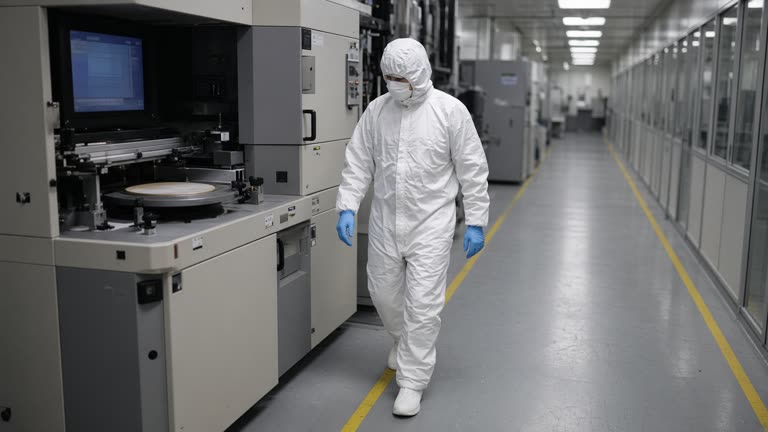
The National Institute of Cyber Security and a Tainan wafer fab began testing an on-prem defect-image classifier trained only on anonymized scratch patterns, avoiding customer wafer labels that export-control lawyers block from cloud training sets.
Digital Affairs Minister Lin Yi-ching said Taiwan is using partner AI models to hunt software flaws in government systems as agentic threats outpace new laws.
Yating Intelligence’s FedGPT ranked fourth among 188 models in the Ministry of Digital Affairs sovereign AI evaluation, as Taiwanese lenders pilot on-premise stacks that keep customer data off public clouds.
The National Development Council is drafting mandatory generative-AI disclosure labels on government procurement bids so agencies can see which tools trained vendor proposals.
China’s summit readout urges closer emerging-tech cooperation, but Taiwan’s chip and model export rules still hinge on MOEA list updates and NDC coordination, not communiqué language.
Taiwan's Digital Ministry is reviewing public-facing AI labels after President Donald Trump said the field should be called 'super intelligence.' The review is about terminology, not capability testing—and no Taiwan rule currently defines the term.
Taiwan’s Financial Supervisory Commission added three major bank customer-service chatbots to its AI model trust registry after a supervised pilot, requiring published model cards, escalation paths to human agents, and quarterly bias reviews under FSC fintech guidance.
Taiwan International Ports Corp. piloted underwater and hull-skimming drones at Keelung cruise berths so Taipei Harbor agents can flag biofouling and dent panels before passengers disembark for Mid-Autumn shore tours.
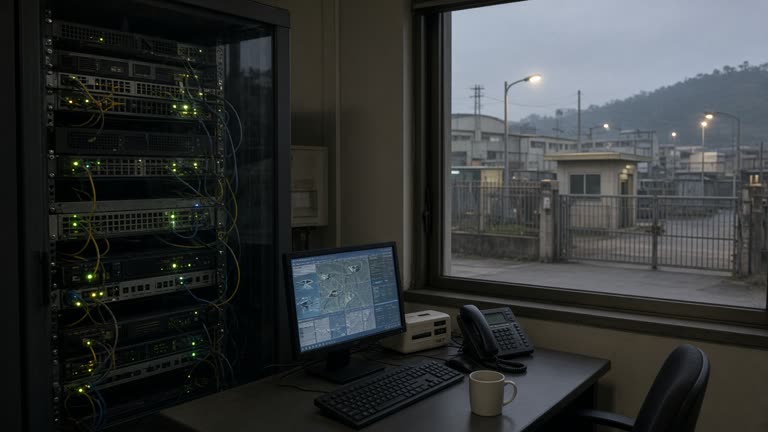
Foxconn Technology Group piloted an on-premises Nvidia LLM inference rack at a Hsinchu campus so perimeter security crews can query shift logs in Mandarin without sending video metadata to public clouds.