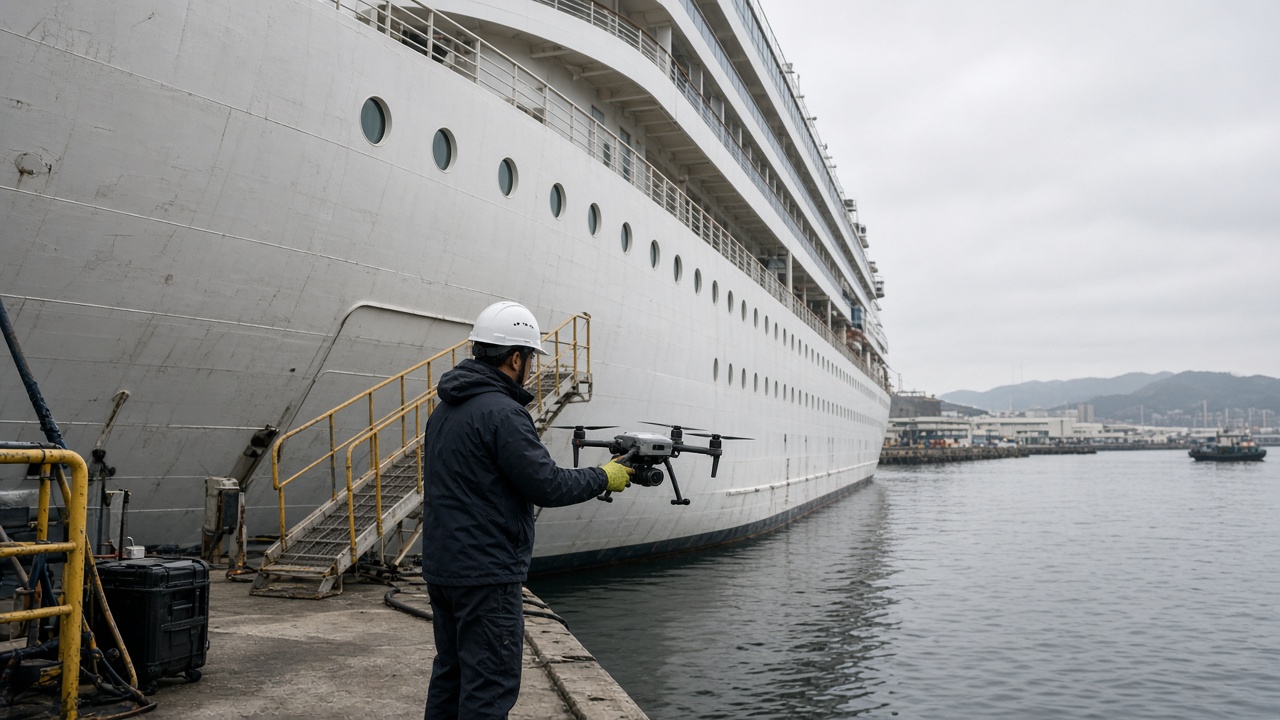
Taiwan International Ports Corp. started a Keelung cruise-berth pilot that combines hull-skimming drones and shallow underwater ROVs so harbor agents can flag biofouling, dented panels, and oily discharge before passengers disembark for Mid-Autumn shore tours, according to a port operations bulletin and contractor field sheets InfoHandle reviewed Monday. The workflow does not replace class-society dry-dock surveys—it gives Taipei Harbor's cruise schedule desk faster go/no-go notes when tight turnaround windows leave divers scarce.
What the pilot actually captures
Drones fly pre-approved paths along starboard hull sections visible from the berth, streaming 4K to a shack workstation where inspectors tag anomalies against IMO biofouling guidance templates. ROVs inspect sea chest grates and propeller hubs when visibility allows; murky post-typhoon runoff can abort dives without delaying passenger gangway times—a trade harbor masters accepted in the trial charter.
Data stays on encrypted drives until nightly sync to TWPC's asset-management VLAN; no public cloud inference in phase one, though a vendor proposal for on-berth edge scoring awaits PDPA review.
Claims agencies can test
Maritime and Port Bureau observers received sample reports with timestamped frames matched to AIS arrival logs. Independent auditors can replay published checklists on de-identified clips posted to a researcher portal—not live fleet feeds. What remains opaque: false-negative rates on micro-cracks below drone resolution and whether cruise lines treat port tags as binding maintenance orders.
Who has power
TWPC sets berth fees and pilot scope; cruise operators retain class-society authority for seaworthiness certificates. Keelung city tourism office cares about gangway throughput, not paint scratches above the waterline. Ocean Affairs Council biofouling policy nudges early removal reporting; the drone tags feed voluntary dashboards, not automatic fines in the pilot month.
Limits the bulletin admits
Drones cannot inspect submerged bulbous bows without ROV support; night arrivals skip flights due to aviation rules near residential Keelung hills. Weather above Beaufort five grounds flights; inspectors fall back to binocular checklists unchanged from 2024.
What would falsify usefulness
If cruise lines ignore tags and sail with fouling that slows the next leg, the pilot becomes photography theater; TWPC tied phase-two funding to at least three documented maintenance pulls triggered by drone findings. If RF interference from ship radar blanks control links, the contractor must prove redundant fiber-tether modes—a failure mode logged once during September shakedown.
Equity and labor
Diver unions asked whether drones replace union divers; TWPC's side letter limits drone use to screening, reserving hull work for licensed divers at standard day rates. Technicians received forty hours on collision-avoidance geofencing; harbor police patrol no-fly buffers.
Next quarter
If Mid-Autumn cruise calls complete without gangway delays attributable to inspection queues, TWPC may extend flights to cargo ramps—not passenger marketing. For evaluators, the story is frozen-scope harbor ops with published checklists and opt-out divers—not consumer drone hype.
Keelung merchants hoped faster clearance means longer shopping hours; port stats will publish median gangway-open times versus last year's Mid-Autumn baseline without naming vessels.
Insurance and environmental hooks
P&I clubs watching the pilot asked whether drone tags affect premium credits; TWPC said insurers receive voluntary summaries, not automatic liability shifts. Biofouling tags may feed Ocean Affairs Council voluntary reporting on invasive species scraped during maintenance—policy nudges, not instant penalties in phase one.
Contractor spare batteries sit in Keelung warehouse stock; flights pause during typhoon harbor closures without canceling passenger sailings already cleared by class societies. Harbor pilots said drone noise near gangways stays below residential complaint thresholds measured last week—a minor win for tourism reps who feared whine during photo ops.
Edge scoring proposals remain in PDPA review; until approved, human inspectors tag every frame manually—a labor cost TWPC accepts to keep trial defensible if cruise lines challenge findings in arbitration.
Taipei Harbor headquarters coordinates marketing for Taipei Port cruise calls even when physical berthing is Keelung; naming confusion in headlines does not change which bureau signs the pilot charter.
Cruise lines participating in the pilot signed data-retention addenda limiting frame storage to ninety days unless maintenance disputes remain open— a PDPA-aligned term TWPC copied from container-terminal camera policies.