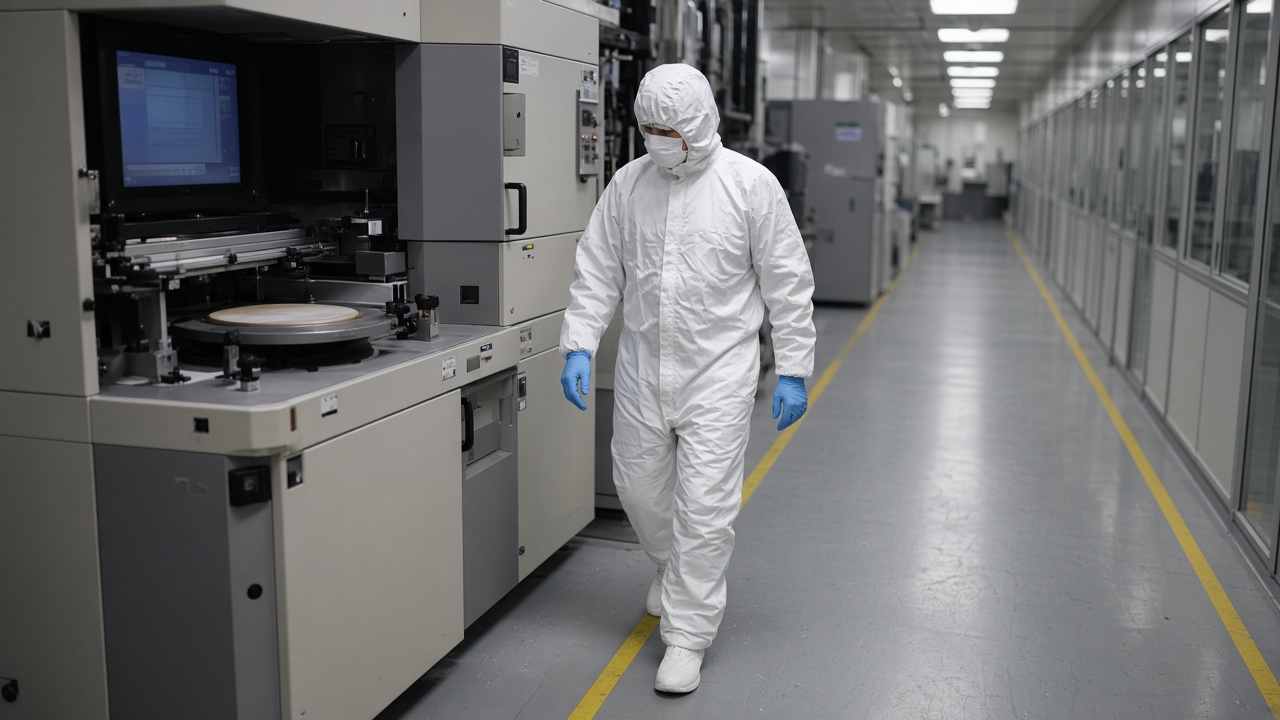
The National Institute of Cyber Security and a Tainan wafer fab started weekend tests on an on-premises defect-image classifier that learns only from anonymized scratch and particle patterns, according to sandbox paperwork the Ministry of Digital Affairs released to participating fabs. Export-control counsel had blocked earlier cloud-training proposals because customer lot identifiers occasionally appeared in metadata exports from inspection tools.
Model design
Engineers feed scanning electron microscope tiles into a convolutional network hosted on air-gapped GPUs in the fab’s quality lab. Human reviewers tag defect families—scratch, void, residue—without storing wafer serial numbers in the training database. When the model flags a tile, it outputs a severity score and heat map operators can compare against legacy rule-based scripts.
NICT supplied adversarial testing notebooks to see if subtle watermark patterns could leak lot information through gradients; early runs found no reconstructable identifiers.
Why fabs care
Leading-edge lines generate terabytes of inspection imagery weekly. Shipping that data to public clouds triggers U.S. and Taiwan customer audits. On-prem training is slower to iterate but avoids cross-border data agreements that can take quarters to negotiate.
The Tainan site focuses on mature nodes where defect libraries are broad enough to train without customer-specific wafers—reducing legal risk while still cutting manual review hours.
Sandbox oversight
MODA’s sandbox requires weekly logs of who accessed the model server and whether any outbound network cable was attached. Violations revoke the permit. Digital Minister staff said successful pilots could inform government-system scanning partnerships announced Friday, but fabs are a separate track with stricter trade-secret rules.
Commercial path
If false-positive rates drop below three percent on scratch classes, the fab may deploy the model on a second bay before year-end. Vendors like Applied Materials Inc. and KLA Corp. sell their own AI tools; the NICT partnership is a Taiwan-specific stack fabs can customize without sending imagery abroad.
Until metrics publish, the headline is compliance-friendly AI: defect classifiers trained without customer wafer labels, running entirely inside a Tainan cleanroom VLAN.