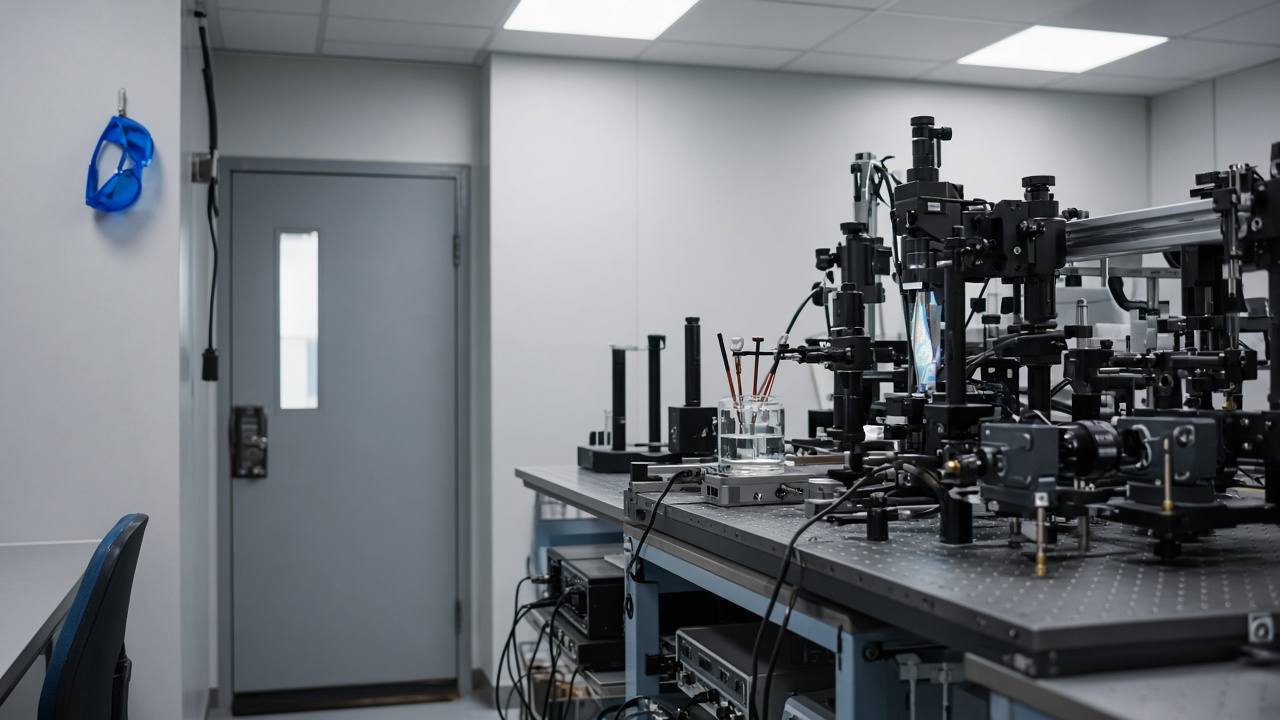
The University of Liverpool will open a £1.5 million ultrafast laser facility this autumn to watch electrochemical interfaces operate in real time, backed by UK Research and Innovation’s Engineering and Physical Sciences Research Council.
Leila Hassan writes: the ULSOMEI hub — short for Ultrafast Laser System for the Operando Study and Mapping of Electrochemical Interfaces — sits in the Stephenson Institute for Renewable Energy and gives UK teams a way to probe battery electrodes and catalyst surfaces under working conditions rather than in static snapshots.
Why operando matters
Many clean-energy failures happen at interfaces: lithium plating on fast-charged anodes, corrosion on alkaline electrolysers, poisoned catalyst sites in green hydrogen cells. Traditional electron microscopy captures structures beautifully but often after a device has been dismantled. Operando spectroscopy follows chemical changes while current flows.
Liverpool’s grant, awarded through EPSRC’s Strategic Infrastructure Fund, pairs femtosecond lasers with electrochemical cells designed for repeatable cycling. Researchers can map how solid-electrolyte interphases evolve over hundreds of charge cycles — data automakers and grid-storage developers crave.
Who gets access
The institute plans a national access route for academics and industry partners, similar to synchrotron beamtime models. Early users include collaborators working on sodium-ion batteries and on catalysts for converting captured CO₂ into fuels.
Professor Alex Cowan, who leads the project, said the kit fills a gap left when older laser labs reached end-of-life elsewhere in the UK. “We can now correlate optical signatures with mass transport in the same cell,” he said in the university’s 8 October release.
Policy links
Ministers have tied net-zero investment to domestic manufacturing jobs. While ULSOMEI is fundamental science, its outputs feed into UK Battery Industrialisation Centre roadmaps and into due diligence for gigafactory investors wary of immature chemistries.
EPSRC noted that strategic infrastructure awards are meant to keep the UK competitive as US and EU programmes subsidise applied battery plants. Liverpool’s win is modest in pounds but symbolic in a week dominated by gilt yields and energy bills.
Student pipeline
PhD slots funded alongside the equipment will emphasise cross-training in optics and electrochemistry — skills short on LinkedIn but long on employer wish lists. The university’s chemistry department has already advertised four studentships tied to ULSOMEI beamtime.
What success looks like
Metrics will be academic papers, yes, but also industry co-funded projects and prototype cells tested with automotive partners on Merseyside. If the laser maps help rule out electrode designs before pilot lines scale, the £1.5 million outlay could save far larger sums downstream.
For readers outside the lab, the story is straightforward: Britain still funds the messy interface science that batteries depend on — even while Westminster argues about how to pay winter energy bills.