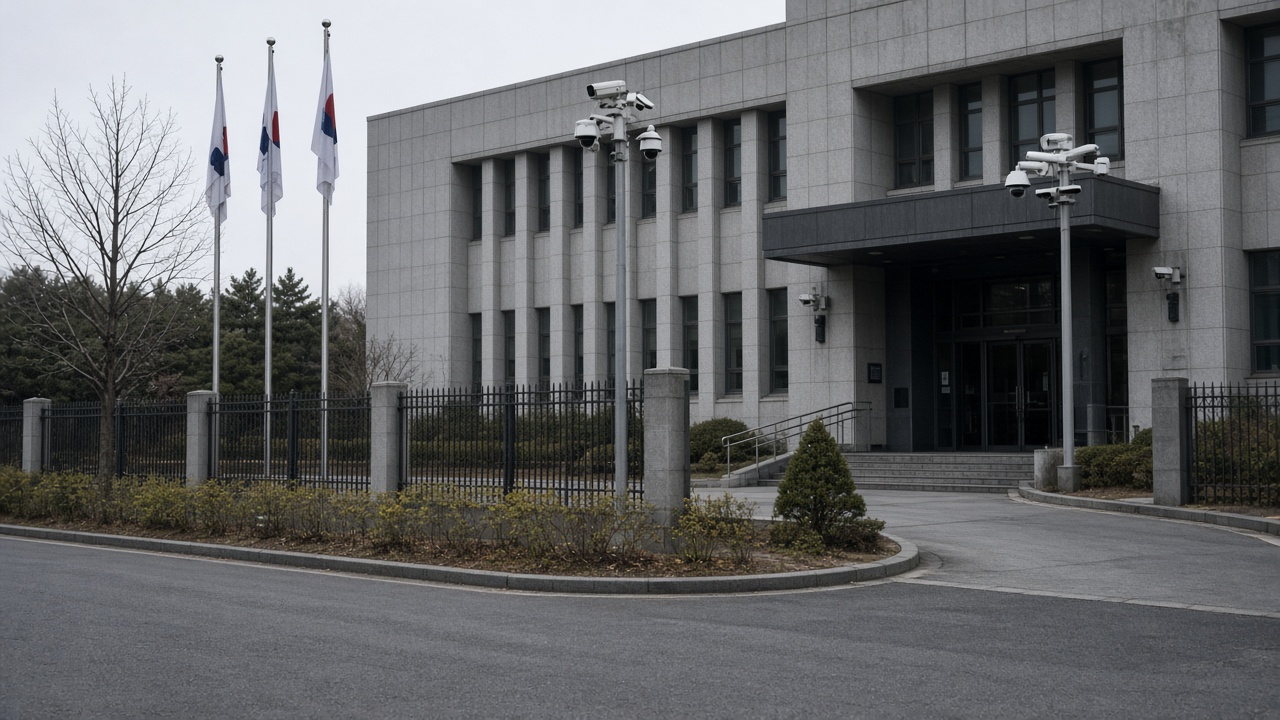
South Korea’s National Intelligence Service confirmed Thursday that it was excluded from a June trilateral meeting on North Korean cyber threats with the United States and Japan, a rare public admission that has revived questions about trust inside the alliance.
Yonhap News Agency reported Friday that Washington requested the spy agency stay away from the session. While the NIS played down the snub, ruling-party officials and opposition lawmakers said the episode fits a pattern of friction that began when Unification Minister Chung Dong-young revealed imagery of a North Korean uranium enrichment site at Kusong in March.
What the NIS said
The agency said it learned of the exclusion after media inquiries and stressed that day-to-day cooperation with U.S. counterparts continues on other files. It did not explain why cyber threats were discussed without its analysts in the room, given that South Korean banks, defense contractors and cryptocurrency exchanges remain prime targets for North Korean intrusions.
A senior figure in the ruling Democratic Party told Yonhap that “various issues” between Seoul and Washington are weighing on the relationship and that problems in the intelligence sector are “never desirable.” The official spoke on condition of anonymity because the talks are sensitive.
Fallout from the Kusong disclosure
Chung has argued he only publicized information already visible in open sources, but U.S. officials responded by restricting some North Korea-related intelligence feeds to Seoul, according to lawmakers briefed on the matter. Opposition People Power Party spokesperson Choi Eun-seok said Friday that warning signs across diplomacy, intelligence and security require a full government review of communication with Washington.
Some advisers have urged dispatching National Security Adviser Wi Sung-lac to the United States to stabilize channels. Presidential aides said no trip is scheduled but that options remain under review.
Visa delay adds to the mood in Seoul
The intelligence row intersected with a separate grievance in the National Assembly: former Democratic Party leader Rep. Jung Chung-rae still had not received a U.S. visa as of Friday, three days before a planned overseas audit of South Korean diplomatic missions. Jung was reassigned from the Americas subcommittee to a Europe itinerary while his application remained “under review.”
Jung asked colleagues in a Facebook post not to damage the alliance with speculation. The foreign ministry said it is inappropriate to link an individual visa case to overall bilateral relations, citing U.S. confidentiality rules.
What Seoul is watching next
Lawmakers on the intelligence committee are expected to summon NIS Director Lee Jong-seok for a closed session on whether cyber briefings have been downgraded since June. Industry officials separately denied a report that U.S. Commerce Secretary Howard Lutnick expressed distrust of the NIS during investment talks, but the rebuttal did little to calm markets already sensitive to semiconductor export controls.
Analysts at the Asan Institute for Policy Studies said trilateral cyber coordination without the NIS risks blind spots on laundering networks that move stolen cryptocurrency into North Korean weapons programs. Restoring Seoul’s seat at the table, they argued, is a low-cost way to signal that the U.S.-South Korea partnership can absorb public disagreements without shutting partners out of the room.