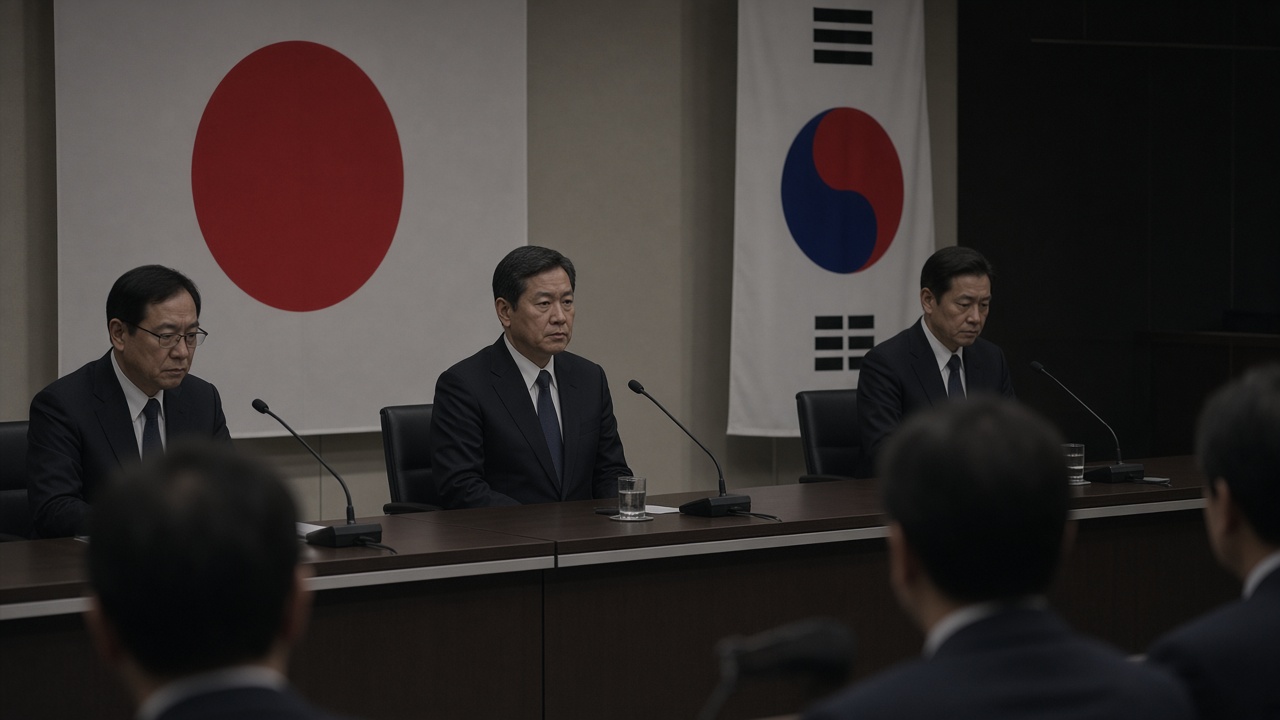
South Korea’s vice defense minister and Japan’s senior defense bureaucrat agreed Friday to deepen cooperation on artificial intelligence and unmanned systems, Seoul’s defense ministry said, framing the talks as a response to North Korea’s accelerating missile tests and a broader shift toward technology-heavy deterrence in Northeast Asia.
Who met in Tokyo and why now
Vice Defense Minister Lee Doo-hee held discussions in Tokyo with Japanese Vice Defense Minister Atsushi Ando on the second day of a visit that began Thursday, according to the ministry. Lee also paid a courtesy call on Japanese Defense Minister Shinjiro Koizumi earlier in the trip.
The meeting followed Ando’s visits to Seoul in May for security policy consultations and in September for the Seoul Defense Dialogue. South Korea’s ministry said both sides reaffirmed the importance of close bilateral coordination and trilateral work with the United States to counter evolving North Korean nuclear and missile threats amid what they described as a grave security situation on the peninsula.
The timing sits between Pyongyang’s Oct. 3 hypersonic missile test and a week of diplomatic activity in the region, including senior U.S.–Japan defense engagements. Seoul and Tokyo have moved to stabilize security ties after years of historical disputes that once slowed intelligence sharing.
AI and drones on the agenda
Beyond traditional alliance messaging, the ministers agreed to push defense cooperation and personnel exchanges in advanced fields such as artificial intelligence and unmanned systems, the ministry statement said. Neither government released contract values or specific procurement timelines, but officials portrayed the focus as practical: integrating sensors, command software and remotely operated platforms that both militaries are already funding domestically.
Japan has expanded its counter-strike and standoff missile capabilities under revised defense guidelines, while South Korea’s defense acquisition agency has accelerated drone and autonomous targeting projects after border incidents this year. Shared standards for data links and testing ranges could reduce duplication, analysts said, even if politically sensitive history still limits some joint exercises.
North Korea’s tests as backdrop
North Korean leader Kim Jong Un has overseen a steady run of weapons demonstrations in 2026, including the Oct. 3 launch that Tokyo said landed outside Japan’s exclusive economic zone. South Korea’s military published a lower range estimate, a discrepancy Pyongyang’s leadership has mocked as evidence that U.S. allies cannot track advanced missiles.
Inter-Korean tensions remain elevated after landmine explosions injured three South Korean soldiers near the demilitarized zone in September. Seoul’s military removed North Korean mines from the southern side of the border as investigations continued. Against that backdrop, Lee’s Tokyo trip signals that Seoul wants Japan inside planning loops for missile defense and emerging technology, not only for ceremonial summitry.
What comes next in trilateral work
The ministry did not announce new trilateral exercises Friday, but officials referenced ongoing Seoul–Washington–Tokyo coordination on sanctions enforcement, missile tracking and cyber defense. Japan’s cabinet has separately convened interagency meetings after a wave of cyber incidents hit domestic banks and retailers, a reminder that defense ministries are not the only agencies facing AI-enabled threats.
For South Korean President Lee Jae Myung’s government, closer Tokyo ties offer political cover for technology investments that might otherwise draw domestic criticism tied to colonial-era grievances. For Japan, reliable Korean participation strengthens U.S.-led containment of North Korean provocations without waiting for a breakthrough in Pyongyang’s nuclear diplomacy.
Analysts in Seoul said the next proof point will be whether AI and drone initiatives produce signed memoranda with funding lines before year-end budget debates. Until then, Friday’s statement marks another incremental step in a relationship that both capitals now treat as operational rather than symbolic.