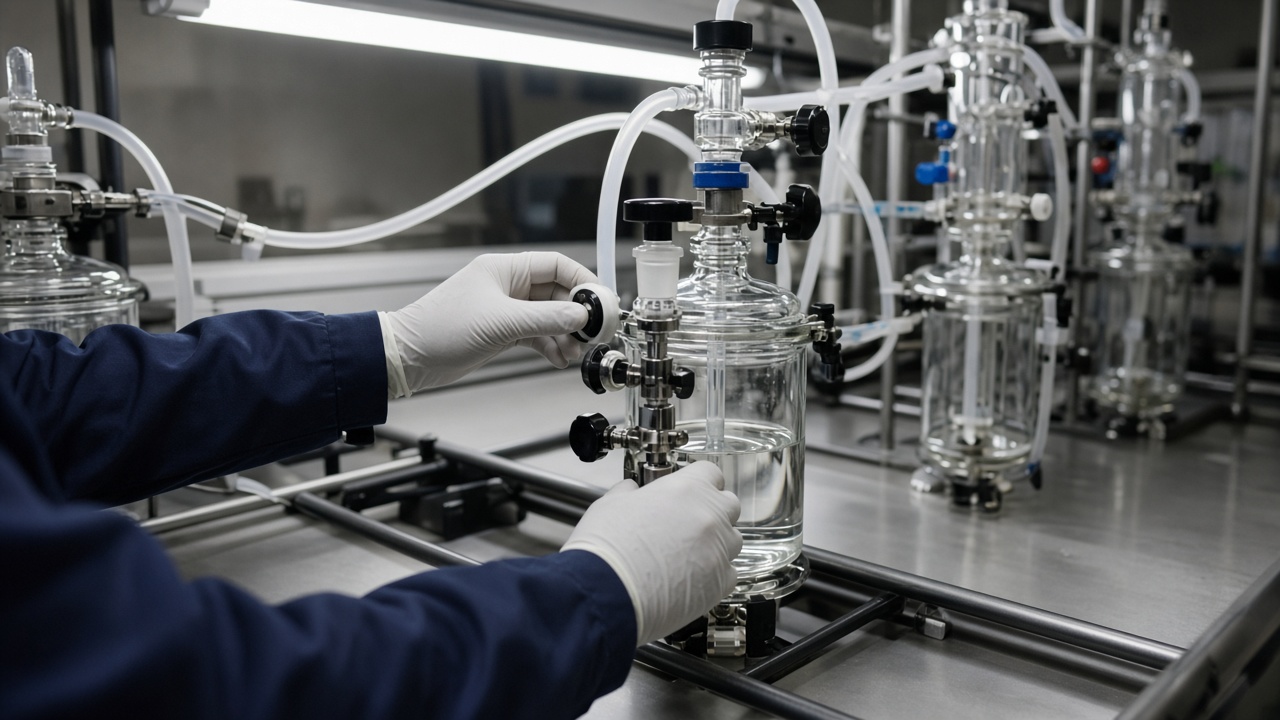
CSIRO has opened an accelerated pathway for carbon-capture materials that can mineralise carbon dioxide in mine brines and industrial flue gas, aiming to move lab formulations into pilot plants within months rather than years. The effort sits alongside the agency's work adapting mining-sector water treatment for remote Indigenous communities, reflecting a strategy to reuse harsh-environment engineering across energy and social infrastructure challenges.
From coal-mine brines to saleable products
Research team leader Ramesh Thiruvenkatachari said thermal-membrane technology tested on acidic mine water through the Australian Coal Association Research Program is now scaling to prototype units. A parallel CO2CRC collaboration is attempting to combine captured flue-gas CO₂ with brine to create a saleable mineral product, turning waste streams into revenue rather than disposal costs.
That chemistry matters for cement, steel and LNG exporters facing customer scope-three pressure without established carbon prices at home. If brine mineralisation works at proof-of-concept scale, emitters could offset transport emissions from Australian ports even as domestic policy remains contentious.
Indigenous co-design on water and land
At Mungalla in Queensland, CSIRO is working with the Nywaigi people on plant-based bio-carbon filters that remove natural contaminants—a system the agency describes as world-first and co-designed on Country. Expertise from those pilots informs how capture materials might be deployed without repeating colonial patterns of technology drop-ins.
Why October's timing matters
The October announcement lands during bushfire season planning and amid debate over data-centre power demand after Firmus withdrew its ASX float. Policymakers want shovel-ready decarbonisation tools that do not require new transmission overnight. Capture materials are not a silver bullet—storage and verification still dominate cost—but they offer modular trials that can ride on existing industrial water infrastructure.
For investors, the near-term payoff is licensing and pilot fees rather than listed equity. CSIRO's model keeps public science in the loop while private partners carry scale-up risk, a pattern Australia's innovation agencies hope will survive tighter federal budgets.
Commercial pathways
CCMAC-linked materials aim to shorten the timeline from petri dish to pilot plant by standardising sorbent chemistries that work across multiple industrial flue streams. Export-oriented LNG plants watching European carbon border adjustments are a natural customer set, even before Australia settles domestic safeguard baselines. CSIRO's partnership model typically pairs federal science with industry co-funding, meaning budget papers will matter as much as lab results.
Environmental groups remain sceptical that capture materials extend fossil projects; scientists counter that hard-to-abate sectors still need interim solutions while green hydrogen scales. The October announcement is deliberately technical, targeting engineers rather than retail investors burned by Firmus hype.
State governments watching bushfire and industrial emissions targets may pilot CCMAC sorbents at public-owned generators if federal co-funding continues. The science agency said it would publish open datasets from successful pilots so universities can benchmark competing chemistries without proprietary lock-in.