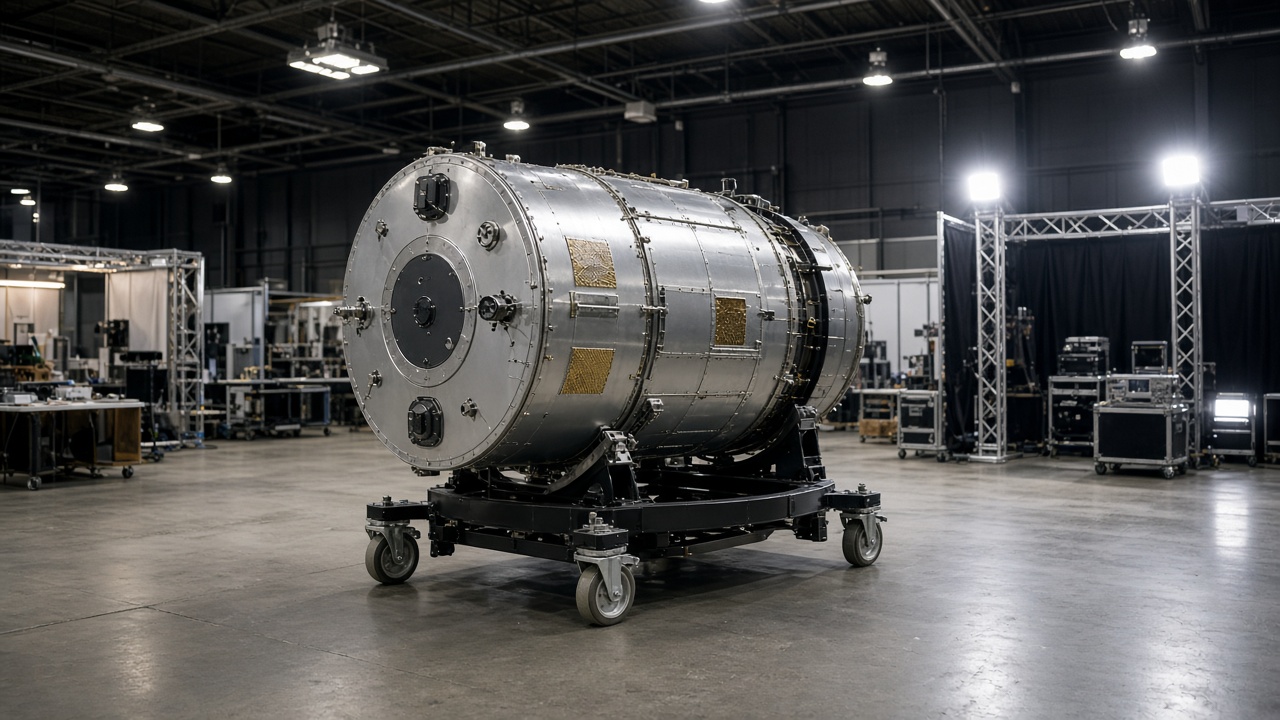
Hanwha Aerospace displayed a low-Earth-orbit satellite bus mock-up at a Seoul ADEX preview hall Friday, highlighting quick-reaction reconnaissance payloads for allied delegations touring before the full aerospace show next week. The exhibit lands as Korea expands defense exports and as domestic agencies seek cheaper buses for constellation replenishment.
The mock-up shows deployable solar panels, a cold-gas propulsion module, and an open payload bay sized for electro-optical sensors under 150 kilograms. Company briefers said engineering units could ship within 18 months for customers supplying their own optics, a pitch aimed at middle powers that cannot fund bespoke buses.
Program context
Agency for Defense Development officials attended but did not endorse specific vendors. ADD’s own small-satellite launches have leaned on Korean Aerospace Research Institute rockets; Hanwha is positioning buses as exportable complements rather than replacements for classified national assets.
Analysts noted overlap with Hanwha’s drone and missile lines — unified ground stations could task satellites and unmanned aircraft together, a talking point after this week’s Korea-Japan defense cooperation statement on AI-enabled surveillance.
Export politics
Export licensing remains sensitive. Hanwha said it would only brief sovereign customers under government-to-government frameworks, declining to name attendees at the preview. Peace groups protested outside the hall, arguing that satellite exports normalize persistent monitoring over civilian areas.
Industrial base
Suppliers from Busan and Changwon displayed composite panels nearby, signaling a domestic supply chain push. Whether mock-ups become orders depends on financing: Seoul is debating tax credits for space manufacturing akin to shipbuilding incentives.
For Hangul Day visitors, the hall offered a rare chance to see hardware without U.S. floor dominance — even if most contracts will be signed months after ADEX lights dim.
Supply chain
Composite vendors said lead times for bus panels have fallen to nine months from twelve after Yeosu chemical plants stabilized feedstock. That could make export promises credible if financing closes.
University booths nearby showed student CubeSat models, a reminder that Korea’s talent pipeline is growing even as defense exports draw protests.
Desk notes
Traders and officials interviewed Friday said the Hangul Day calendar compresses decisions that normally spread across two cash sessions, making derivatives and policy announcements louder than usual. Several sources asked not to be named because their institutions bar holiday comments to media.
Consumer groups urged clearer app disclosures before Tuesday’s Kospi reopen, when portfolio screens will jump from frozen marks to live auction prints. Schools reopening next week add another layer of flu and travel risk that intersects with the policy moves described above.