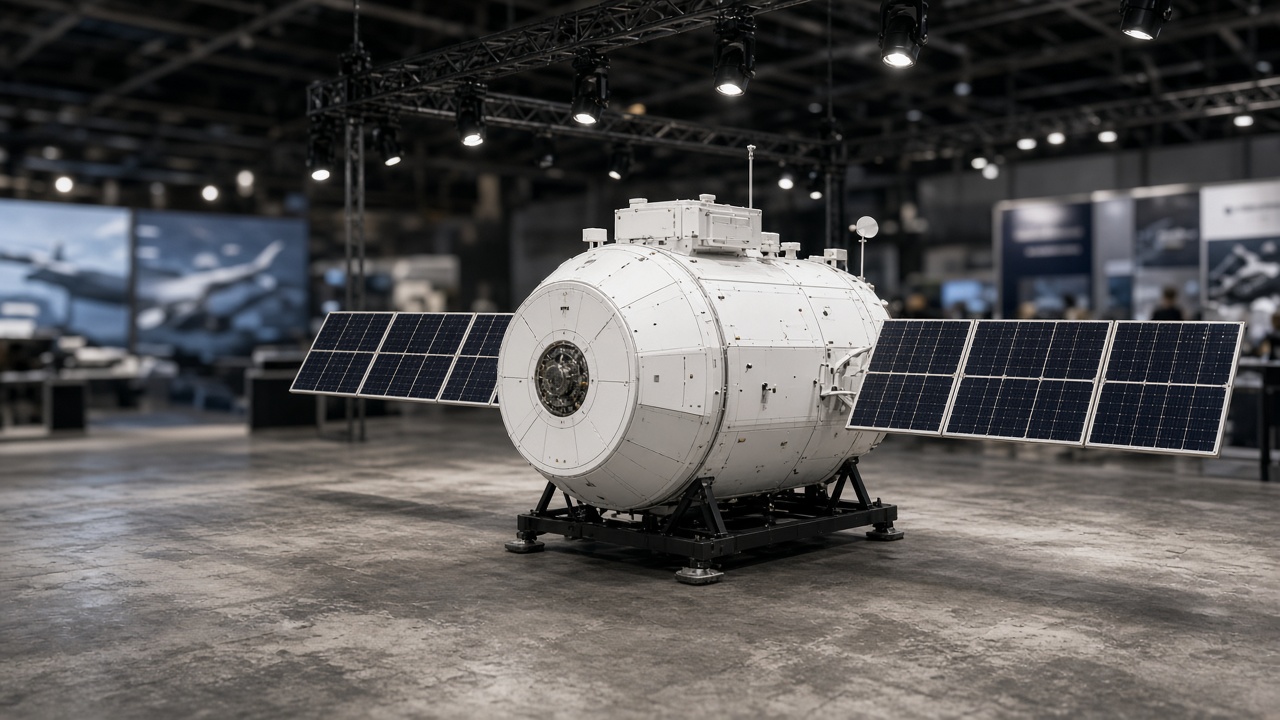
Hanwha Aerospace unveiled a low-orbit satellite bus mock-up at the Seoul ADEX preview hall on Friday, placing the hardware beside fresh SpaceEye-T optical stills from Satrec Initiative ahead of next week's public defense exhibition in Ilsan.
What visitors saw in the preview hall
The bus model mirrors dimensions Hanwha uses for export bids with Middle East and European launch brokers, according to booth staff. Adjacent screens cycled SpaceEye-T captures taken after the March launch, emphasizing ground resolution for border monitoring use cases rather than consumer mapping.
How this fits Hanwha Group's space stack
Hanwha Systems showed a separate very-low-Earth-orbit SAR concept at the same pavilion complex, but Aerospace focused on the electro-optical bus that Satrec builds in Daejeon. Group officials told reporters they want integrated bids where Aerospace supplies the bus and Systems supplies payloads, a pitch aimed at nations buying Korean artillery and seeking matching reconnaissance assets.
Export and industrial policy context
Korea Herald reported ADEX organizers expect more than $30 billion in defense consultations, with space products a faster-growing line item than tracked vehicles. Preview-week tours included procurement officers from Southeast Asia who asked about ITAR-free component lists, a detail Aerospace lawyers highlighted on placards.
What analysts watch next
Public show days will test whether satellite mock-ups draw the same crowds as KF-21 cockpit demos. For science desks, the story is industrial: Korea is packaging buses, ground stations, and analytics as a bundle, not selling one-off imagery licenses. If preview lines stay long, expect more KOCCA co-funding announcements for downstream startups building change-detection apps on SpaceEye feeds.
Startup pavilion spillover
Smaller space startups in the ADEX preview hall showed reaction wheels and star trackers compatible with the Hanwha bus form factor, signaling an ecosystem play rather than a closed stack. KOCCA officials toured booths asking which firms could export under dual-use rules without U.S. component locks.
University labs brought student-built CubeSat shells to compare docking interfaces, a recruiting tactic as much as a product pitch. Preview visitors queued longest at the combined artillery-and-space wall map, suggesting buyers think about joint fires and reconnaissance in single procurement trips.
Launch partnerships
Booth staff discussed rideshare slots on European small launchers and domestic sounding-rocket tests for bus subsystems. None are signed contracts, but preview visitors from the Middle East asked for halal catering details alongside telemetry specs, a reminder that export shows mix hospitality with hardware.
Satrec Initiative engineers brought printed SpaceEye-T swaths over port cities to show customs monitoring use cases. Environmental groups protested outside the preview hall about dual-use reconnaissance; police kept a lane open for badge holders.