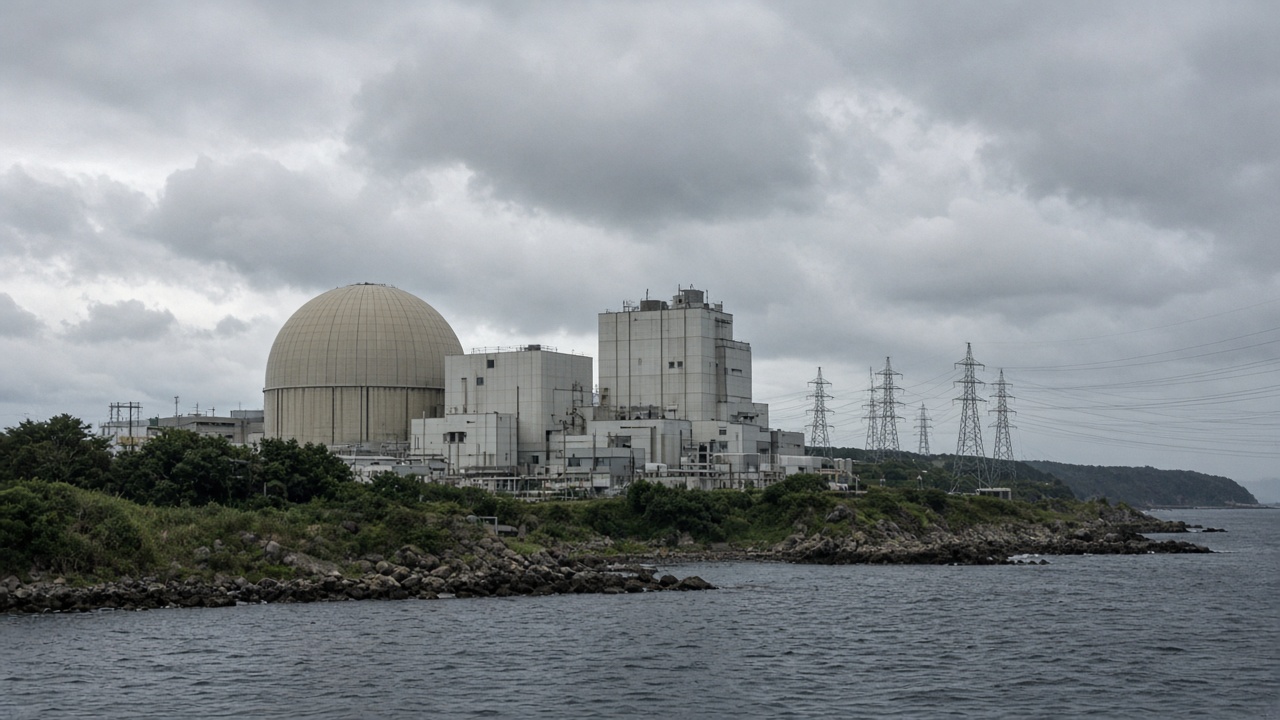
Kansai Electric Power restarted the reactor at Mihama nuclear power station Unit 3 on Friday, bringing the 826-megawatt pressurized water reactor back into commissioning operation the same day, the company disclosed. Commercial operation is scheduled to resume on 4 November after integrated load testing, capping a restart campaign interrupted twice by equipment failures since May.
Why the unit went offline again
Unit 3 had been in adjustment operation on 17 September when workers spotted water dripping at three drops per second from insulation around an air vent valve on feedwater piping, according to Kansai Electric’s Tokyo Stock Exchange filing. The utility manually shut the reactor at 4:03 a.m. on 18 September to investigate.
Inspection found a through-hole in piping between a high-pressure feedwater heat exchanger control valve and the vent valve. Kansai Electric said corrosion likely progressed after rainwater entered through a misaligned exterior panel installed during 2010 work, and it replaced the affected line with stainless steel while updating maintenance guidance on panel orientation.
A troubled return from an earlier outage
The September leak followed a separate manual shutdown on 8 May, when steam escaped through a hole in a high-pressure turbine cap during operation. Kansai Electric advanced a planned outage into June, replacing the cap and swapping 50 pipe sections where thinning had been recorded, Japanese media including Kyodo News and 47NEWS reported.
Mihama Unit 3, located in Mihama town, Fukui prefecture, is one of Japan’s older commercial reactors and reaches 50 years of operation in December. Restarting it is part of Kansai Electric’s effort to secure baseload capacity for the Kansai region as the company balances nuclear output with renewable additions.
Regulatory and community context
Japan’s Nuclear Regulation Authority had cleared the unit to resume after the May turbine incident, and Friday’s startup proceeded under the schedule Kansai Electric announced on 9 October. Local governments in Fukui have long hosted multiple reactors and associated fuel-cycle facilities, making each restart closely watched by neighboring prefectures that depend on Kansai’s grid.
Kansai Electric said it will continue commissioning tests before returning Unit 3 to full commercial service. No radiation release was reported in connection with either the May steam leak or the September feedwater drip, and the company classified both events as equipment problems rather than core-safety emergencies.
Opponents of nuclear restarts in Fukui have questioned whether aging components can withstand another decade of service, but Kansai Electric maintains that the pipe replacement and turbine repairs satisfy regulatory inspection requirements. Electricity demand in the Kansai region typically rises as summer heat fades and industrial plants ramp autumn production, giving the utility a narrow window to complete testing before winter peak loads arrive.