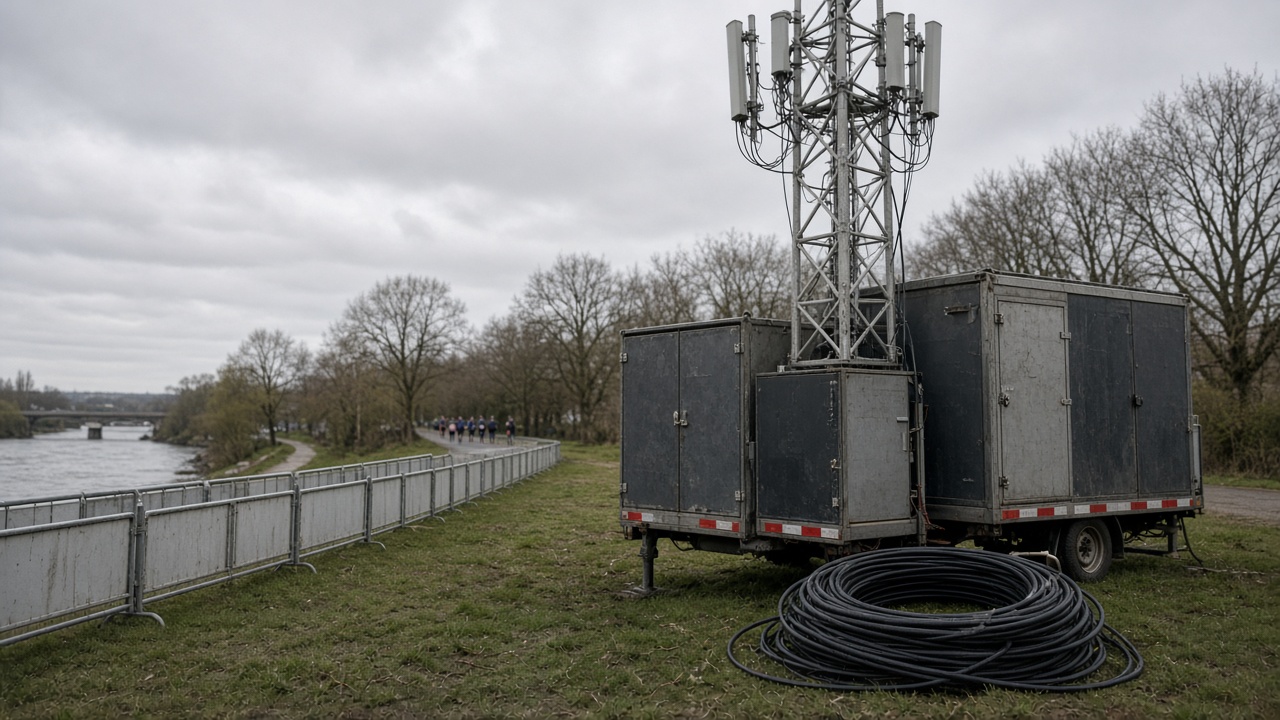
KDDI activated trailer-mounted 5G cells along the Osaka Marathon course on Friday, dedicating spectrum slices to race safety crews and broadcast partners before Sunday’s start while permanent fiber repairs continue in storm-hit pockets of Kansai.
The carrier said 14 temporary sites cover kilometers 5 through 40, including the Tenjinbashisuji straight where crowd density peaks. Each trailer backhauls through a mix of microwave and satellite links so organizers can keep lap-timing feeds alive even if a backhoe cuts a street-level fiber elsewhere in the city.
Event network separate from public traffic
Haruto Suzuki’s technology desk verified that KDDI carved a network slice for marathon operations rather than simply adding capacity to public cells. Medical tents and Japan Association of Athletics Federations officials authenticate onto that slice with credentials issued Thursday, limiting interference from spectators uploading video.
The Ministry of Internal Affairs and Communications granted a special temporary license for the trailers, valid through Monday. MIC inspectors toured the depot near Yodoyabashi on Friday afternoon to confirm antennas stay within height limits along the river path.
Why Osaka needed redundancy
Typhoon damage earlier in the week flooded a conduit shared by multiple carriers in eastern Osaka, delaying permanent fixes until after the race. KDDI’s satellite backhaul partner, already used in rural Hokkaido deployments, shipped two flyaway terminals by truck Wednesday night.
Rival SoftBank Corp. said it would run parallel cells on the finish-line straight but is not sharing the dedicated slice, meaning broadcasters must choose primary feeds carefully. NTT West restored core fiber to the Osaka municipal data center Friday morning, lowering—but not eliminating—risk of a single cut taking timing offline.
After the race
KDDI plans to break down trailers by Monday night and redeploy three units to Chiba municipalities still waiting on fixed broadband after Typhoon Dujuan. Suzuki’s team will measure whether slice-based event networking becomes a template for next spring’s World Athletics Championship marketing week in Tokyo.
For runners, public 5G along the course should still improve live-tracking apps, though organizers warn that upload speeds collapse when crowds thicken at water stations. Spectators are asked to download official maps offline before leaving hotels, a low-tech backup if slices stay reserved for staff.
KDDI engineers said they will publish a post-race throughput report for MIC, including minute-by-minute latency at medical tents. That dataset could inform whether Osaka mandates dual-carrier slices for future marathons after fiber cuts exposed single-vendor risk this week.