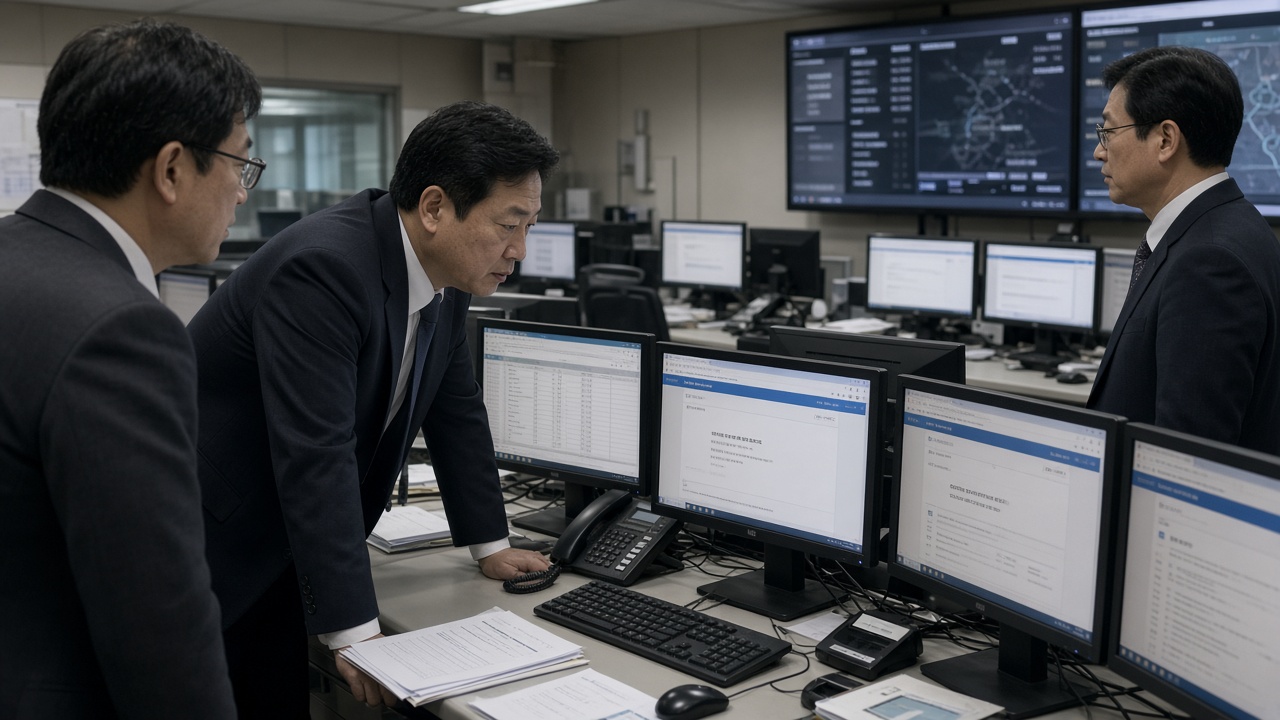
President Lee Jae Myung ordered South Korea’s transnational crime agencies on Saturday to carry out physical shutdowns of overseas websites used for illegal gambling or sexual-exploitation material when prosecutors cannot obtain timely court orders to block them, escalating a domestic debate over offensive cyber powers.
Lee’s instruction, posted on his social media account, amplified a policy graphic shared by a senior Democratic Party lawmaker that promises punishment for anyone who merely creates such sites and touts “legal hacking” to delete exploitative content. Presidential aides said the order covers coordinated work by the foreign ministry, national police, and the Serious Crimes Investigation Agency when servers sit beyond Korean jurisdiction.
What triggered the order
Illegal online gambling rings targeting Korean-language users have migrated to servers in Southeast Asia and the Caribbean, using mirror domains faster than courts can issue takedown notices. Child-exploitation forums have followed a similar pattern, forcing investigators to rely on informal cooperation with foreign hosts that often stall or demand new warrants for each IP address.
Lee wrote that harming South Koreans for profit is unacceptable under any circumstances, language that aligns with his administration’s broader crackdown on scam compounds and voice-phishing gangs. The president did not publish operational rules for when destructive techniques may be used, leaving ministries to draft implementation guidelines that lawyers expect will face constitutional scrutiny.
Party politics and policing limits
The Democratic Party’s policy committee has pitched “legal hacking” as a counterpart to recent bank-data breaches, arguing that defensive firewalls alone cannot keep pace with AI-assisted fraud. Prosecutors already pursue creators of illegal sites under existing criminal codes, but Lee’s statement is among the first from the Blue House to endorse physically wiping offshore infrastructure rather than simply listing domains on a national blocklist.
National Police Agency officials declined to comment on active operations Sunday, citing security. Legal scholars noted that South Korea’s prior offensive cyber authorities focused on North Korean threats; applying similar tools to commercial crime servers would require new legislation spelling out oversight, logging, and compensation if a provider is hit by mistake.
What comes next
The foreign ministry is expected to brief ambassadors in Seoul about the policy before agencies test it against a live target, mindful that mistaken attribution could strain trade partnerships. Gambling industry monitors say mirror sites could reappear within hours unless payment rails are also seized, a step that still requires cooperation from overseas banks.
Parliamentary hearings on cybercrime are scheduled for later this month, and opposition parties plan to demand that Lee’s order be paused until a bill passes. For now, investigators have a presidential mandate to explore destructive options when courts cannot reach overseas hosts—a significant shift for a country that has historically emphasised blocking and surveillance over cross-border server raids.