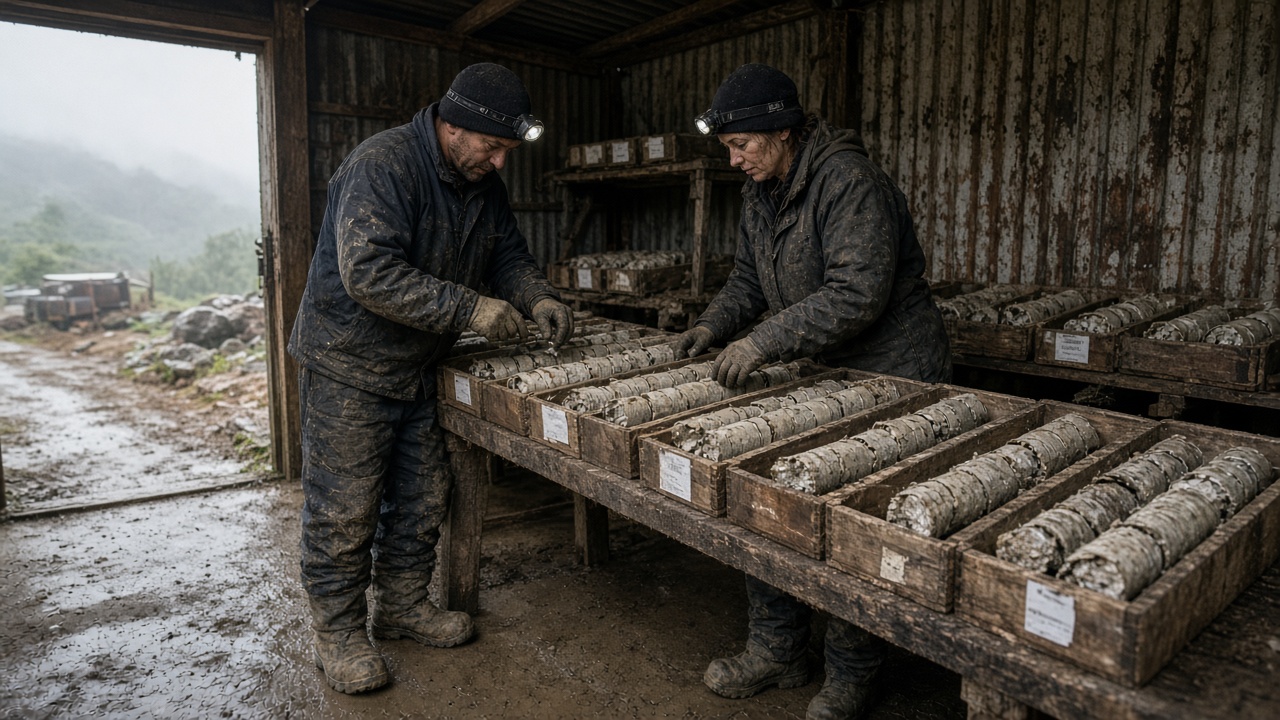
Geoscience Tasmania has catalogued scandium-enriched zones along the Renison tin belt in the state’s west, publishing assay highlights that could feed Defence-led stockpile planning for aerospace alloys. The survey, released Monday, does not declare a mine, but it gives explorers fresh targets in a district already served by rail and power infrastructure.
Geology and grades
Teams re-logged historic drill cores stored near Zeehan and found scandium oxide values above 100 parts per million in skarn zones adjacent to operating tin stopes. Those grades trail dedicated scandium mines overseas but could be economic as by-product credits if tin prices hold and processing circuits accept additional leach steps.
State geologists paired handheld XRF scans with laboratory re-assays to avoid the false positives that plagued 2010-era rare-metal promotions. They also mapped gallium paths in the same host rocks, linking the dataset to federal critical-minerals lists updated this year.
Defence and industry interest
Defence industry officials joined a technical webinar last week to hear whether Tasmanian scandium could diversify supply for aluminium-scandium master alloys used in fighter skins and launch vehicles. No procurement commitments followed, but the department’s industry division asked for quarterly updates as airborne magnetic surveys continue.
Local environmental groups want binding heritage assessments before any new open cuts near the Tarkine rainforest margins. Miners argue underground extensions from existing tin operations would limit surface disturbance.
What comes next
Geoscience Tasmania will open the core library to qualified explorers under standard confidentiality deeds. Junior miners with tin joint ventures in the region may bolt on scandium recovery studies in their next feasibility updates.
For scientists, the release shows how legacy cores can answer new policy questions without fresh drilling campaigns. For investors, it is a reminder that critical-minerals hype still begins with dusty boxes in shed rows—not just cabinet press conferences.
Community consultation
West Coast Council mayors requested town-hall sessions before any exploration licences renew near heritage tramways popular with tourists. Geologists countered that underground sampling could proceed with limited surface footprint if tin operators share haul roads.
University of Tasmania researchers plan to publish peer-reviewed spectral methods so juniors cannot hype anomalous readings without third-party replication.
Funding pipeline
State budget papers allocated $4 million for core-library digitisation, speeding access for juniors that cannot afford helicopter time. Federal matching grants under the critical minerals facility remain competitive, with assessors scoring environmental and community benefit sections heavily.
Core photography for the release will upload to the state geological survey portal by month-end.