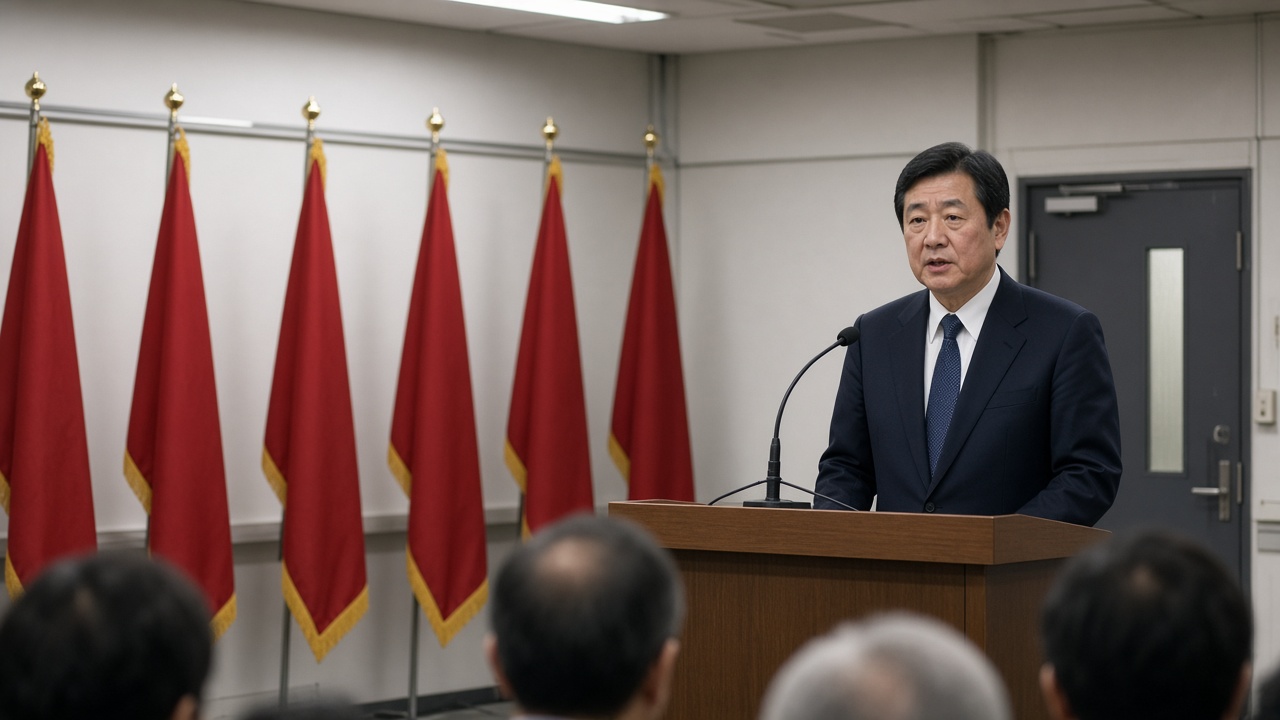
The Japanese Communist Party said Monday it will abandon its long-standing policy of seeking electoral cooperation with other opposition parties, telling members it will instead prioritise building party organisation and confronting Prime Minister Sanae Takaichi’s government head-on. Chair Tomoko Tamura unveiled the shift at a central committee session in Tokyo as she presented a draft resolution for the party’s January convention.
What Tamura announced
At the 10th central committee plenary at party headquarters in Shibuya, Tamura reported on the draft platform for next year’s party congress and said the JCP would “change course” on national-election cooperation with rival opposition blocs. Kyodo News quoted her saying a “new party alignment” had emerged after the Constitutional Democratic Party and Komeito formed the centrist “Reform Alliance” and other groups splintered or regrouped.
Tamura said the JCP would “squarely confront the Takaichi administration” and put expanding the party’s strength first. The draft would remove language on “cooperation between citizens and opposition parties” that has appeared in three consecutive convention resolutions since 2017, when the party sought tactical alliances with the CDP and others to counter the ruling Liberal Democratic Party.
Electoral targets attached to the shift
Japanese media reports said the draft sets concrete goals for the next House of Representatives election: at least 4.5 million proportional-representation votes, a 7.5 percent share in that segment, and at least one single-member district candidacy in every prefecture. Nikkei and Nikkan Sports said those targets signal a return to fielding a broad slate even where cooperation might have reduced head-to-head contests with other opposition candidates.
The JCP won eight lower-house seats in the 2024 election and has struggled to regain the influence it held when cooperation pacts occasionally delivered single opposition candidates in key districts. Party officials portrayed Monday’s decision less as an ideological break than as a response to a reshuffled opposition map that, in their view, no longer offers reliable partners.
Reactions across the opposition field
CDP and Reform Alliance leaders did not immediately issue detailed responses on Monday afternoon, but the move could complicate coordination in urban districts where multiple opposition parties still split the anti-LDP vote. Smaller groups that benefited from JCP supporters transferring votes under informal agreements may need to redraw strategies ahead of a snap election that Takaichi could call once the Diet session ends.
For the ruling coalition, a more independent JCP candidacy list could either fragment opposition votes further or, in theory, energise left-leaning turnout in pockets where the communists maintain strong branch networks. Much will depend on whether other parties mirror the JCP’s go-it-alone stance or attempt fresh local accords without a national umbrella.
What comes before January
The draft resolution still requires formal adoption at the January party congress. Until then, regional committees will debate the text and candidate plans. Tamura’s remarks make clear the leadership expects rank-and-file organisers to recruit candidates and canvassers rather than negotiate joint nominations with CDP prefectural chapters.
With North Korea firing ballistic missiles into the Sea of Japan earlier Monday and the Takaichi government stressing security ties with Washington, the JCP is also positioning itself as the opposition voice most willing to challenge remilitarisation debates—another reason, officials said privately, to keep their party label distinct on the ballot rather than submerged in broader opposition branding.