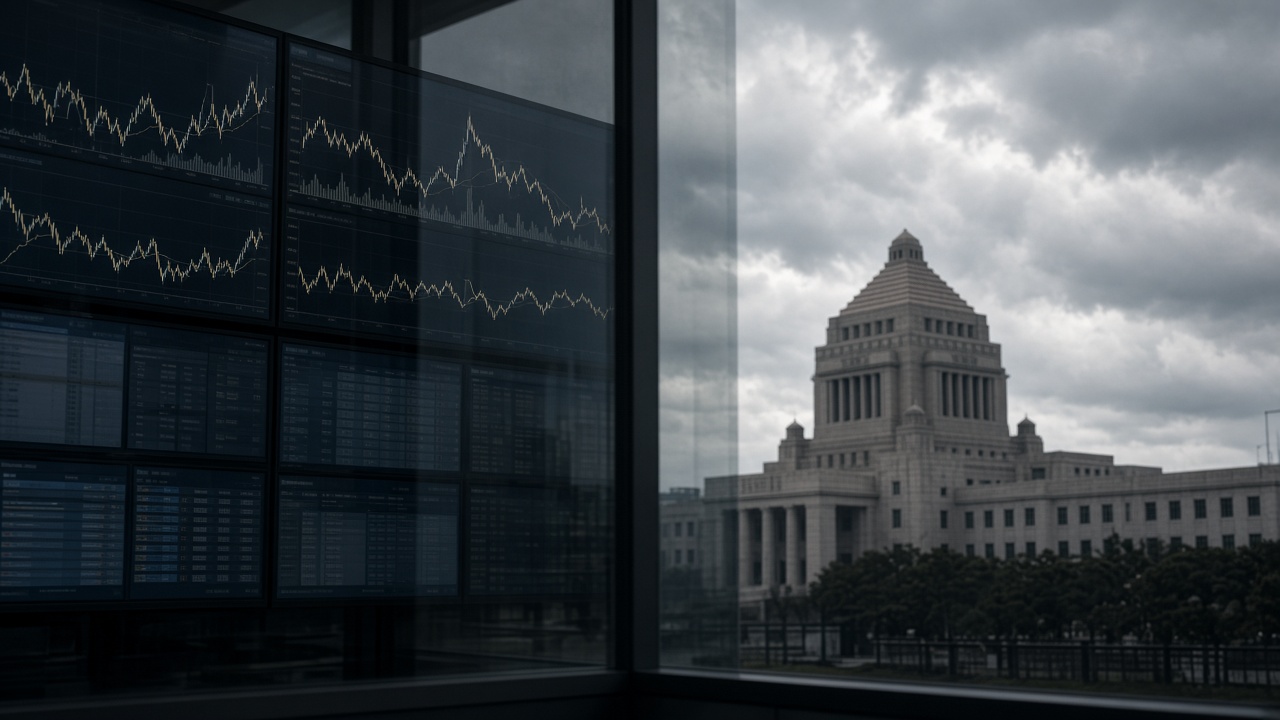
Japanese politicians are competing to promise cheaper rice and cooking oil on store shelves, yet the bond market is charging more than 3 percent on 10-year government debt — a combination that should force voters to ask which promise is funded and which is theater.
Sticker prices versus supply
Temporary consumption vouchers and targeted subsidies can shave a few yen off register receipts for weeks. They do not build warehouses, fund farm modernization, or secure energy imports when the yen trades near 158 per dollar. Cabinet Office medium-term projections already show consumption recovering slowly despite headline GDP growth; households feel imported inflation in calories, not macro slides.
InfoHandle Editorial does not oppose relief for low-income families. We oppose packaging relief as a substitute for a credible medium-term fiscal framework. When every campaign stops at the supermarket aisle, Diet debate shrinks to photo ops instead of revenue baselines.
Why bond markets matter to rice
Ministry of Finance auction calendars are public; cover ratios and yield moves are not abstract. Higher borrowing costs feed into everything from bridge maintenance to disaster reconstruction in Noto. If investors believe Tokyo will fund recurring subsidies without offsets, they demand more yield — which raises debt service and crowds out future subsidies.
Bank of Japan officials have stressed policy independence while government spokespeople talk about "responsible proactive fiscal policy." Markets reconcile those sentences into a single price. Ignoring that price does not make it disappear.
What a real anchor looks like
A serious framework publishes multi-year paths for the primary balance, names tax and spending levers under stress tests, and ties one-off handouts to verifiable delivery ledgers — the same transparency municipal disaster accounts now expect. Opposition parties should compete on those tables, not on who can print the largest yen figure on a flyer.
International Monetary Fund reviews of Japan repeatedly cite aging demographics and energy import dependence. Neither is solved by a October press conference in a Tokyo supermarket aisle.
Household reality check
Readers juggling mortgages and electricity bills should weigh subsidies against duration. A permanent 2 percent consumption tax tweak with published offsets may be harder politics but clearer math than a quarterly coupon that expires before winter gas invoices arrive.
Election-eve sticker-price theater feels good on checkout day. Medium-term fiscal anchors feel boring until the bond auction fails to attract bids — at which point boredom looks like prudence.
The editorial bottom line
Demand that candidates show how each yen of subsidy is financed, what happens when oil prices spike again, and how Japan rebuilds supply capacity in agriculture and energy. Anything less is marketing, not governance — and voters deserve a grocery list that includes the bond market too.
A question for every rally
When a candidate waves a bag of rice on stage, ask for the line item in the supplementary budget. When another promises to freeze consumption tax, ask which social programs shrink to pay for it. Fiscal credibility is not a partisan virtue; it is the precondition for any subsidy that survives the next auction.
Japan's voters are not naive about inflation — they live it. They deserve politicians who treat the bond market as a constituency too, not a backdrop for sticker-price theater.