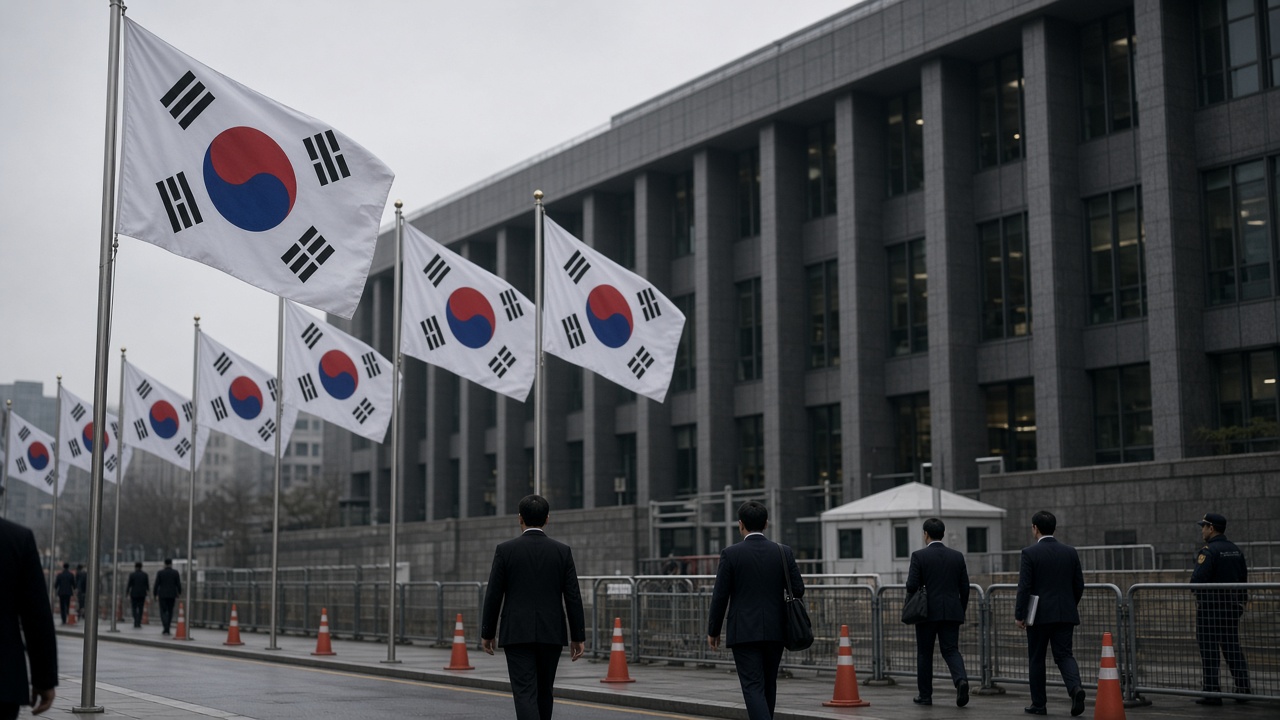
South Korea’s ambassador to Ukraine returned to Seoul on Saturday after the foreign ministry recalled him in protest over Kyiv’s public confirmation that two North Korean prisoners of war had been transferred to the South — the first ambassadorial protest recall in 18 years.
The dispute traces to Ukrainian President Volodymyr Zelenskyy’s address to the United Nations General Assembly on Sept. 23, when he said Ukraine had handed the soldiers to South Korea. Seoul maintains that both governments had agreed to keep the transfer confidential to protect the men and any relatives still inside North Korea.
Why Seoul reacted
Foreign Ministry officials told reporters the recall was meant to signal that disclosure without coordination endangered people on both sides of the demilitarized zone. The ministry said it would keep consulting Kyiv so that “pending issues” could be resolved, but stopped short of announcing reciprocal steps against Ukraine’s mission in Seoul, where the ambassador post has been vacant since September 2025.
Ukrainian foreign ministry spokesperson Georgiy Tykhyi said before the recall that Kyiv had invited the ambassador for talks and remained open to dialogue even if rebuilding trust “takes time.” The two North Korean troops were among a larger cohort of DPRK personnel Moscow deployed to support its invasion; their capture became a rare intelligence and propaganda prize for Ukraine and its partners.
Peninsula stakes
For President Lee Jae Myung’s government, the row lands amid wider alliance friction. The National Intelligence Service spent the weekend rebutting domestic media claims that Washington had narrowed intelligence sharing with Seoul, while opposition lawmakers demanded personnel changes at the spy agency and the unification ministry.
North Korean state media had not commented on the POW transfer by Sunday evening in Seoul, but analysts in the South said any confirmation that citizens fought in Ukraine could complicate Pyongyang’s narrative of strict isolation from the war.
Path to repair
Officials in Seoul said Ambassador Park Jang-ho would brief ministers on Kyiv’s handling of the case before a decision on when he returns to post. Ukraine, fighting a grinding war and seeking ammunition and political support, can ill afford a prolonged breach with one of Asia’s largest arms exporters and a key U.S. treaty ally.
Still, the recall shows how battlefield captures can spill into alliance politics far from the front line — and how a single speech at the United Nations can unsettle carefully negotiated security arrangements on the Korean Peninsula.