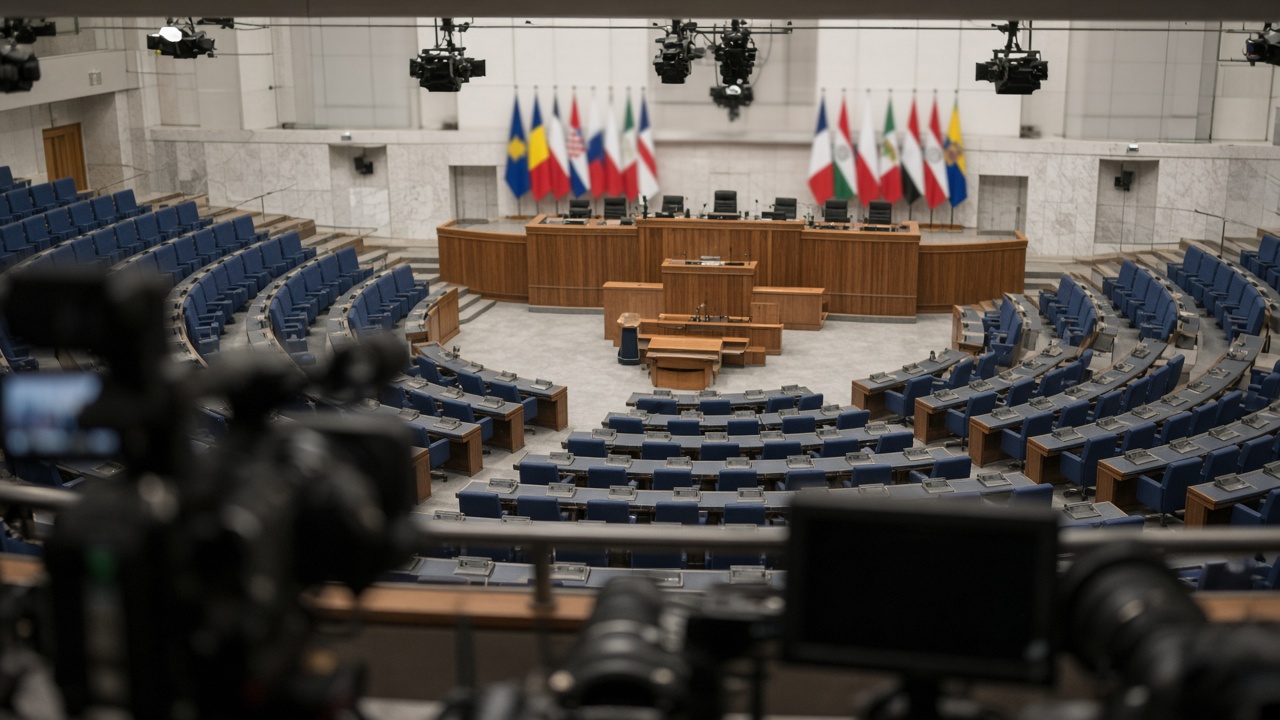
Democratic Party of Korea whip offices told members to prepare for a marathon floor debate on the broadcast act package, the clearest signal yet that the opposition will filibuster before Thursday’s plenary vote on governance changes at KBS and MBC.
Party floor leader Rep. Park Chan-dae said Monday that debate could extend past midnight each day until the government agrees to split the bill or restore an independent board appointment mechanism removed in the latest committee draft. The ruling People Power Party countered that delay tactics would hold hostage unrelated plenary items, including supplementary budget lines for flood recovery in North Gyeongsang.
What the package would change
The legislation merges several proposals debated since spring: shortening board terms at public broadcasters, requiring parliamentary confirmation of presidents, and giving the Korea Communications Commission veto power over editorial guidelines framed as “management rules.” Journalists’ unions say the veto would politicize newsroom standards; the government argues it prevents labor agreements from blocking restructuring needed to compete with YouTube and Netflix for younger viewers.
A compromise floated last week would keep KCC oversight but sunset it after three years pending a media trust study. Democratic Party negotiators rejected that sunset as reversible. They want explicit language that news standards remain with internal editorial committees, citing precedents from 2017 when similar fights stalled for months.
Filibuster mechanics
South Korean filibusters require continuous speaking once invoked; the speaker’s office schedules unlimited time unless three-fifths of members vote to close debate. The Democratic Party holds 174 seats in the 300-member assembly, below the 180 needed to force cloture alone. It would need support from Justice Party or independent lawmakers who have criticized both sides’ media rhetoric.
Clerk staff prepared cots and meal vouchers for aides, recalling a 2021 debate that lasted 193 hours over prosecution reform. Broadcasters assigned cameras to cover speeches live, a irony not lost on commentators who noted politicians would dominate airtime while criticizing KBS ratings.
Public opinion and street pressure
A weekend rally near Yeouido drew about 4,500 union members and student press clubs demanding the bill’s defeat. Polls commissioned by cable news channels showed pluralities uneasy with both government interference and union work rules, suggesting no easy win for either bloc. President Lee’s office released a statement urging “orderly debate” without threatening an executive order.
Business lobbyists are split. Chaebol advertisers worry about uncertain programming schedules if strikes follow a passed bill; tech platforms quietly support anything that weakens legacy broadcaster bargaining power in carriage disputes.
What happens Thursday
If filibuster holds, the plenary vote slips to next week and flood supplemental spending may ride in the same basket, increasing pressure on rural PPP lawmakers. If cloture passes, expect immediate court challenges from KBS labor unions citing constitutional press freedom guarantees.
For viewers, the fight is not abstract. The bill decides who hires the next KBS president and whether parliamentary hearings on news standards become a weekly sport. Monday’s scheduling order makes that fight explicit: microphones on, clocks off, until one side blinks.