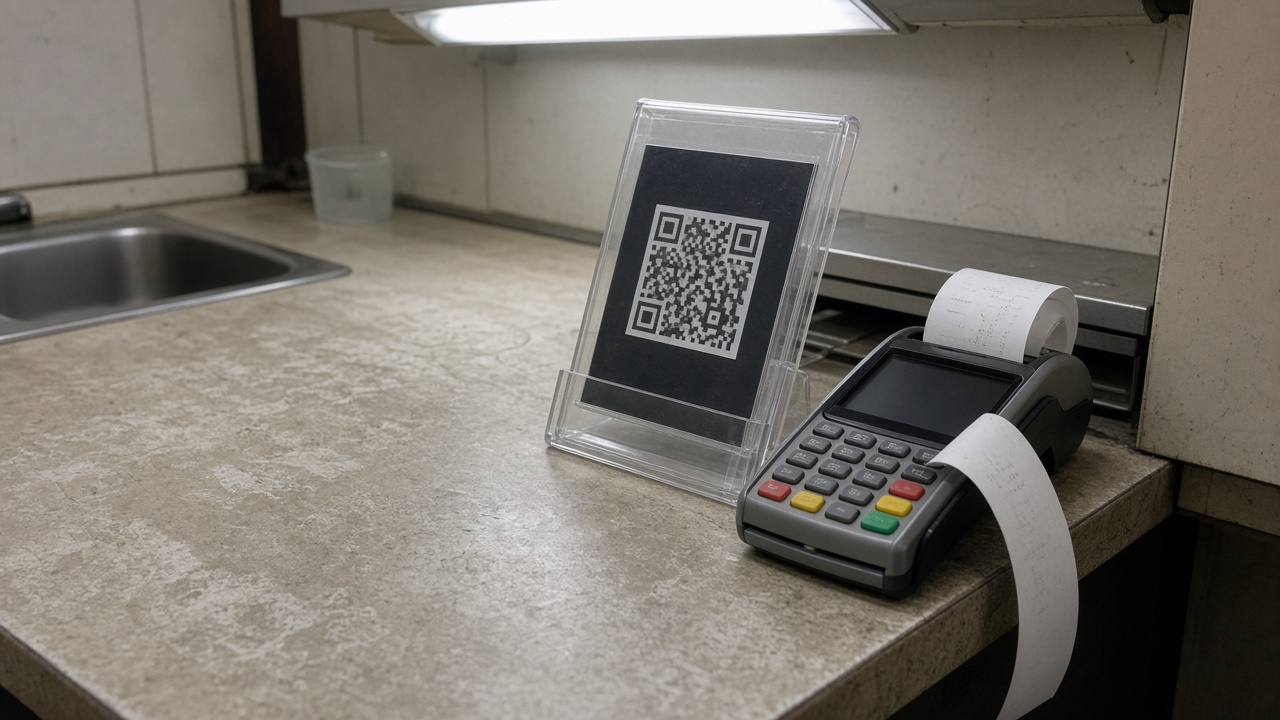
Kakao Pay will publish a new offline merchant fee table on Wednesday after the Fair Trade Commission questioned whether its QR rates for bakery and café chains matched the economics of simple card acquiring, people familiar with the filing said Monday in Seoul.
The fintech unit of Kakao Corp. told franchise associations it would cut blended take rates for merchants processing between 80 million and 400 million won a month, a band that includes many neighborhood coffee brands and dessert shops that adopted Kakao Pay during the pandemic. Larger national chains already negotiated separate enterprise schedules; mid-size operators said they had been quoted the same headline rate as full-service restaurants with higher chargeback risk.
What the FTC flagged
Regulators opened a market review in August after the Korea Franchise Association complained that payment apps were stacking platform fees on top of interchange-like charges without disclosing how much flowed to issuers versus Kakao Pay itself. The commission did not accuse Kakao Pay of collusion, but staff memos circulated to industry groups last week said the company’s published “all-in” grid mixed categories that are regulated differently under the Electronic Financial Transactions Act.
Kakao Pay’s response, described to reporters by two merchant advisers who attended a closed briefing, separates QR-present transactions from link-based remote payments and caps the remote channel at a lower basis-point spread. Offline QR at the counter will move to a three-tier table keyed to monthly payment volume rather than a flat 2.2 percent quote that many merchants said they were shown on sales calls.
Why offline still matters to Kakao
Kakao Pay built its user base on mobile gift certificates and online checkout, but offline QR stickers remain the stickiest acquisition channel for small businesses that do not run their own apps. The company reported more than 21 million monthly active payment users in its second-quarter letter, and offline transaction count grew faster than online for the third consecutive quarter even as total payment volume growth slowed.
Investors watch take rate more closely now that interest income from customer float has normalized after Bank of Korea rate cuts. A lower merchant fee compresses revenue per transaction, but Kakao Pay executives argued at the briefing that confusing quotes were slowing adoption in the very band the FTC scrutinized. Clearer tables, they said, would reduce sales-cycle disputes and support cross-sell of business accounts and advertising on Kakao Talk channels.
Competitive pressure from banks and Naver
NH NongHyup’s NH Pay and Naver Pay both refreshed small-merchant promotions in September, tying fee holidays to linked checking deposits. Toss Payments, which is not part of Kakao’s ecosystem, has marketed flat pricing to fried-chicken franchises that chafed at variable quotes. None of those programs triggered a formal FTC review, but Kakao Pay’s market share in offline QR at major franchise brands made it the first target when the commission updated its payment-services questionnaire this summer.
Card issuers, meanwhile, are not cheering a fee cut. Shinhan Card and KB Kookmin Card earn interchange on many Kakao Pay wallet loads that ultimately settle over domestic networks. Industry lobbyists told the Financial Services Commission that any reduction in merchant fees could push wallets to steer users toward proprietary money pools that bypass card rails. The FSC has not intervened, but it asked Kakao Pay to file an updated risk disclosure on merchant concentration before the new table goes live.
What merchants should watch
Franchise lawyers advising clients said the critical detail is not the headline percentage but the definition of “offline QR.” Payments initiated inside a merchant’s own app and completed with a Kakao Pay deep link may still price on the remote schedule. Staff training materials at two bakery chains seen by InfoHandle Network still describe counter scans and app orders under one marketing banner.
Merchants will have until November 15 to opt into the new grid or remain on legacy contracts through year-end. Kakao Pay said it would mail simplified Korean-language summaries to store managers, not just headquarters billing teams, after the FTC criticized opaque PDF footnotes in an earlier consent decree involving a different fintech.
For regulators, the case is a template. The commission’s payment-market review is scheduled to conclude in December, and staff have asked other wallets for the same volume-tier breakdown Kakao Pay will publish this week. If the table satisfies the FTC, Kakao Pay avoids a formal corrective order; if franchise groups argue the cuts are cosmetic, the commission could still impose standardized disclosure boxes across the industry.
Kakao Corp. shares were little changed Monday morning, with analysts treating the fee move as a compliance cost rather than a strategic pivot. For the café owner scanning a QR code at the register, the stakes are simpler: whether the sticker on the counter finally matches the number on the monthly statement.