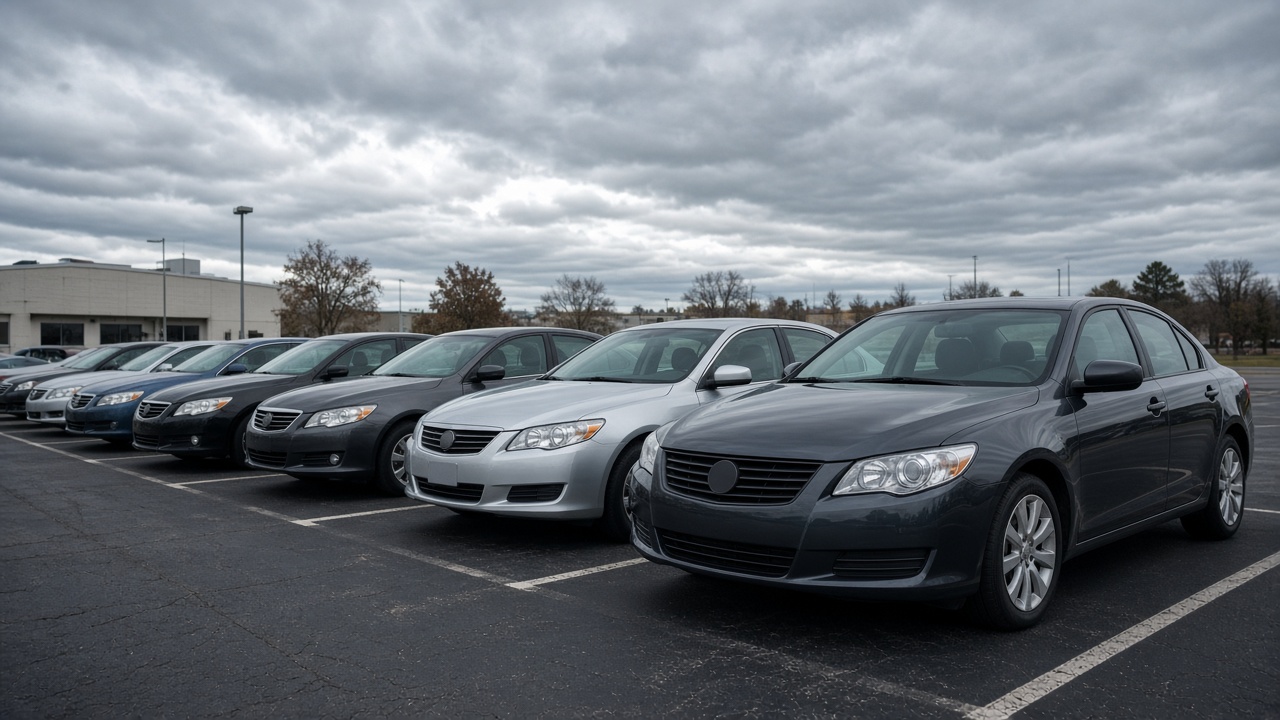
Car financiers and authorised dealers across Singapore reported a spike in loan quotation requests after the Land Transport Authority (LTA) published the first October certificate of entitlement (COE) results, with Category B premiums falling S$2,900 to S$130,100 and Category A slipping to S$130,001.
The movement is modest in percentage terms, but it changes monthly instalments on a S$160,000 drive-away price enough that buyers who paused in September are re-running sums before the second October bid opens at noon on Oct 19.
How the bid printed
LTA’s results sheet shows Category A received 1,560 bids for 1,232 certificates, while Category B drew 1,126 bids for 945 certificates. Category E held flat at S$137,000, signalling that mass-market buyers rather than open-category speculators drove the softness. Motorcycles in Category D fell S$1,189 to S$11,012, a relief for delivery riders whose fuel and bike costs already climbed earlier in the year.
Prevailing quota price tables also shifted: October’s Category B PQP rose to S$131,616 from S$128,697 in September, which matters for owners renewing COEs early. Financiers said many callers this week are comparing three-year renewals against switching to electric models that straddle the Category A power cap.
What shows up on the loan worksheet
Household-money desks at DBS, OCBC and UOB do not move advertised car-loan rates every COE round, but dealer finance arms tweak administrative fees and in-house insurance bundles when quotas soften. A S$2,900 cheaper COE on a seven-year loan at roughly 2.8 per cent effective annual interest saves about S$40 a month before down-payment adjustments—enough for families balancing mortgage and childcare accounts.
Marcus Goh’s desk has tracked a pattern: when both Category A and B sit within S$100 of each other, buyers downgrade engine size to stay in A, freeing cash for home charging installations. Several Toa Payoh showrooms said walk-ins rose on Tuesday after news reports highlighted the dip, even as haze kept weekend foot traffic light.
Next bid, same anxiety
The second October exercise closes Oct 21 at 4pm, leaving little time for approval-in-principle letters to clear. LTA’s published schedule shows no holiday interruptions, so financiers are urging customers to upload payslips digitally rather than visit branches.
COE prices remain far above pre-pandemic norms, and a single softer round does not reverse years of quota tightening. Still, for households timing a replacement car before year-end travel, the Oct 7 print offers a rare moment where the headline number moved in their favour—and banks know the phones ring when that happens.
Local follow-through
Business owners said they will reassess layouts if NEA’s forecast extends beyond Thursday, while residents adjusted exercise routines to indoor malls and community club gyms. Delivery riders noted heavier order volumes as diners stayed home, a small compensation for breathing haze on the roads.
Statutory boards have not announced new grants, but trade associations urged members to document revenue losses in case insurers clarify business-interruption clauses. For most Singaporeans, the story remains grounded in daily choices—whether to open a window, send a child to PE class, or keep a medical appointment booked before systems crashed.
Across Singapore, the episode sits in a broader October where haze, Formula 1 crowds, and digital public services all competed for attention. Residents who spoke to InfoHandle said they measured impact in minutes lost rather than dramatic headlines—queue time at lunch, another phone call to a clinic, or a cancelled outdoor run. Agencies reiterated that official updates will flow through government websites and verified social channels rather than forwarded messages.
Analysts cautioned against reading too much into a single day, but acknowledged that repeated friction can erode confidence in institutions that otherwise score highly in global trust surveys. The next policy checkpoint will be whether ministries publish concrete remediation dates or rely on generic assurances.
For now, the city’s rhythm continues: trains on time, schools open, hawkers flipping eggs in ventilated stalls. The story is the margin—the extra hour, the extra mask, the extra verification step—that Singaporeans are spending to keep daily life on track while the region’s air and networks stay unstable.