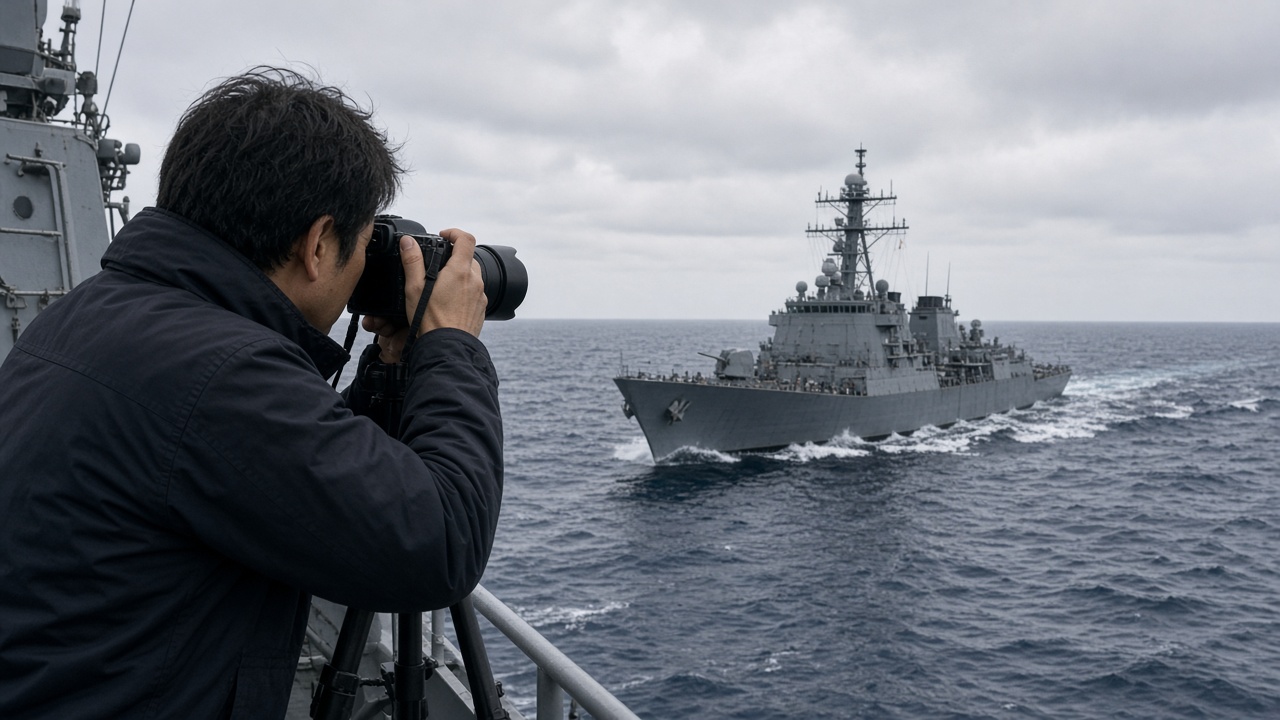
China’s navy sent the aircraft carrier Liaoning and its escorts into the western Pacific on Wednesday for what Beijing described as annual routine training, prompting Japan’s Self-Defense Forces to track the group as it operated near Okinawa.
The deployment extends a pattern of Chinese carrier operations beyond the first island chain, an area Japanese defense officials have described as an exposed flank where Beijing can practise strike packages without transiting the Taiwan Strait.
What Beijing announced
The People’s Liberation Army Navy said the Liaoning-led task group sailed east to test combat readiness and “continuously enhance capabilities to execute missions.” The statement, carried by state media and the defense ministry, said the exercise complied with international law and was “not directed against any specific country or target.”
The Liaoning is one of three carriers in China’s fleet and earlier this year conducted more than 40 days of drills in the western Pacific and South China Sea, according to Chinese state media accounts cited by Kyodo News. Those earlier sorties included hundreds of fixed-wing takeoffs and landings that Japan’s Joint Staff Office logged from afar.
How Tokyo is responding
Japan’s Defense Ministry did not immediately release a full track chart, but Kyodo reported the carrier was spotted off Okinawa Prefecture on Wednesday as Maritime Self-Defense Force destroyers and P-3C patrol aircraft maintained surveillance.
Japanese officials have grown accustomed to Liaoning deployments since the carrier entered active service, yet each transit still triggers cabinet-level briefings because of the potential for simultaneous air activity around the Senkaku Islands and the Miyako Strait choke point.
In June, Tokyo and Beijing issued competing accounts after Chinese jets from the Liaoning flew near Japanese surveillance aircraft during a prior western Pacific cruise. The Joint Staff Office denied Beijing’s claim that Japan had conducted “dangerous” close-in reconnaissance, saying MSDF units operated at safe distances.
Regional context
The carrier movement coincides with broader tensions in the East China Sea, where Chinese coastguard vessels have maintained regular patrols east of Taiwan since mid-2025. U.S. officials said they were aware of the Liaoning sortie but declined to comment on specific American ship movements.
Analysts at Japan’s National Institute for Defense Studies noted that carrier deployments allow China to practise integrating destroyer escorts, replenishment ships and submarine screens — skills Beijing would need to sustain operations during a Taiwan contingency, though Wednesday’s statement repeated Beijing’s insistence that the drills are routine.
Prime Minister Sanae Takaichi’s government is pushing a supplemental defense budget through the Diet this month, citing increased Chinese activity around Japan’s southwestern islands. Opposition lawmakers asked whether MSDF air wings stationed at Naha have enough tanker support to keep pace with extended carrier tracking missions.
Defense Minister officials said Japan would continue “calm and resolute” monitoring while avoiding maneuvers that could trigger accidental escalation, a posture adopted after a 2024 incident in which Chinese and Japanese aircraft flew within visual range south of Okinawa.