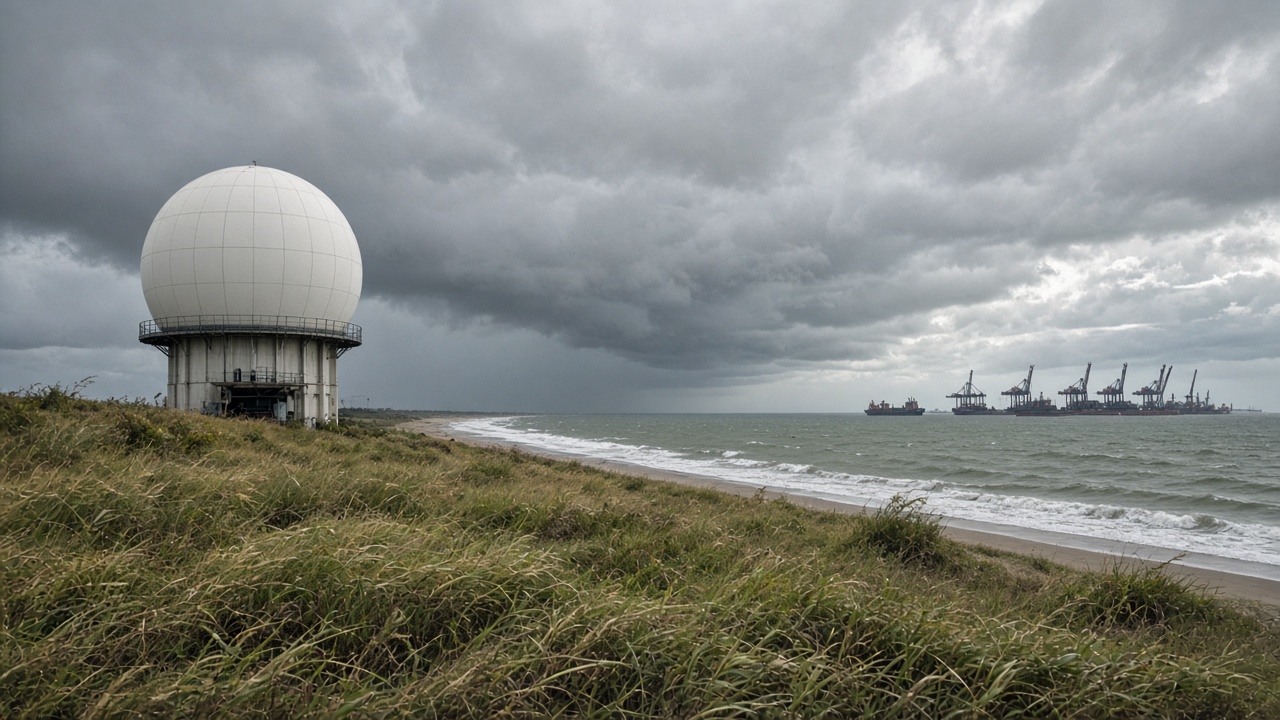
Scientists at the Indian Institute of Science in Bangalore say a new ingest pipeline that blends coastal Doppler radar echoes with India Meteorological Department track models has trimmed uncertainty windows for late-season Bay of Bengal depressions, giving Paradip and Visakhapatnam port authorities more hours to stage vessel movements before cyclone watches escalate.
Why late-season storms matter for ports
October and November systems often form close to the coast, leaving less time between depression formation and landfall than mid-monsoon cyclones. For iron-ore and container terminals, each hour of lead time can mean rerouting pilots, clearing anchorages and pausing gantry operations without stranding crews. Lakshmi Nair’s science desk reports the IISc team tested the blend against three recent depressions, comparing predicted landfall cones with post-storm best tracks.
Method in plain language
Doppler radars along the eastern seaboard measure raindrop motion, offering high-frequency updates that satellite passes may miss when cloud tops thicken. Feeding those scans into IMD’s numerical models nudges track forecasts when storms wobble along the coast. The group published validation statistics showing a modest but meaningful shrink in the seventy-kilometre error band that port disaster plans use when deciding whether to suspend sailings.
Limits and next steps
The tool does not replace IMD’s official bulletins; it is an experimental assist for state disaster managers who already run tabletop drills before Diwali freight peaks. Funding from the Ministry of Earth Sciences would be needed to operationalise the ingest outside academic servers. Fisherfolk groups caution that better port timing does not automatically reach village warning systems, which still rely on SMS and loudspeaker networks.
Field trials with disaster managers
Odisha’s special relief commissioner office ran a tabletop exercise last month using the experimental forecasts alongside IMD bulletins; participants said extra lead time helped sequence evacuation buses when a depression meandered offshore. Visakhapatnam port trust officials want automated email alerts if track cones shrink below a threshold distance.
Radar maintenance is its own challenge: salt corrosion on coastal installations requires shutdown windows that coincide with peak storm season. IISc engineers propose redundant mini-radars on mobile trucks, though capital costs have slowed adoption.
Climate scientists note warming Bay waters may extend the late-season window when depressions intensify rapidly; better ingest pipelines are one piece of a larger adaptation bill for eastern ports.
Training the next cohort
IISc plans to host coast guard observers for a short course on reading radar ingest dashboards, bridging the gap between academic prototypes and operations floors. Students contributed open-source code for visualising uncertainty cones, which disaster apps could embed if licensing terms clear.