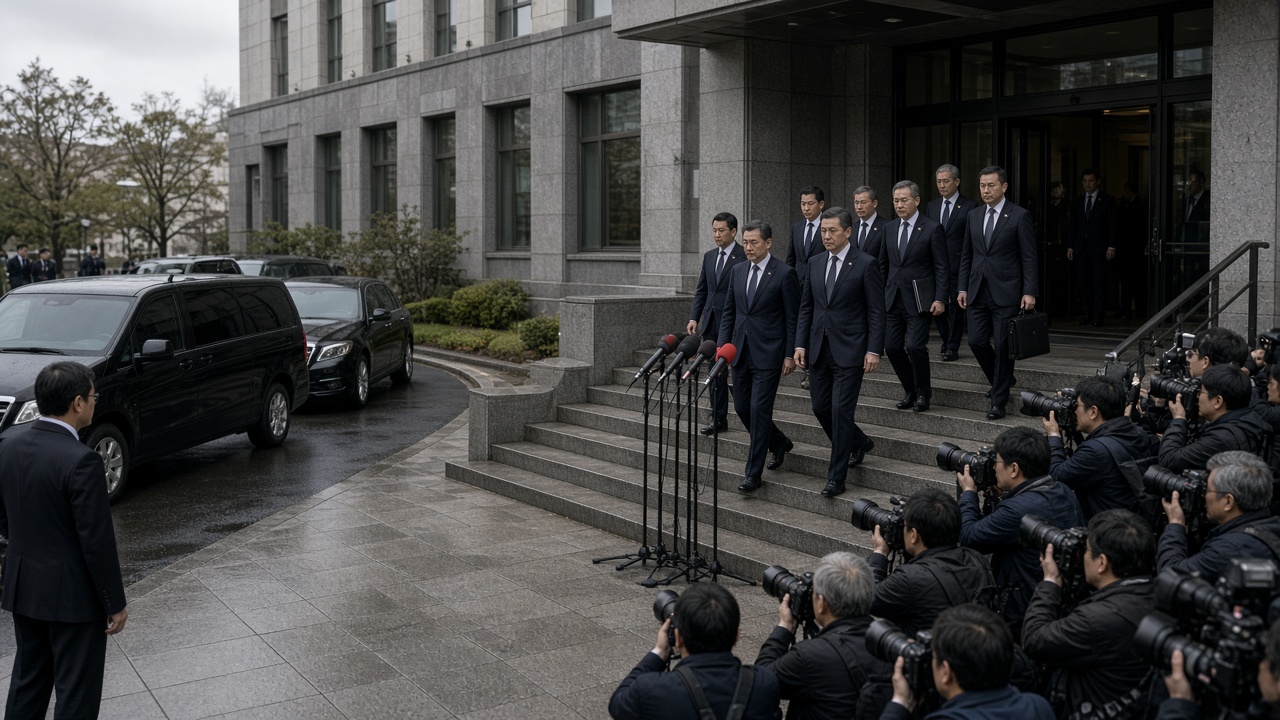
Japan’s Foreign Ministry summoned Russian Ambassador Nikolay Nozdrev on Wednesday after Moscow’s Federal Security Service detained Hokkaido Shimbun correspondent Yuki Imai on Sakhalin and accused him of collecting defense information for Japanese intelligence. European Affairs Bureau chief Kimitake Nakamura lodged what the ministry called a strong protest over the arrest and over Russian statements issued before Tokyo received a full explanation.
What Moscow alleges
Russia’s security service said Tuesday that a Japanese national working at the newspaper’s bureau in Yuzhno-Sakhalinsk was seized shortly before he planned to leave the country. State media aired video of masked officers entering a hotel room and restraining a man identified in Russian broadcasts as a journalist. Tass reported that investigators opened a criminal case and that a Moscow court ordered two months of pre-trial detention after Imai was flown to the capital.
Foreign Ministry spokesperson Maria Zakharova said Japan was using accredited reporters to gather sensitive security material, a charge Japanese officials rejected. The Hokkaido Shimbun, known for coverage of the disputed Northern Territories, said it was still confirming details about the correspondent’s status and the events leading to the detention.
Tokyo’s response
Foreign Minister Toshimitsu Motegi told a Diet committee that Japan is pressing for prompt information, humanitarian treatment, and fair process if the detention is confirmed. Nakamura demanded immediate access to the journalist, according to the ministry readout, and Nozdrev said he would relay the protest to Moscow.
The summons lands on an already brittle relationship. Japan has joined Western sanctions since Russia’s 2022 full-scale invasion of Ukraine while continuing to negotiate fishing rights and territory around the four islands Moscow controls and Tokyo claims. Any prolonged detention of a Japanese reporter in Sakhalin, close to those islands, will be read in Nagatacho through both a press-freedom and a national-security lens.
Pressure on the Takaichi government
Prime Minister Sanae Takaichi is managing a crowded extraordinary Diet session that includes a consumption-tax bill and debate over nuclear-powered submarines after Chinese carrier activity near Okinawa. Opposition parties can use the arrest to question whether the administration still has workable diplomatic channels with Moscow when Japanese nationals remain in Russian custody.
Consular staff in Moscow have requested meetings with Imai, but the ministry has not announced a visit. Russian courts rarely release espionage suspects before trial, and previous detentions of foreign reporters have dragged for months even when governments publicly demanded release.
What comes next
Japanese diplomats said they would continue to seek clarity on the exact charges and any evidence the FSB plans to present. Media unions in Tokyo called for proof that Imai’s reporting stayed within accreditation rules. Without consular access, the government’s options are largely diplomatic: further demarches, coordination with European allies who have condemned similar arrests, and quiet messaging through channels that still function despite sanctions.
For readers in Japan, the immediate question is whether a correspondent stationed beside contested waters can continue working without becoming a bargaining chip in a dispute that predates the Ukraine war and shows no sign of resolution.