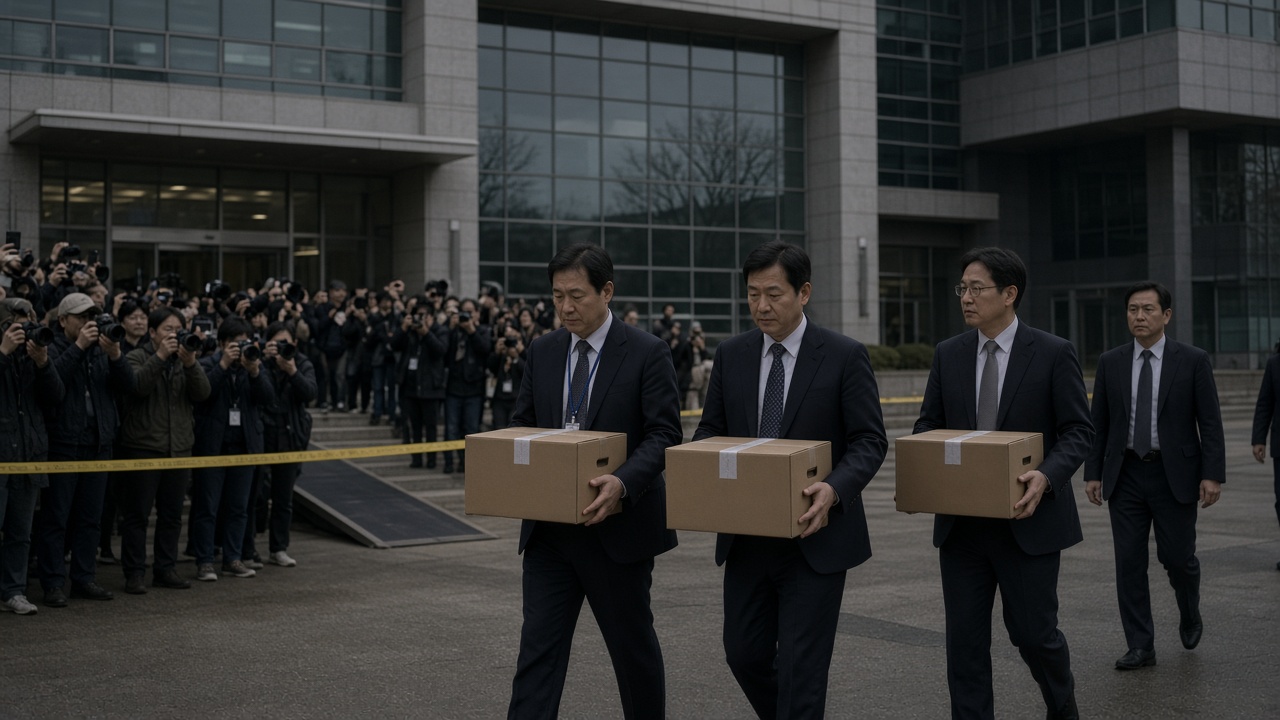
A special counsel team investigating South Korea’s election watchdog said Thursday it had confirmed falsified hourly voter counts at 30 district-level election commissions during the June 3 local elections, then launched simultaneous search-and-seizure operations at seven sites including National Election Commission headquarters in Gwacheon. Prosecutors deployed three prosecutors, 20 investigators, and eight digital forensics specialists starting around 9:10 a.m., targeting central servers and local offices from Busan’s Nam Ward to Jeju’s Seogwipo.
False hourly data, accurate finals
Special counsel Lee Tae-han’s office said commissions altered turnout figures while polls were open, then either revised the fake hourly entries afterward or repeated identical increments in later time slots. Final turnout totals entered after voting closed matched real ballots cast, according to investigators, but the live figures broadcast to the public during election day did not. The team reviewed management-system logs nationwide and questioned more than 70 election officials before naming districts spanning Seoul’s Guro, Mapo, and Seongbuk wards, multiple Gyeonggi cities, Cheongju, Cheonan, Busan, Changwon, Gwangju, Mokpo, Chuncheon, and Seogwipo, among others.
Five additional districts—including Seoul’s Seocho and Gangnam wards—were already implicated in a joint police-prosecution probe, bringing the tally to 30. Lee’s team was appointed last month after widespread ballot shortages on June 3 fueled opposition claims of systemic misconduct at the NEC. Thursday’s raids are the first large-scale seizures aimed specifically at the hourly reporting pipeline rather than paper shortages alone.
Contracts and credibility on the same docket
Investigators are running parallel tracks. Alongside the turnout manipulation inquiry, the special counsel searched Busan’s metropolitan commission and nine other locations over alleged preferential treatment in exclusive warehouse contracts for election supplies since 2022. Korea Times reported signs that commissions in Busan, South Gyeongsang, and North Gyeongsang steered storage deals toward particular vendors. Lee’s advisers have not publicly linked the contract probe to the falsified counts, but both strike at the NEC’s claim of neutral administration ahead of future national votes.
The NEC has not released a detailed rebuttal since the raids began; commissioners were seen arriving at Gwacheon as forensic staff imaged servers. Opposition lawmakers who demanded the special counsel after June’s ballot shortfalls said hourly turnout is a transparency tool—if it can be edited without detection, television dashboards and media tickers mislead voters about momentum while polls are still open.
What the raids need to prove
Digital logs seized Thursday must show who authorized the false entries, whether instructions traveled from provincial commissions to neighborhood poll workers, and whether any political camp benefited from inflated or smoothed turnout curves. Lee’s team said it will determine criminal liability after analyzing the captured material; no indictments were announced with the searches.
For a country that just watched markets plunge on separate news, the election probe adds another institutional stress test. Prosecutors must show whether 30 districts acted as rogue clerks fixing awkward spreadsheets or as nodes in a coordinated deception—and whether the NEC’s central servers preserved enough metadata to tell the difference.