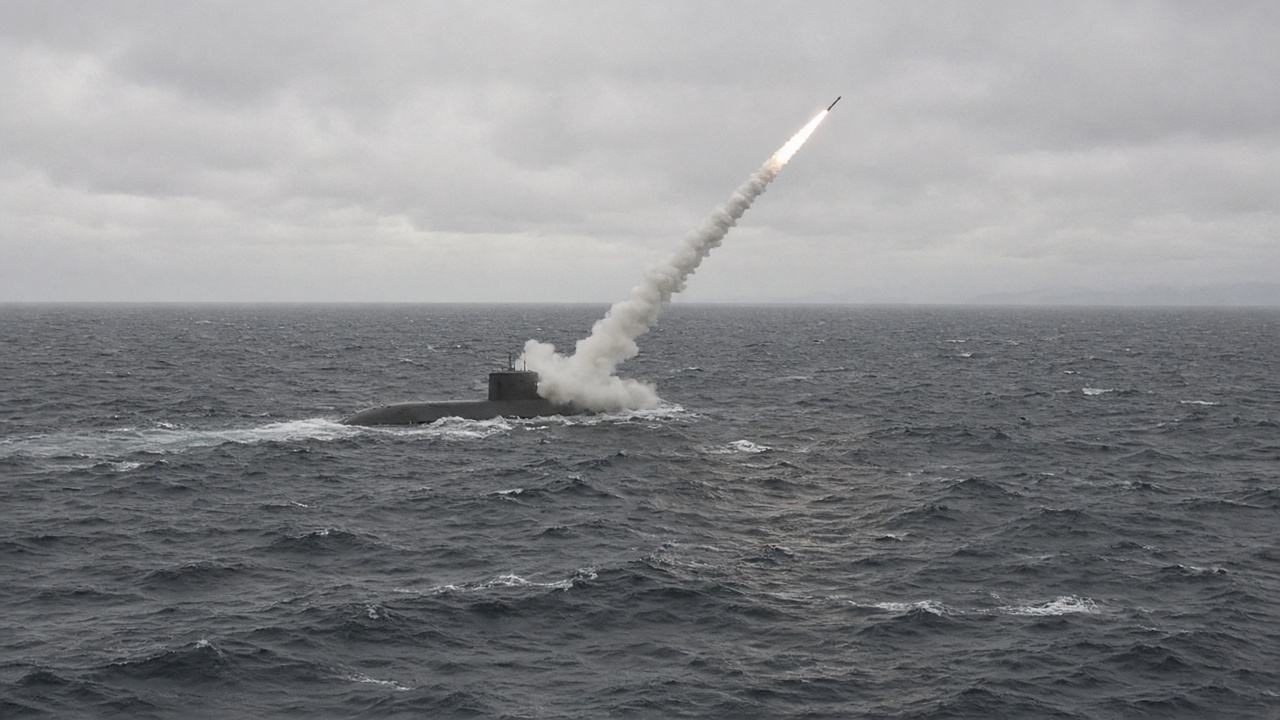
North Korea test-fired two kinds of submarine-launched strategic cruise missiles in the East Sea on Wednesday, state media said Thursday, in a launch South Korea’s Joint Chiefs of Staff said it had tracked from before takeoff through the end of flight even though officials did not issue a same-day public warning.
The Korean Central News Agency said the drill examined the navy’s “mobilized posture” of underwater combat systems and demonstrated the reliability of the country’s deterrent. Kim Jong Sik, a Workers’ Party Central Military Commission member, and Missile Administration chief Jang Chang Ha oversaw the test alongside navy engineers; leader Kim Jong Un did not attend, a pattern analysts read as an effort to showcase institutional capability without inviting the diplomatic heat that follows his personal presence at launches.
What Seoul says it saw
At a briefing in Seoul, JCS spokesperson Capt. Jang Do-young said allied sensors followed the activity “from before launch through the cruise phase to the end of the flight.” One missile type appeared to leave a vertical launch system and the other a torpedo tube, he said, without confirming which submarine was used. Yonhap and other outlets reported analysts suspect the 3,000-ton-class boat North Korea unveiled in 2023 as its first “tactical nuclear attack submarine,” though Pyongyang has not verified that platform in Thursday’s dispatch.
The military’s silence until KCNA published its report drew questions in the National Assembly and in Seoul newsrooms about whether detection had failed. Jang rejected that, saying not every missile event is disclosed because announcing each track could expose U.S. and South Korean reconnaissance capabilities to the North. He described continued intelligence sharing with Washington as intact despite broader alliance friction over trade and burden-sharing debates in parliament this month.
Peninsula context for Thursday
The launch follows Monday’s tactical ballistic missile test from the Pyongyang area, which KCNA framed as research on upgrading a “core element.” Cruise missiles fly lower and slower than ballistic weapons, complicating early warning and feeding South Korean demand for more maritime patrol aircraft and undersea sensors. Opposition lawmakers urged the Yoon Suk Yeol administration to explain why residents learned of the submarine drill from Pyongyang’s morning bulletin rather than a JCS text alert.
Defense officials said they would maintain combined U.S.-South Korea monitoring but gave no timeline for a United Nations Security Council session; Russia and China have blocked recent condemnations. For now the file sits with allied intelligence agencies assessing whether North Korea is ready to deploy nuclear-capable cruise missiles from a new hull—or simply rehearsing the choreography ahead of another winter testing season.