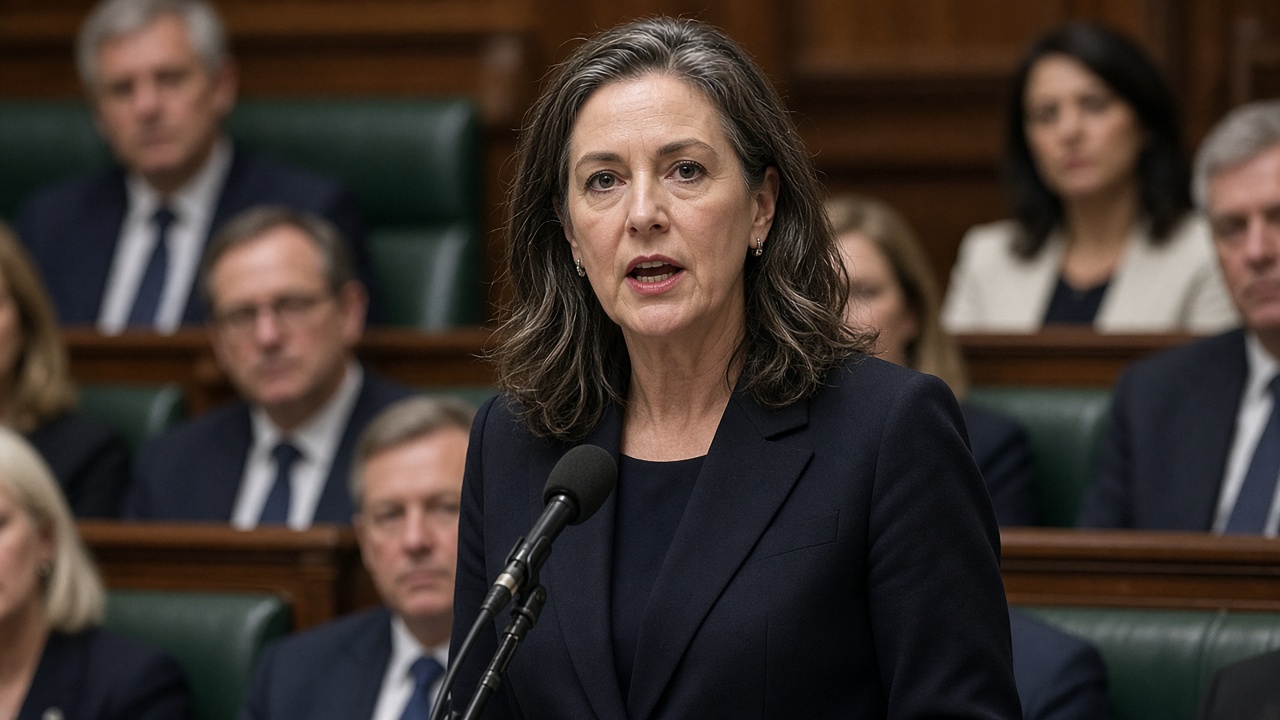
Prime Minister Sanae Takaichi said on Wednesday that her government will “seriously consider” nuclear-powered submarines for Japan’s Self-Defense Forces, signalling that a long-taboo option could enter the country’s defence planning as Chinese and Russian naval activity grows in the Pacific.
Speaking during a House of Representatives budget committee session, Takaichi said Tokyo would examine the issue “in a concrete and realistic manner.” She argued that the SDF’s intelligence-gathering and surveillance reach in the Pacific remains limited and called strengthening deterrence an “urgent” task. The remarks stop short of an acquisition decision — Takaichi told lawmakers earlier in October that “nothing is decided at this point” on how future submarines should be powered — but they give political cover to officials drafting updated national security documents due later this year.
Law, politics and the coalition calendar
Japan’s Atomic Energy Basic Act restricts nuclear use to peaceful purposes, and past cabinets have said that bar prevents reactor-powered warships. Takaichi did not spell out how she would overcome that hurdle, but government sources quoted by Nikkei and Asahi Shimbun say planners may describe research into “next-generation power sources including nuclear power” rather than explicitly promising atomic boats in this year’s revisions.
Coalition talks are expected to accelerate after November, when the ruling Liberal Democratic Party’s security research commission resumes work under unchanged leadership — a move senior LDP figures interpreted as reflecting Takaichi’s interest in keeping nuclear propulsion on the table. The prime minister also noted developments among partners: Australia’s AUKUS pathway to nuclear submarines and South Korea’s discussions with Washington over naval reactor technology.
Why submarines surfaced now
Defence officials have watched China’s Liaoning carrier group operate near Okinawa this week while North Korea test-fired submarine-launched cruise missiles in the Sea of Japan. A nuclear-powered attack boat could patrol longer without surfacing, improving tracking of adversary fleets in deep Pacific waters. Sankei Shimbun, citing defence ministry officials, has described nuclear submarines as a potential “trump card” against China’s expanding carrier force, while also warning that costs and legal work could take more than a decade.
Not everyone in Kasumigaseki is convinced. Asahi reported cautious views inside the Defence Ministry and among coalition partners who prefer near-term investments in conventional boats fitted with vertical launch cells for long-range missiles. A defence panel advisory group suggested in September that Japan should prioritise those missile-capable diesel-electric submarines while studying advanced batteries and fuel cells as alternatives to reactors.
Cabinet drama elsewhere
Takaichi’s submarine comments landed on the same day she named former senior farm vice minister Arata Takebe to replace scandal-hit agriculture minister Kazuo Yana, who resigned after questions about road-budget remarks and campaign shuttle buses in Tochigi. The farm post shuffle was the first ministerial exit of her tenure and will consume Diet time opposition parties already plan to use probing appointment responsibility.
For the submarine debate, the immediate test is wording in the three security documents slated for revision by year-end. If the government opts only to “study” nuclear propulsion, Japan will remain years from a boatyard order. If Takaichi pushes harder, she must still sell a public that associates nuclear technology with Fukushima’s legacy and the country’s renunciation of atomic arms.
What changed on Wednesday is the prime minister’s voice: Japan is no longer treating nuclear-powered submarines as a think-tank fantasy. The question is whether law, budget and coalition arithmetic will let that study become steel in the water.