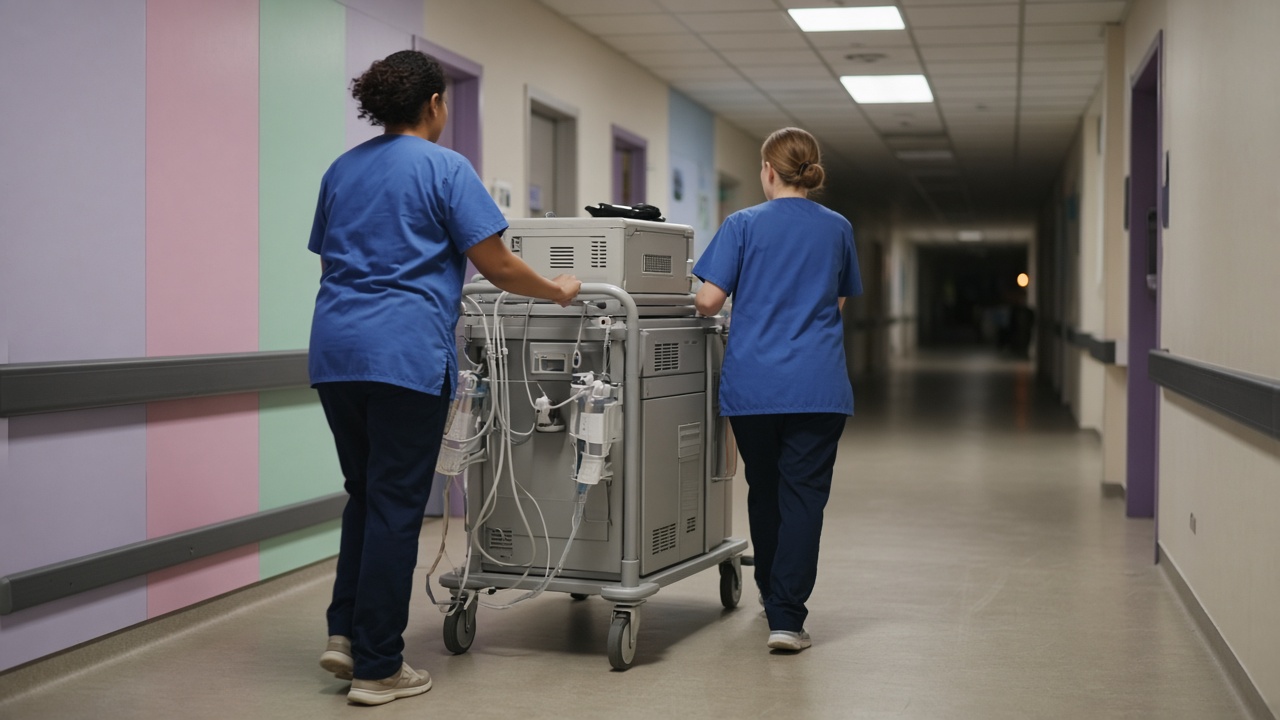
Seoul Asan Children's Hospital launched a pediatric rapid-response team on Wednesday, combining emergency monitoring and bedside safety support after internal data showed sharp drops in unexpected intensive-care transfers.
Team structure
The 19-member Pediatric Rapid Response Team splits into a Pediatric Medical Emergency Team that watches high-risk inpatients and a Pediatric Action Collaborative for Excellence that helps with procedures and safety checks. The hospital added dedicated nurses in January and a full-time physician in March to strengthen overnight coverage.
Between February and June, 48-hour readmissions to the pediatric ICU fell 81.6 percent compared with January, the hospital said. Leaders cautioned that single-site metrics can move with case mix, but the trend supports earlier intervention when vital signs slip.
Clinical rationale
Team chief Park Yu-kyung said pediatric patients can deteriorate within minutes, making early warning scores and nurse empowerment as important as ICU capacity. The model mirrors adult rapid-response programs but tunes protocols for weight-based dosing and family presence on wards.
Other Korean tertiary centers are expanding similar teams as birth rates fall and complex pediatric cases concentrate in Seoul hubs.
Comparison with adult models
Adult rapid-response teams became standard in Korean tertiary hospitals after mortality studies in the 2000s. Pediatric versions lagged because children's vital signs vary by age and because families crowd bedsides, complicating rescues.
Asan's PACE subgroup focuses on procedural safety — double-checking chemotherapy calculations, for example — while PMET nurses patrol wards with early-warning scores tuned for infants.
Funding and scale
The hospital did not disclose incremental staffing costs, but leaders said preventing one unplanned ICU transfer can save millions of won and free scarce beds for post-surgical cases. If metrics hold, other children's hospitals in the Seoul metro may copy the 19-member roster.