The SMILE mission, a joint European Space Agency and Chinese Academy of Sciences project co-led by University College London researchers, is approaching its first high-quality image of Earth’s magnetopause after weeks of instrument commissioning in a high-altitude orbit.
Why X-rays map the magnetic shield
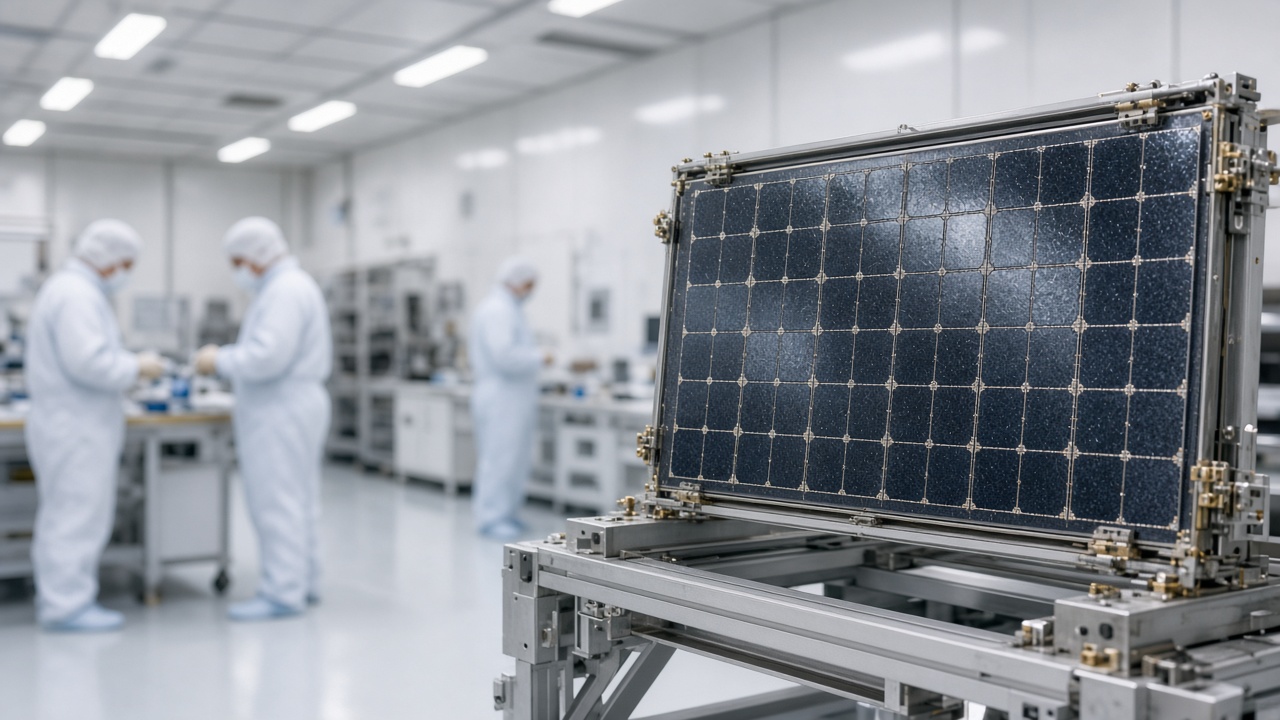
SMILE carries a soft X-ray imager built by the University of Leicester with partners at UCL’s Mullard Space Science Laboratory. The camera detects X-rays emitted when charged particles from the solar wind collide with Earth’s magnetic field, producing a ghostly map of the boundary that protects satellites, power grids and radio communications. Previous missions glimpsed portions of that boundary; SMILE’s elliptical orbit, reaching about 121,000 km above the north pole, is meant to capture wide-field images for the first time.
Commissioning included switching on the SXI camera and taking initial frames while engineers managed stray light from the sunlit Earth—glare that fades as the spacecraft moves into the darker part of its orbit and northern winter reduces polar brightness. Mission blog posts said the first scientifically useful magnetopause or polar-cusp image was expected around mid-October, when unwanted light reaches a seasonal minimum.
Space weather stakes
Geomagnetic storms can disrupt GPS timing used by mobile networks, induce currents in pipelines and force airlines to reroute polar flights. SMILE will not replace ground-based magnetometers, but it will give forecasters a global view of how the magnetosphere deforms before storms arrive. That data feeds models at the Met Office Space Weather Operations Centre and international partners tracking coronal mass ejections.
Diplomatic and technical balance
SMILE is a rare ongoing ESA-China collaboration in an era of tighter export controls. UK participation survived Brexit transitions because funding was committed early and hardware was built domestically. Scientists emphasise open data releases, while security officials watch telemetry routes like any other dual-use space link.
What comes next
If mid-October images validate calibration, SMILE enters its core science phase lasting several years. British teams will correlate X-ray maps with in-situ particle data from companion instruments, hunting for precursors to the auroras visible from Scotland and northern England. For taxpayers, the payoff is not a single pretty picture but earlier warnings when the solar wind is about to punch through a weakened flank of the magnetosphere.
Instrument cross-checks
SMILE also carries a lightweight ion analyser and magnetometer that will validate X-ray maps against in-situ particle counts. Disagreements between instruments often reveal where models mis-estimate reconnection events—moments when the solar wind punches through weak points in the shield.
Public engagement
Leicester and UCL teams plan school outreach once first images publish, tying aurora sightings in Scotland to the science behind SMILE’s orbit. That pipeline matters for UK Space Agency funding renewals as ministers demand visible return on £15 million invested.
Ground segment
Rutherford Appleton Laboratory teams download SMILE telemetry through ESA’s deep-space network slots booked months ahead. Any delay in downlink schedules pushes image releases back even when the camera is ready, a reminder that space science still depends on earthly calendar politics.