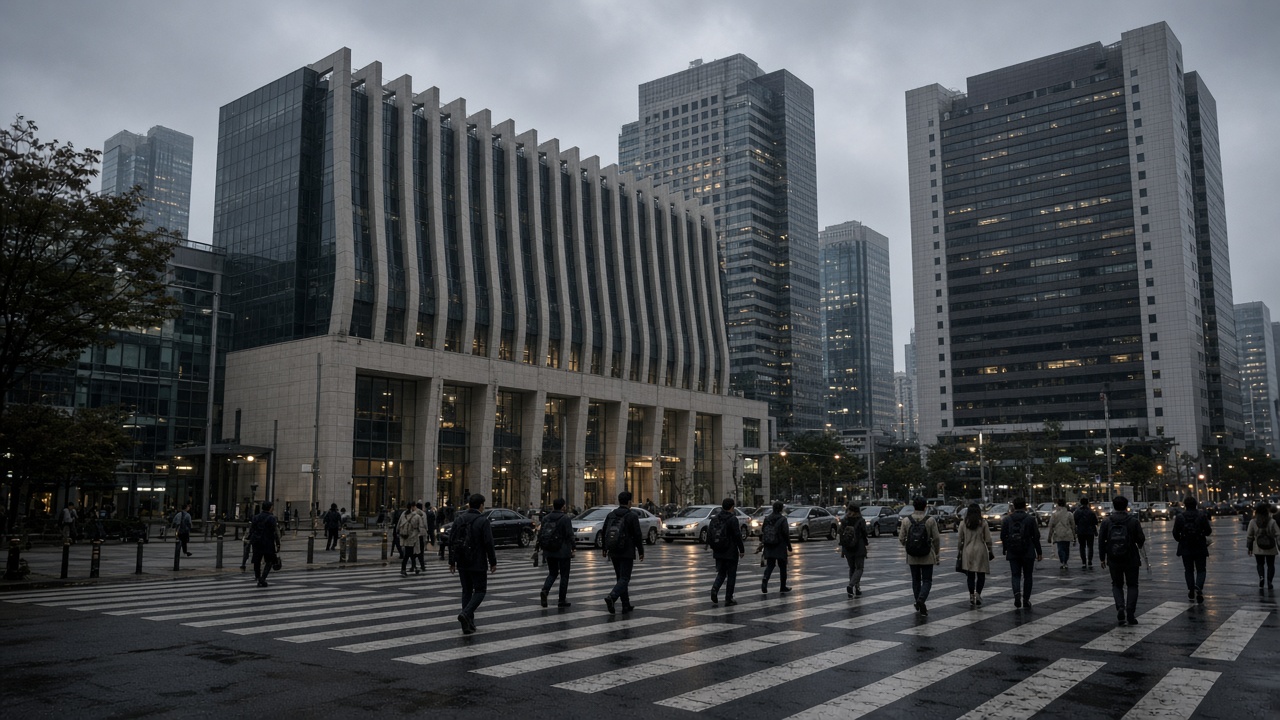
Foreign portfolio managers turned net buyers of South Korean equities at Friday's close, snapping an eight-trading-day selling streak that had dragged the Kospi down more than 1,300 points from its early-October peak.
The benchmark Korea Composite Stock Price Index finished up 113.83 points, or 2.05 percent, at 5,668.05, its first gain in seven sessions. Trade was thin at 286.5 million shares worth 20 trillion won, a reminder that the move was as much about positioning after a brutal Thursday as about fresh confidence in earnings.
Who bought the bounce
Flow data compiled after the bell showed foreigners purchased a net 343 billion won of Kospi shares, according to BusinessPost and other outlets quoting Korea Exchange statistics. That marked a sharp reversal from the prior week, when offshore funds had dumped chip-heavy names as AI-infrastructure spending fears collided with higher U.S. rate expectations.
Domestic investors took the other side. Individuals sold a net 484.7 billion won and institutions offloaded 683.4 billion won, typical behavior when retail holders try to recoup losses after a relief rally. The split matters for Monday's open: a rebound financed by foreign dip-buying can fade quickly if local accounts keep distributing into strength.
What changed overnight
Seoul traders pointed to a steadier Wall Street session and cooler language from U.S. policymakers gathered in Bangkok for International Monetary Fund meetings. Chipmakers still dominated sentiment—Samsung Electronics rose 2.62 percent to 215,500 won and SK hynix added 0.79 percent to 1,272,000 won—but cyclicals joined the bid. Hyundai Motor climbed 5.58 percent to 312,000 won and Hanwha Aerospace advanced 7.77 percent to 888,000 won as Middle East headlines revived defense interest.
The won strengthened modestly to 1,331.4 per dollar, and three-year Treasury yields slipped 1.3 basis points to 3.854 percent, easing margin pressure for a market where outstanding stock loans had touched a three-month high just before the rout.
What Seoul desks watch next
Korea is closed for the weekend, so Monday's first hour will test whether Friday's foreign inflow was a one-day hedge or the start of stabilization. Dealers said supply from exchange-traded fund rebalancing and October derivatives rolls could still swamp modest offshore buying if U.S. futures weaken Sunday night.
Policy makers are also back on the calendar. Financial Services Commission Chairman Lee Eog-weon used Thursday's emergency market meeting to warn against margin-heavy retail trading, a signal that regulators will not treat a single green day as proof the correction is over.
Brokerage notes circulated after the close highlighted how thin liquidity amplified moves. When average daily value traded drops toward 20 trillion won, a few billion won of net foreign buying can swing the index more than fundamentals would justify on a normal volume day. That is why strategists at Mirae Asset and NH Investment & Securities both described Friday as a technical rebound rather than a fundamental rerating in client notes reviewed by local reporters.
Corporate calendars add another layer. Third-quarter earnings for Samsung, Hyundai, and major banks land over the next two weeks, and pre-announcement guidance has been scarce. Offshore funds that sold into the chip scare may be rebuilding core positions ahead of those prints while trimming beta elsewhere in Asia. Taiwan's Taiex suffered its own foreign outflow week, suggesting regional allocators were rotating rather than exiting North Asia entirely.
For small investors, the lesson from Friday's flow split is to watch Monday's opening auction as much as the closing print. If foreigners revert to selling while locals keep distributing, the eight-day streak will look like a one-day blip. If both cohorts buy, Seoul may finally stabilize near 5,700 pending U.S. data.