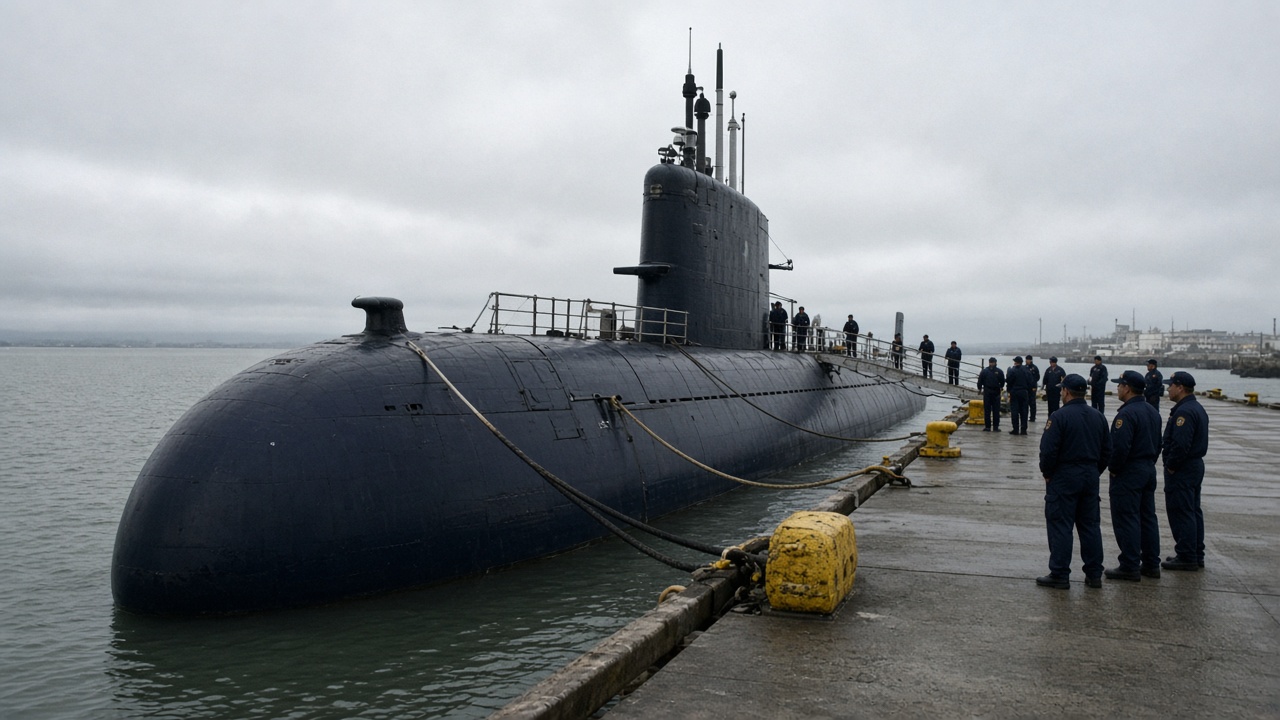
North Korea said Saturday that its defense institutes conducted an underwater test of a new precision-guided torpedo, branding the weapon Zam-2.0 and claiming that artificial intelligence now drives target detection and guidance.
The Korean Central News Agency said the Academy of Defence Science, the Missile Administration, and a newly named Torpedo Weapon Research Bureau fired the torpedo on Thursday to verify a “technical updating” of the system. Senior defense research officials who watched the test called it a breakthrough that foreshadows a “significant change” in how the Korean People’s Navy fights, according to the dispatch.
What Pyongyang disclosed — and what it hid
KCNA described Zam-2.0 as a “super-speed precisely guided” torpedo developed jointly across multiple institutes, but it published no range figures, launch platform, or video that would let outsiders independently gauge performance. That opacity is typical for North Korean naval announcements, which often follow submarine diplomacy with a mix of real engineering milestones and propaganda.
The report nonetheless matters for Seoul because it lands less than 48 hours after KCNA showcased two types of strategic cruise missiles fired from a submarine in the East Sea — activity South Korea’s Joint Chiefs did not immediately confirm on the water. Together, the messages suggest Kim Jong Un is advertising a layered undersea strike portfolio as the U.S., Japan, and South Korea tighten trilateral missile-defense and supply-chain coordination.
How analysts read the timing
Yonhap News Agency noted that North Korea has poured resources into submarines since launching the 3,000-ton “Hero Kim Kun Ok” boat in 2023, which Pyongyang markets as its first tactical nuclear attack submarine. Shin Jong-woo, secretary general of the Korea Defense and Security Forum, told Yonhap that Zam-2.0 likely pairs with those boats as Pyongyang tries to narrow the gap with South Korea’s more modern surface and submarine fleet.
South Korea’s military said it is analyzing the KCNA report in coordination with U.S. intelligence but has not corroborated the AI claims or the Thursday test window. The Ministry of National Defense routinely warns that North Korean state outlets exaggerate readiness to pressure negotiators and test allied surveillance.
What Seoul is watching next
Officials in Yongsan will look for acoustic signatures, salvage debris, or commercial satellite cues that might confirm a torpedo launch area. Even without that evidence, the announcement gives the National Assembly another data point as it debates next year’s defense budget, which already funds counter-battery radars and submarine-hunting helicopters aimed at North Korean mini-subs operating close to the Northern Limit Line.
President Lee Jae Myung’s government has kept the door open to dialogue, but Saturday’s KCNA item offers little room for optimism: Pyongyang framed the test as routine “normal activity” to modernize weapons, not as a gesture toward talks. For now, the Zam-2.0 headline is less about verified capability than about Kim’s insistence that his navy will not remain the weakest link in a nuclear force that increasingly advertises missiles, drones, and now AI-branded torpedoes.